
GSSP Courses
Check out the 2026 GSSP Course Schedule
Individual course schedules can be accessed in the Course Information section below
Courses offered for 2026 GSSP
- All courses are taught on-site (no online option) and conducted in English.
- Courses are taught on a graded basis and grade(s) will be reflected on your transcript.
- The Faculty of Science reserves the right to cancel any course, if there is insufficient enrolment to start a class.
- Courses and curriculum listed below may be subject to changes.
- NUS students can read up to 2 courses.
- All SP2718 courses can only fulfil Unrestricted Electives (UE).
- International students can read up to 4 units of courses, which is equivalent to 6 ECTS*.
Course Information
SP2718B Introduction of Cellular Agriculture (4 units)
Introduction of Cellular Agriculture
Course description
This course introduces students to the science, engineering, and societal impact of cellular agriculture—the production of food and proteins from cells rather than whole animals. Students will explore the foundations of cultivated meat, precision fermentation, and cell-based proteins, and examine how these technologies contribute to sustainable food systems. Students who have completed the course will be able to critically evaluate progress in cellular agriculture and contribute meaningfully to the development of sustainable food solutions.
Syllabus
Week 1: Scientific Foundations
Topic 1: Introduction To Cellular Agriculture & Future Food Challenges
Topic 2: The Science And Technology Behind Cultivated Meat And Cell-Based Foods
Topic 3: The Science And Technology Behind Precision Fermentation & Acellular Agriculture
Week 2: Engineering, Scale-Up And Perception
Topic 1: Biomaterials & Scaffolding for Structured Products
Topic 2: Bioprocess Engineering & Scaling Up
Topic 3: Consumer Acceptance, Ethics, And Market Adoption
Week 3: Taste, Regulation and Future Pathways
Topic 1: Making “Cultivated Meat” Like Meat
Topic 2: Safety, Regulation, And Quality Control
Topic 3: Future Of Cellular Agriculture & Student Mini-Symposium
Assessment
Class Participation: 30%
Essays: 30%
Project/Group Project: 40%
Prerequisites and preclusions (for NUS students):
Preclusion: HSI2004
Instructor(s):
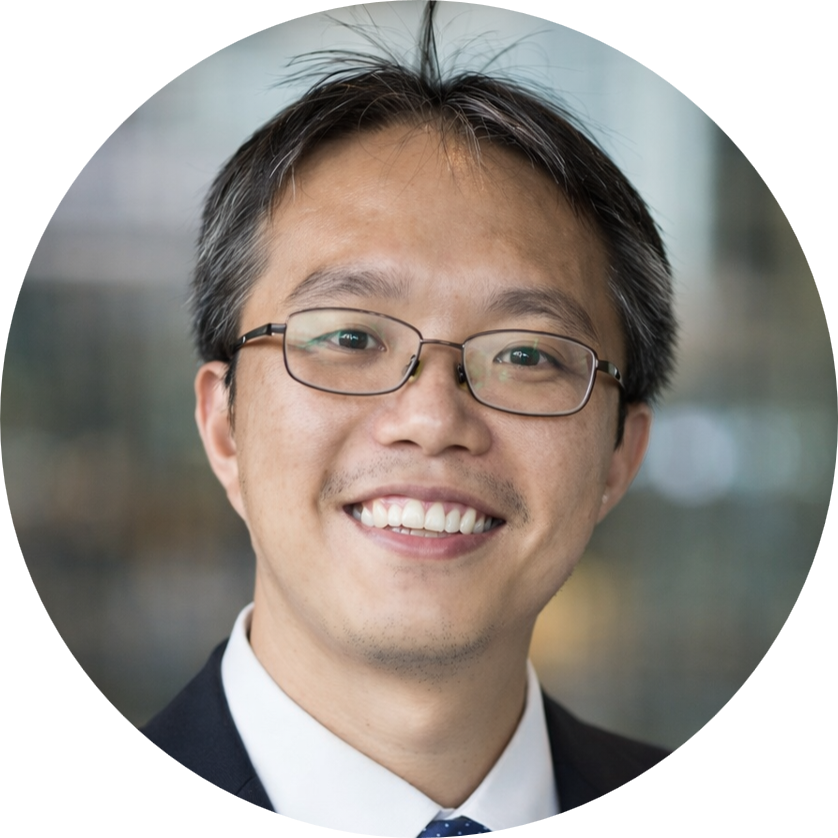
Dr Lieu Zi Zhao, Robert
Instructor’s Profile
Dr Robert Lieu is a Senior Lecturer in the Special Programme in Science and the Department of Biological Sciences at the National University of Singapore (NUS). His teaching interests focus on Synthetic Biology, Biotechnology, and the science behind alternative protein products, and he engages students of all backgrounds through inspiring, interactive classes, including blended learning, case studies, and hands-on, inquiry-driven activities that help students learn by doing. Believing today’s learners are tomorrow’s consumers, Robert is dedicated to making emerging science and technology accessible to everyone.
Dr Lieu completed his Bachelor’s and PhD degrees at the University of Melbourne, followed by research stints in molecular cell biology, RNAi delivery, and mechanobiology. Since joining NUS as a lecturer in 2015, he has taught undergraduate and graduate modules, managed teaching laboratories, mentored students, and coached teams for international science competitions. His interests include science communication, teaching and learning, synthetic biology, and bioimaging.
SP2718C Engineering Cells: Parts to Behaviour (4 units)
Engineering Cells: Parts to Behaviour
Course description
Engineering Cells: Parts to Behaviour is a course that introduces students to the core concepts and practices of engineering biology and its growing relevance to the bioeconomy. Students learn to see living cells as programmable systems whose behaviours can be understood, redesigned, and optimised using engineering principles. Using the Design–Build–Test–Learn (DBTL) cycle as a guiding framework, students will explore how genetic information encodes function, how standardised parts can be assembled into modular circuits, and how the DBTL framework can improve the behaviour of engineered systems.
Syllabus
- What is Synthetic Biology?
- Engineering Biology Roadmap & the DBTL Cycle
- Impacts & Applications of Engineering Biology (Current Real-World Applications Across Major Sectors)
- Core Tools for Engineering Biology Part 1: Engineering DNA & Biomolecules
- Core Tools for Engineering Biology Part 2: Engineering Hosts and Data Science
- Information Processing and Engineering of Cellular Behaviour Part 1
- Information Processing and Engineering of Cellular Behaviour Part 2
- Information Processing and Engineering of Cellular Behaviour Part 3
- Applying DBTL to Improve the Biosensor Design
- Impacts & Applications of Engineering Biology (Future Directions & Transformative Potential)
Assessment
Class Participation: 30%
Essays: 30%
Project/Group Project: 40%
Prerequisites and preclusions (for NUS students):
Preclusion: Students who have completed SP2274
Instructor(s):
Dr Lieu Zi Zhao, Robert
Instructor’s Profile
Dr Robert Lieu is a Senior Lecturer in the Special Programme in Science and the Department of Biological Sciences at the National University of Singapore (NUS). His teaching interests focus on Synthetic Biology, Biotechnology, and the science behind alternative protein products, and he engages students of all backgrounds through inspiring, interactive classes, including blended learning, case studies, and hands-on, inquiry-driven activities that help students learn by doing. Believing today’s learners are tomorrow’s consumers, Robert is dedicated to making emerging science and technology accessible to everyone.
Dr Lieu completed his Bachelor’s and PhD degrees at the University of Melbourne, followed by research stints in molecular cell biology, RNAi delivery, and mechanobiology. Since joining NUS as a lecturer in 2015, he has taught undergraduate and graduate modules, managed teaching laboratories, mentored students, and coached teams for international science competitions. His interests include science communication, teaching and learning, synthetic biology, and bioimaging.
SP2718E Waste: an overlooked sustainability issue (4 units)
Waste: an overlooked sustainability issue
Course description
This course explores the environmental and social impacts of human-generated waste. Topics include waste produced during daily life and after death, as well as from food production, manufacturing, transportation, electronics, household items, and clothing. Students will develop critical thinking skills and empathy—particularly for those who manage waste—through hands-on activities such as litter picking. The course emphasises that preventing waste is more cost-effective than managing it after it is generated. Students will also compare and evaluate waste management policies across different countries.
Syllabus
- How Nature Deals With Waste
- Waste And How Our Ancestors Deal With Waste
- Food Waste
- E-Waste And Household Gadget Waste
- Transport Waste/ Basel Convention
- Textile Waste
- Landfills And Incineration
- Waste From Mining/ Construction/ Manufacturing
- Solutions To Waste
Assessment
Class Participation: 7.5%
Essays: 20%
Project/Group Project: 12.5%
Quizzes/Tests: 15%
Final Exam: 25%
Others (Self reporting of daily waste, pre-test and self-introduction): 20%
Prerequisites and preclusions (for NUS students):
NIL
Instructor(s):
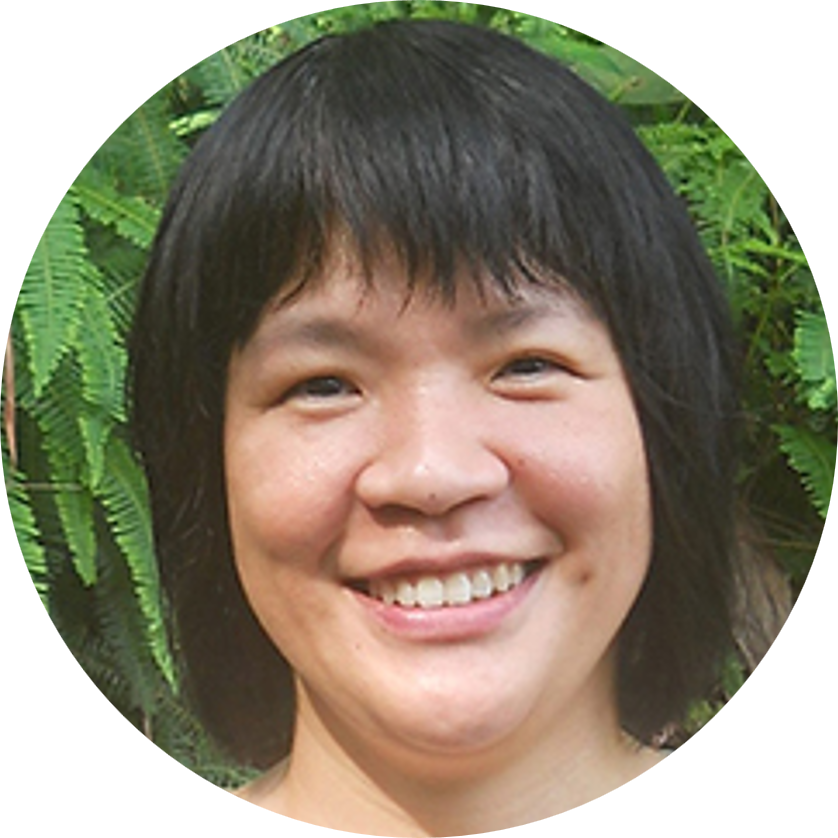
Dr Amy Choong Mei Fun
Instructor’s Profile
Dr Amy Choong Mei Fun received her BSc (Hons) from NUS, PhD from the University of Hong Kong.
She is a senior lecturer from the Department of Biological Sciences at NUS and the coordinator for the Minor in Botany. She joined the Department about five years ago and she teaches undergraduate Life Sciences as well as cross faculty modules to students; not only from her department but also from other disciplines. The modules she currently teaches are: Comparative Botany, Fungal Biology, Natural Heritage of Singapore as well as Tropical Horticulture Her class size ranged from 8 to 600. She is keen to encourage students to learn and not just study for grades. Amy strongly believes that this is good for their personal development and to ensure that the planet continues to be livable.
Before joining NUS, Dr Amy was teaching and was the Technology Development Manager at Republic Polytechnic. Her research positions included: Research Fellow at the Tropical Marine Science Institute, Research Analyst with Givaudan Pte Ltd and Scientific Officer at the Sungei Buloh Wetland Reserve.
Her research interests include plant-insect interactions, mycology, green roofs, climate change and life cycle analyses.
She had co-published the book A guide to Macrofungi in Singapore and papers with wide ranging research topics.
SP2718I Mendelian, Population and Quantitative Genetics (4 units)
Mendelian, Population and Quantitative Genetics
Course description
The course will introduce a beginner to the basic principles of genetic inheritance and how genetic analysis of individuals and populations is performed. This will include an understanding of Mendelian patterns of inheritance and variations that could occur due to multiple alleles, lethal genes, chromosomal variations, linkage, gene interaction and other genetic phenomena (penetrance, expressivity, pleiotropy, etc). Emphasis is placed on the understanding of the underlying molecular and biochemical basis of inheritance. Quantitative and population genetics will also be discussed with an emphasis on understanding the processes and forces in nature that promote genetic change.
Syllabus
Topic 1: Introduction – Welcome To The World Of Genetics
Topic 2: Mendelian Genetics – Terminologies, Mendelian Laws
Topic 3: Mendelian Genetics – Sex Linkage, Modes Of Inheritance, Pedigree Analysis, Penetrance, Expressivity, Pleiotropy
Topic 4: Mendelian Genetics – Functional Consequences Of Mutation
Topic 5: Variations To Mendelian Genetics – Multiple Alleles
Topic 6: Variations To Mendelian Genetics – Epistasis Models
Topic 7: Variations To Mendelian Genetics – Lethal Genes, Genetic Linkage
Topic 8: Population Genetics – Hardy-Weinberg Equilibrium, Allele Frequencies, Non-Random Mating
Topic 9: Population Genetics – Mutation & Selection Forces
Topic 10: Population Genetics – Mutation & Selection Forces, Maintenance Of Polymorphism
Topic 11: Quantitative Genetics – Statistical Description Of Quantitative Traits
Topic 12: Quantitative Genetics – Polygenic Inheritance, Heritability, Breeding, Heterosis
Topic 13: Genetic Epidemiology Principles – Genetics Of Complex Phenotypes
Topic 14: Genetic Epidemiology Principles – Study Designs Commonly Used In Genetic Epidemiology
Assessment
Class Participation: 30%
Quizzes/Tests: 70%
Prerequisites and preclusions (for NUS students):
Preclusion: LSM2105; NUS students reading a Life Sciences major, 2nd major or minor are not eligible for this course
Instructor(s):
A/P Chew Fook Tim
Instructor’s Profile
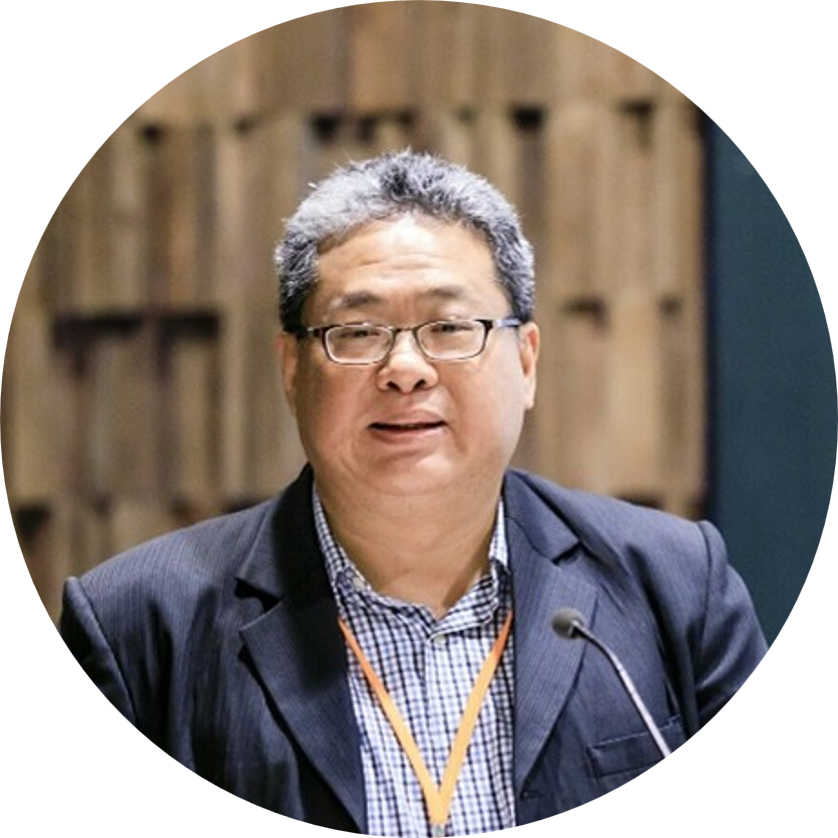
Associate Professor Dr CHEW Fook Tim is Vice Dean of the Faculty of Science, National University of Singapore (NUS), overseeing the Undergraduate and International Programs. He is also an Associate Professor at the Department of Biological Sciences, teaching both Undergraduate and Postgraduate Molecular Genetics and Crop Biotechnology; and is the Principal Investigator of the Functional Genomics Laboratories, Molecular Immunology and Allergy Laboratory, and the Research Centre on Sustainable Urban Farming. His key areas of research are in the Genetics of Allergic Respiratory and Skin Diseases, Skin Ageing, Allergen Characterization, and Large-Scale Crop Breeding, where he has published >200 scientific articles and reviews. He has been a lead scientific consultant to several organizations including Syngenta Crop Protection, Sime Darby (SD Guthrie), First Resources, Genting Plantations, Musim Mas and Olam International, where he works on the Genetics of Major Crops, and the Commercialization of Molecular Breeding and Seed Production Programs and is on the Governing Board of several major organizations.
Professor Chew has recently been involved with the National Medical Research Council (NMRC) Large Collaborative Grant – on TARIPH, The Academic Respiratory Initiative for Pulmonary Health (S$10 million, total project value) and is also involved in developing the Seed Innovation Hub initiative (total project value of S$22 million) on breeding of leafy and fruiting vegetables for our region as well as for urban agriculture.
SP2718G What Do Scientists Really Do? A Cell Biologist’s Guide to Scientific Thinking and Research (4 units)
What Do Scientists Really Do? A Cell Biologist’s Guide to Scientific Thinking and Research
Course description
This course introduces students to the thinking and practices that underpin scientific discovery, with a focus on how cell biologists ask research questions the right way. Students learn to formulate testable hypotheses, design valid experiments, and evaluate data critically and ethically. Key competencies include identifying variables and controls, assessing reproducibility, reading scientific literature, and communicating findings. Experiential learning is supported by virtual reality experiences in lab safety and basic microbiology experiments.
Through authentic case studies and hands-on activities, students gain a foundational understanding of how scientific knowledge is constructed and the skills needed to participate in research globally.
Syllabus
Day 1: The Scientific Method And The Nature of Science
Day 2: Variables And Measurement
Day 3: Laboratory Safety And VR Session 1
Day 4: Experimental Design
Day 5: VR Session 2A – Microbiology Lab
Day 6: VR Session 2B And Scientific Articles
Day 7: Critiquing Research Methods
Day 8: Case Study Day
Day 9: Scientific Writing
Day 10: Scientific Writing And Data Visualisation
Day 11: Scientific Communication
Day 12: Group Project Planning
Day 13: Peer Review and Draft Presentations
Day 14: Writing Workshop
Day 15: Final Presentations and Research Integrity
Assessment
Class Participation: 10%
Essays: 20%
Project/Group Project: 10%
Quizzes/Tests: 40%
Individual Presentation: 20%
Prerequisites and preclusions (for NUS students):
NIL
Instructor(s):
A/P Yeong Foong May
SP2718A How the Ocean Works (4 units)
How the Ocean Works
Course description
About three-quarters of the Earth’s surface is covered by ocean, a vast realm that has shaped both our planet and the story of humankind. Our future depends on understanding the ocean and responding wisely to human-driven changes. This course introduces the ocean’s influence on the Earth’s systems and our daily lives, helping you make evidence-informed decisions and communicate them responsibly. It draws on blended and active-learning approaches, uses a range of digital tools, and keeps mathematics to a minimum.
Syllabus
1 The Blue Marble
Overview of our ocean and planet: significant geography, vital Earth statistics, and long-term changes in parameters such as CO₂ levels and ice coverage.
2 Living on a Ball
Consequences of living on a spherical planet: differential heating, seasons, navigation, travel routes, time zones, and cartography.
3 Sunshine on My Shoulders
How the Sun warms our planet: nature of light, heating and radiation, solar constant, greenhouse effect, equilibrium temperature, greenhouse gases, Stefan–Boltzmann law, Wien’s law, and blackbody radiation.
4 Pressure & That Sinking Feeling
Fundamental concepts of pressure and buoyancy: density, pressure, Archimedes’ principle, floating behaviour, and ocean stratification.
5 Under the Sea
Earth’s interior structure, tectonics and ocean chemistry, ocean floor geology, deep-sea mineral resources, and ecosystem impacts.
6 Tides
How tides work and how they influence human activities and natural systems.
7 Waves: Poetry in Motion
Ocean waves: what they are, deep vs shallow waves, tsunamis, wave generation (including storms), wave energy, and their potential as a renewable resource.
8 Pure Water
Properties that make water invaluable: global distribution, scarcity, heat capacity, expansion, and latent heat—key factors in climate and weather regulation.
9 Ocean Water
Structure of the ocean; light and nutrients; the two-layer dilemma; salinity; CCD; solubility; and how these parameters vary and shape ocean processes.
10 The Air We Breathe
Role of the atmosphere in climate and weather: Coriolis effect, atmospheric cells, ITCZ, cyclones, and the atmosphere as a global energy engine.
11 Ocean in Motion
Major ocean currents and their influence on life; Ekman transport; upwelling and downwelling; El Niño and Walker circulation; and resolving the two-layer dilemma.
Assessment
Class Participation: 10%
Project/Group Project: 25%
Quizzes/Tests: 30%
Individual assignments and peer assessment: 35%
Prerequisites and preclusions (for NUS students):
Preclusions: GEK1548,GEK1548FC, GEH1033
Instructor(s):
Dr Chammika N B Udalagama
COS1000 Computational Thinking for Scientists (4 units)
Computational Thinking for Scientists
Course description
This course introduces students to computational thinking as applied to problems in science, with special emphasis on their implementation with Python/Python Notebook (Jupyter). A selection of examples will be chosen to illustrate (a) fundamentals of algorithm design in computer programming (b) solution interpretation, as well as (c) analysis of the computational solutions and data visualization using state-of-the-art tools in Python. The selection will tackle different types of approaches typically used in scientific computational thinking, including deterministic, probabilistic and approximation methods. The course will also highlight scientific computational issues such as accuracy and convergence of numerical results.
Syllabus
A) Computation Methods
We cover three types of classes of computational methods in this course:
1) Iterative maps
-
- Using brute-force iteration to investigate the long-term deterministic behaviour of recurrence relations.
- Examples may include the Fibonnaci sequence and the Logistic map
2) Repeated Random Sampling
-
- Using random sampling to model and solve probabilistic problems.
- Examples may include applying the Monte Carlo method to solve the Monty Hall problem.
3) Differential equations
-
- Using numerical approximation techniques to solve first-order simple and coupled ordinary differential equations
- Examples may include modelling epidemic dynamics using SIR-type models.
B) Computational Language
We cover the following basics of Python:
- Variable and data types
- Program flow:
- Functions
- NumPy
- Matplotlib
Assessment
Project/Group Project: 25% (One project)
Quizzes/Tests: 40% (Two tests at 20% each)
Laboratory Tests: 35%
Prerequisites and preclusions (for NUS students):
Preclusion: COS2000, CS1010%/CS1010E/CS1010S, CS1101S, CS2030/CS2030S, CS2113/CS2113T, SP2273, TEE2101, TIC2001, TIE2030
Instructor(s):
Dr Angeline Shu Sze Yi
Instructor’s Profile
Dr Angeline Shu joined NUS as an undergraduate in 2007, pursuing a degree in Physics and a minor in Philosophy. She has been at NUS ever since then — after graduation, she worked as a teaching assistant with the Physics department. In about 2016, she decided to do a part-time Ph.D while continuing her role as a teaching assistant. She completed this endeavour at the end of 2021, with her dissertation mostly being about the role of information in quantum thermodynamics.
She is fascinated by how humanity, as a collective body, have built up knowledge over millennia. Discovering the intricate links between topics that seem irrelevant to each other and weaving that into a body of knowledge brings is an amazing experience for her, and it’s something she would love to pass on to students!
QF1100 Introduction to Quantitative Finance (4 units)
Introduction to Quantitative Finance
Course description
This course gives an overview of quantitative finance and introduces mathematical concepts and data analytic tools used in finance. The topics include interest rate mathematics, bonds, mean-variance portfolio theory, risk diversification and hedging, forwards, futures and options, hedging strategies using futures, and trading strategies involving options.
Syllabus
This course provides an introduction to quantitative finance. Topics include the theory of interest, bonds, the term structure of interest rates, risk diversification and key financial derivatives such as forwards, futures, and options. Students will learn hedging techniques using futures and explore basic option-based trading strategies. The fundamental principle of no-arbitrage will be introduced and emphasized throughout the course.
Assessment
- Attendance: 5%
- Assignments: 15%
- In-class quizzes: 20%
- Final exam: 60%
Prerequisites and preclusions:
Pre-requisites: must have completed 1 of 06 MATHEMATICS/07 FURTHER MATHEMATICS at a grade of at least E OR must have completed 1 of MA1301/MA1301X at a grade of at least D*
*Non-NUS students should provide a copy of their academic transcripts or course syllabus of relevant courses that they have read at their home universities.
Instructor(s):
Dr Li Wei, Dr Liu Chunchun
Instructor’s Profile
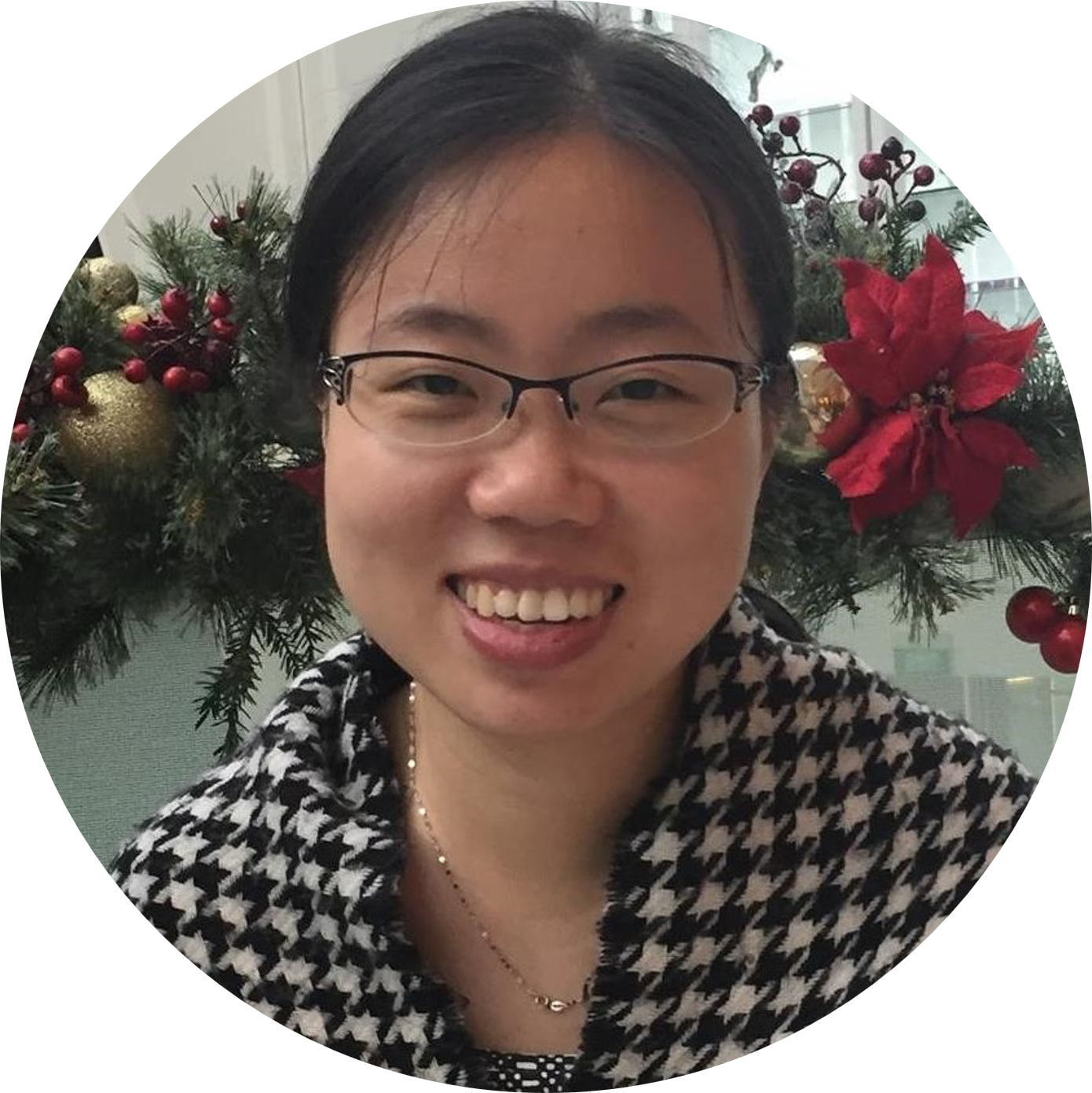
Dr. Li Wei is a Senior Lecturer in the Department of Mathematics at the National University of Singapore (NUS). Holding a Ph.D. in Mathematics from NUS, she has made substantial contributions to both teaching and research. Her expertise encompasses areas such as Quantitative Finance, Game Theory, and Discrete Structures. Recognized for her dedication to education, Dr. Li Wei has been honored with the prestigious Faculty Teaching Award. Currently, she serves as the Director of the Quantitative Finance Programme, hosted by NUS’ Department of Mathematics.
Instructor’s Profile
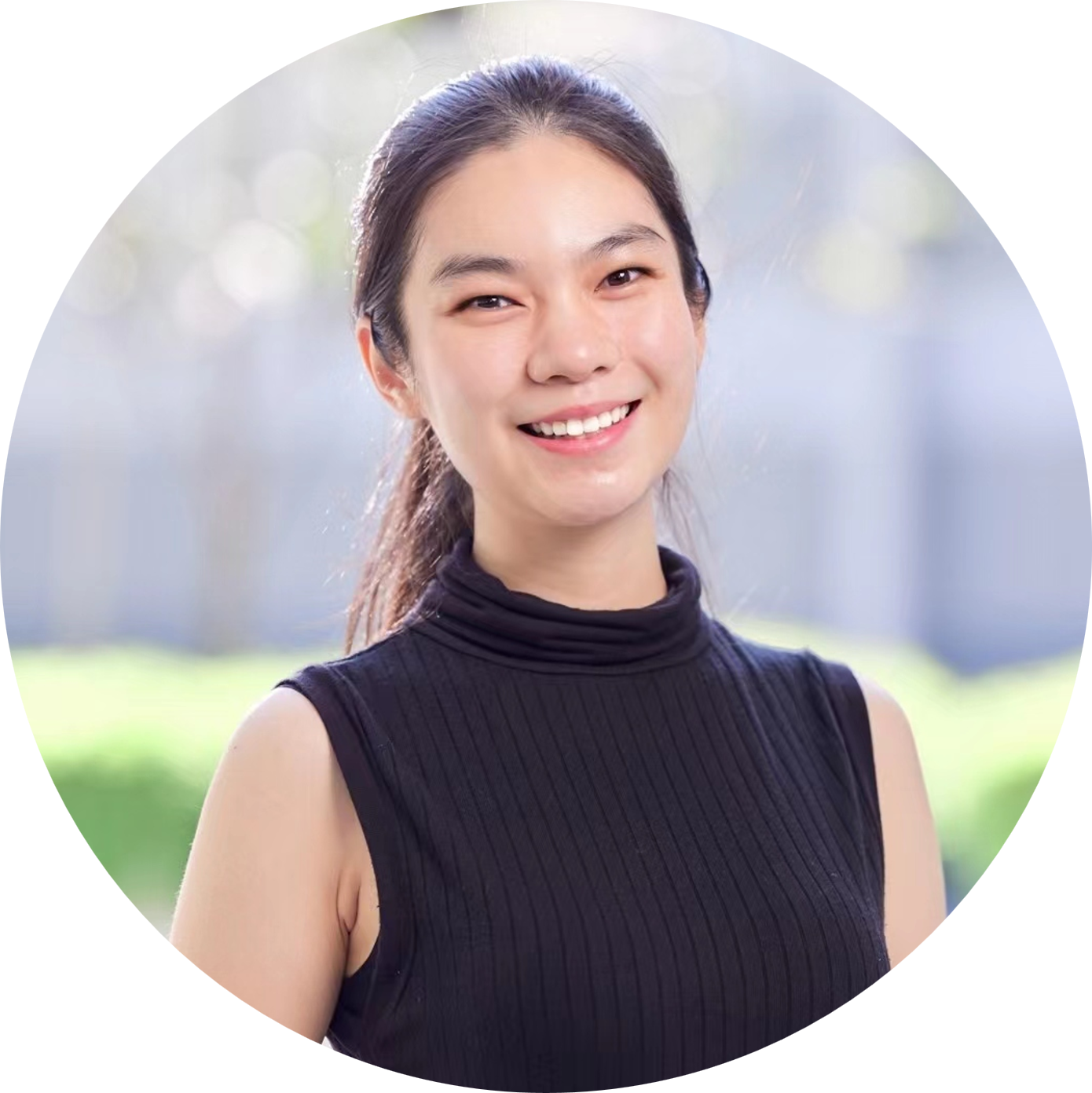
Dr. Liu Chunchun is a Lecturer at the Department of Mathematics, Faculty of Science. She is an experienced educator in multidisciplinary modules. Her teaching areas include economics (microeconomics, macroeconomics, econometrics, mathematical economics, international finance, game theory), mathematics, quantitative finance, and business. As an economist and applied mathematician, her research interests include applied game theory, applied microeconomic theory, applied mechanism design, industrial organization and platform economy.
SP2718D Introductory Mathematics with R (4 units)
Introductory Mathematics with R
Course description
This course presents a gentle, computational, intuition-focused introduction to R programming and foundational mathematics for data analytics. Using R, students learn essential concepts in calculus, linear algebra, and probability through hands-on computation, visualisation, and simulation, emphasising practical understanding instead of abstract theory. Topics include getting started with R; functions and graphing; basic differential and integral calculus; discrete-time dynamics; vectors and matrices; solving systems of linear equations; geometric interpretations such as projections; eigenvalues and eigenvectors; probability and conditional probability; Bayes’ Theorem; random variables and their key properties; commonly used discrete, continuous, and multivariate distributions; and the Central Limit Theorem.
Syllabus
1. Linear Algebra
- Matrix and vector arithmetic
- Special matrices
- Invertibility
- Solving linear system (in R)
- Least square solutions and projections
- Determinants
- Eigenanalysis
2. Calculus
a. Functions and graphs in R
- Scatterplots
- Graphs with 2 variables, contour plot
- Model fitting/curve fitting
b. Derivation and integration in R
- Single variable
- Multivariable
c. Solving differential equations and system of differential equations
d. Matrix and vector derivatives
3. Probability and Statistics
a. Basic concepts of probability and combinatorics
- Bayes’ theorem
b. Discrete random variable
- Expected value
- Variance
c. Discrete parametric distribution families
d. Continuous random variable
- Cumulative distribution functions
- Density functions
- Uniform, Normal, Exponential Gamma, Beta distributions
e. Multivariate distributions
- Discrete
- Continuous
- Covariance
- Correlation
- Independent random variables
- Normal distribution
- Central limit theorem
- Conditional probability
Assessment
- Class Participation: 20%
- Quizzes x3: 30%
- Homework x2: 20%
- Project: 30%
Prerequisites and preclusions (for NUS students):
Preclusions: If undertaking an Undergraduate Degree THEN (must not have completed 1 of ST2131/ST2334/ST3236/ST4238 at a grade of at least D, any Courses beginning with MA11 at a grade of at least D/any Courses beginning with MA131 at a grade of at least D/any Courses beginning with MA15 at a grade of at least D/any Courses beginning with MA2 at a grade of at least D/any Courses beginning with MA3 at a grade of at least D/any Courses beginning with MA4 at a grade of at least D)
Instructor(s):
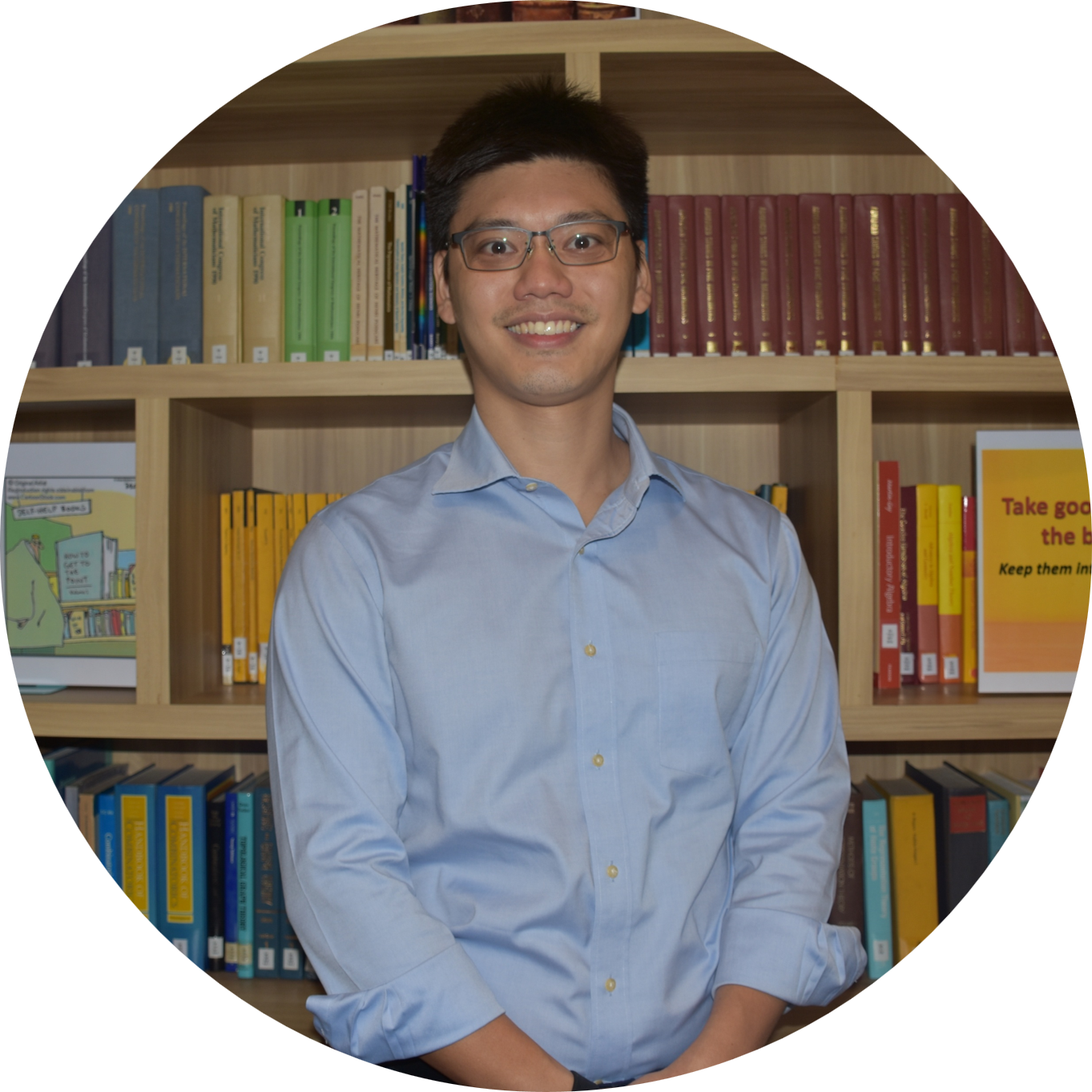
Dr Jonathon Teo Yi Han
Instructor’s Profile
Dr Teo completed his BSc and PhD degrees at the National University of Singapore. His research interests are in geometry and mathematical physics. He teaches large introductory and service mathematics courses for students in Mathematics, Computer Science, Engineering, and Data Science minors.
Dr Teo adopts a student-centred approach to teaching, designing interactive lessons that integrate real-time polling, collaborative problem-solving, and scaffolded discussion to make students’ thinking visible and to address misconceptions in class. He is actively involved in blended-learning innovation and peer-supported learning, mentoring undergraduate teaching partners and sharing effective practices within and beyond the university. He is a recipient of the Faculty Teaching Excellence Award and the NUS Annual Teaching Excellence Award, and is currently a Senior Lecturer in the Department of Mathematics, Faculty of Science, National University of Singapore.
SP2718F Data Science in Action: Financial Transactions and Payments (4 units)
Data Science in Action: Financial Transactions and Payments
Course description
This course introduces students to applied data science in the context of financial transactions and payments. Using large language models (LLMs) and low-code tools instead of programming, students will explore transaction data, identify risks such as fraud and declines, and generate insights into payment behaviours. Through a sequence of boot camps and a group project, participants will gain hands-on experience in data exploration, anomaly detection, applying basic machine learning (ML) methods, and communicating findings. Each boot camp is accompanied by guided mini-labs that consolidate learning and prepare students for the project phase, ensuring that concepts are reinforced before moving on.
Syllabus
Days 1–3: Data Science Boot Camp
- Introduction to data science workflows (EDA, visualisation, storytelling)
- Using LLMs for exploratory data analysis and summarisation
- Basics of supervised and unsupervised learning (classification & clustering)
- Consolidation mini-lab: Guided practice on a toy dataset using LLMs and a low-code ML tool
Days 4–6: Payments Boot Camp
- Payments ecosystem: banks, merchants, consumers, payment networks, regulators
- Anatomy of a transaction: key fields and simplified transaction structures (inspired by ISO standards)
- Risks and challenges: fraud, AML/KYC, declines
- Consolidation mini-lab: Apply anomaly-spotting methods to a curated transaction dataset using LLMs
Days 7–9: Data Science for Payments Boot Camp
- Translating payments problems into DS/ML workflows
- Feature ideation for payments data (velocity, merchant type, geography)
- Applying basic ML models (logistic regression, decision trees, clustering) with low-code ML tools
- Comparing insights: LLM-assisted vs. traditional ML approaches
- Ethics, fairness, and explainability in payments analytics
- Consolidation mini-lab: Fraud/risk case study with curated transactions, integrating DS and payments knowledge to prepare for the project
Days 10–15: Project / Hackathon
- Day 10: Project briefing, team formation, curated dataset release
- Days 11–12: Data exploration, feature design, initial models/insights
- Day 13: Mid-point pitch + peer/mentor feedback
- Day 14: Refinement, poster preparation, presentation prep
- Day 15: Final showcase: Poster session + group presentations to peers and panel
Assessment
Class Participation: 20%
Mini-Labs and Consolidation Exercises: 30%
Project/Group Project: 50%
Prerequisites and preclusions (for NUS students):
NIL
Instructor(s):
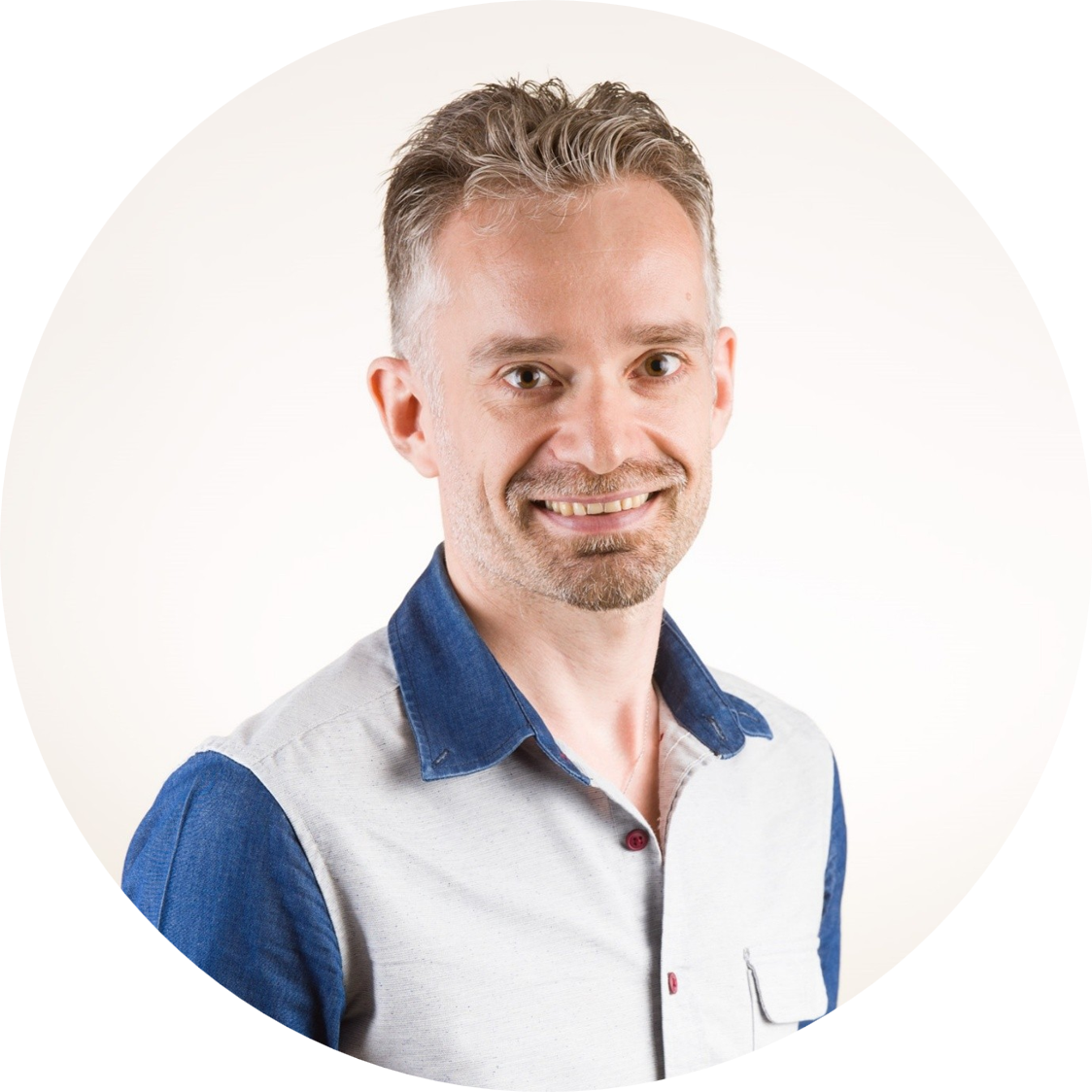
Dr Markus Kirchberg
Instructor’s Profile
Dr Markus Kirchberg is an Associate Professor in the Department of Statistics and Data Science at the National University of Singapore, where he also serves as Director of Continuing Education and Training (CET) for the Faculty of Science and Co-Director of the Data Analytics Consulting Centre (DACC).
He holds a PhD in Information Systems with a specialisation in distributed database systems and brings over 20 years of experience in applied research, technology-driven innovation, and production deployment. His career spans academia, industrial research and incubation labs, and startups.
Dr Kirchberg has designed and delivered commercially successful, data-driven solutions across multiple industries, including financial services (FinTech, RegTech, and SupTech), payments analytics and processing, healthcare, supply chain operations and financing, and transportation. He has spent a decade in financial services, including serving as Head of Visa Labs Asia Pacific, where he led technology innovation and incubation initiatives across the region.
His expertise spans the full innovation lifecycle (from problem framing and data strategy to scalable deployment) and includes cloud computing, large-scale data management, privacy-preserving analytics, machine learning, emerging technologies, and high-volume transaction processing. His teaching focuses on bridging data science theory with real-world, high-impact applications, particularly in the domain of financial transactions and payments.
DSA1361 Introductory Data Science with Python and Tableau (2 units)
Introductory Data Science with Python and Tableau
This course will provide participants with a foundation on what data science is and will focus on linking business questions to statistical techniques, and linking analytical results to business value. Participants will learn how to make sense of data using simple statistical techniques and how best to visualize data. Tableau for data visualisation and presentation, and Python for data analysis will be introduced in the class.
(Can be read together with DSA2362)
Course summary
This course will provide participants with a foundation on what data science is. There will be a focus on linking business questions to statistical techniques, and linking analytical results to business value. By the end of the course, participants will know how to make sense of data using simple statistical techniques and how best to visualize data. Two software that are very widely used in the data science industry will be introduced in this class: Tableau for data visualisation and presentation, and Python for data analysis.
Syllabus
1. Ideas for data visualisation. In this topic we cover some general recommendations when making visualisations. For instance, we discuss the use of colours, types of plots, good graphics and bad graphics.
2. Methods for Data Visualisation. We introduce Tableau; an intuitive software for creating multivariate interactive graphics.
3. Exploratory Data Analysis. We introduce data summaries,transformations, outlier inspection and other such tools to understand the data we have before we proceed to a deeper analysis.
4. Hypothesis testing. Tests based on linear models (t-tests, ANOVA) will be used to introduce the concepts of hypothesis testing and statistical logic.
5. Linear regression. We introduce the assumptions behind the linear regression model. We then demonstrate model fitting and residual analysis to fully comprehend the model and analysis.
6. Topics 3 to 6 will be covered in Python, through the use of Jupyter notebooks, which are widely used in the data science industry. This will enable students to easily pick up and use source code from repositories such as github and bitbucket. Thus, the course will also introduce git – the version control software that is used by almost all data scientists.
Preferred basic knowledge
NIL
Assessments
Quizzes/ Tests: 60% (3 quizzes, 20% each)
Project/ Group Project: 30%
Class Participation: 10%
Prerequisites and preclusions (for NUS students)
NIL
Instructor
Dr Chan Yiu Man
DSA2362 Decision Trees for Machine Learning and Data Analysis (2 units)
Decision Trees for Machine Learning and Data Analysis
Decision tree methods predict the value of a target variable by learning simple decision rules from the data. Use real data to compare the strengths and weaknesses of decision tree models with those obtained by linear and logistic regression and discriminant analysis. Possible applications include economic surveys, credit card data, vehicle crash tests data and precision medicine.
(Can be read together with DSA1361)
Course summary
Decision tree methods predict the value of a target variable by learning simple decision rules from the data. In this course, participants will learn decision tree methods and how to use software to build predictive models and score variables in terms of their importance. They will use real data to compare the strengths and weaknesses of decision tree models with those obtained by linear and logistic regression and discriminant analysis. Participants will also learn how to handle data with missing values without requiring prior imputation. Possible applications include economic surveys, credit card data, vehicle crash tests data and precision medicine.
Preferred basic knowledge
- Enrolled students should bring a laptop to use during class.
- Those without prior experience with using R (write functions, install and use packages) will be asked to take a few DataCamp R courses to pick up such necessary skills. DataCamp courses are online courses.
Assessments
Class Participation: 10%
Essay: 15%
Quizzes/Tests: 75% (3 tests, 25% each)
Prerequisites and preclusions
Prerequisite: DSA1361 or department approval (Can be read together with DSA1361)
Instructor
Prof Loh Wei-Yin
Instructor’s Profile
Prof Loh Wei-Yin has BSc. (Hons.) and MSc. degrees in mathematics from the University of Singapore and a PhD in statistics from the University of California, Berkeley, and is currently Professor of Statistics at the University of Wisconsin, Madison. He has been developing algorithms for classification and regression trees for thirty-five years and is the author of the GUIDE algorithm (www.stat.wisc.edu/~loh/guide.html). He has taught short and semester-long courses on the subject in the U.S., Hong Kong, Taiwan, South Korea, Malaysia, and Singapore. Professor Loh is a fellow of the American Statistical Association and the Institute of Mathematical Statistics and a consultant to government and industry. He is a recipient of the Benjamin Reynolds Award for teaching, the U.S. Army Wilks Award for statistics research and application, and an Outstanding Science Alumni Award from the National University of Singapore.
SP2718H Introduction to the world of plastics (4 units)
Introduction to the world of plastics
Course description
Plastic is a general term for many thermally moldable synthetic polymers that have become an integral part of our day-to-day life. This course introduces and explores the basic definitions, concepts related to polymer synthesis, characterization, additives used for processing, stability, applications, recycling, and ecological and societal impact of polymers. The course is directed towards beginners with a minimum or no background in polymer science and introduces a range of contemporary topics, such as how synthetic plastics are made by industries, some versatile properties of plastics, plastic pollution, recycling, sustainable polymers, and future challenges in the polymer industries. Students who complete this course will learn about different aspects of plastics used in our daily lives and their impact on the environment and human health.
Syllabus
Week 1
- Day 1 – Introduction about plastics, definitions of terms, names, and structure of common polymers etc.
- Day 2 – Synthetic methodologies (Radical polymerisation)
- Day 3 – Synthetic methodologies (Ionic polymerization)
- Day 4 – Synthetic methodologies (Condensation polymerization)
- Day 5 – Structure of polymers (characterization of polymers, amorphous and crystallinity of polymers etc.)
Week 2
- Day 6 – Glass – transition temperature, melting point, structure – property correlations of polymers
- Day 7 – Degradation or aging of polymers
- Day 8 – Processing and recycling of polymers
- Day 9 – Ecological impact of plastic waste
- Day 10 – Biopolymers
Week 3
- Day 11 – Circular and sustainable polymers
- Day 12 – Tutorial, Revision of concepts, Q&A.
- Day 13 – Group presentation
- Day 14 – Group presentation
- Day 15 – Final Class Test
Assessment
Unannounced class quizzes – 15 % (3 x 5%)
Group project – 30%
Presentation – 15%
Final exam – 40%
Prerequisites and preclusions (for NUS students):
None, some chemistry background will be beneficial.
Instructor(s):
Professor Suresh Valiyaveettil
Instructor’s Profile
To be updated.
FSC2101 Forensic Science (4 units)
Forensic Science
Course description
Crime is one feature of human behaviour that fascinates our community. How crimes impact our society and how crimes are investigated and solved in the Singapore context is the focus of the course. The course is designed to enable students to appreciate why and how crimes are committed, to understand how crimes are solved in Singapore using investigative, and the latest scientific and forensic techniques, and to learn the role of the major stakeholders in the Criminal Justice System. Experts from law, pharmacy, statistics, the Health Sciences Authority and the Singapore Police Force will cover topics related to forensic science.
Syllabus
Lecture 1: Introduction and Forensic Science in Singapore
Lecture 2: Forensic Science in Murder Cases
Lecture 3: Forensic Human Identification
Lecture 4: Forensic Analysis of Fingerprints
Lecture 5: Bloodstain Pattern Analysis
Lecture 6: Forensic Hair Analysis
Lecture 7: Illicit Drugs Analysis
Lecture 8: Firearms Examination
Lecture 9: Arson Investigation
Lecture 10: Crime Scene Investigation (CSI)
Lecture 11: Forensic Document Examination
Lecture 12: Evidence in Forensic Science
Assessment
- 8 Quizzes (80%)
- Class Participation and Attendance (20%)
Prerequisites and preclusions (for NUS students):
Preclusion: If undertaking an Undergraduate Degree then (must not have completed “LSM1306” at a grade of at least D)
Instructor(s):
Prof Stella Tan
Instructor’s Profile
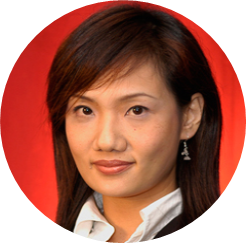
Prof Stella Tan is the Faculty’s Assistant Dean (Undergraduate Studies and Student Life) and Director of the Forensic Science Programme in NUS. She possesses postgraduate academic qualifications in law, forensic science and science. She was a Dean’s Lister at NUS’ Law Faculty and graduated top of her postgraduate class under the tutelage of Dr Henry Lee, a renowned forensic expert, in the United States of America.
In her previous appointment as Deputy Senior State Counsel, Attorney-General’s Chambers, Prof Tan was the lead prosecutor for a wide range of cases, including murder, sexual assault and drugs. She also held the appointment of Director (Prosecution and Legal Policy) at the Health Sciences Authority, where she provided legal advice and practical training to forensic experts.
Prof Tan represents Singapore at the International Standards for Forensic Sciences. She is also the Principal Investigator of the NUS Forensic Science Laboratory, where her collaborators include the Massachusetts Institute of Technology, Singapore Police Force and Central Narcotics Bureau. She has co-authored papers on stem cell research, therapeutic cloning and germline modification for the National Bioethics Advisory Committee. She also delivers forensic science lectures at the Singapore Judicial College. Her interest in nurturing students won her consecutive Dean’s Meritorious Teaching Awards.
FSC4203 Forensic Toxicology and Poisons (4 units)
Forensic Toxicology and Poisons
Ever wondered how much of the coffee you consumed is subsequently metabolised? Find out using forensic toxicology! This multidisciplinary course aims to support medical and legal investigations into the cause of death, poisoning and adverse responses to substances. Drawing from foundational principles in toxicokinetics, participants will be able to: study the physicochemical properties of substances and their effect(s) on the host; and consider the toxicological outcomes of exposure due to the unique handling of substances by organ systems. The lectures will conclude with real-life applications led by practitioners.
Preferred basic knowledge
Forensic science, pharmacy, pharmacology, law and/or chemistry
Assessments
Lab report: 10 %
Class participation and attendance: 10 %
Moot Court: 30%
Oral viva: 50 %
Prerequisites and preclusions
Prerequisite: FSC2101/LSM1306 (Forensic Science) or department approval*
Preclusion: LSM4211 or SP4263
*Non-NUS students may write to us via scisap@nus.edu.sg to check if they meet the pre-requisites.
Instructors
Prof Stella Tan
Prof Ho Han Kiat
Dr Shawn Lee
Instructor’s Profile
Prof Stella Tan is the Faculty’s Assistant Dean (Undergraduate Studies and Student Life) and Director of the Forensic Science Programme in NUS. She possesses postgraduate academic qualifications in law, forensic science and science. She was a Dean’s Lister at NUS’ Law Faculty and graduated top of her postgraduate class under the tutelage of Dr Henry Lee, a renowned forensic expert, in the United States of America.
In her previous appointment as Deputy Senior State Counsel, Attorney-General’s Chambers, Prof Tan was the lead prosecutor for a wide range of cases, including murder, sexual assault and drugs. She also held the appointment of Director (Prosecution and Legal Policy) at the Health Sciences Authority, where she provided legal advice and practical training to forensic experts.
Prof Tan represents Singapore at the International Standards for Forensic Sciences. She is also the Principal Investigator of the NUS Forensic Science Laboratory, where her collaborators include the Massachusetts Institute of Technology, Singapore Police Force and Central Narcotics Bureau. She has co-authored papers on stem cell research, therapeutic cloning and germline modification for the National Bioethics Advisory Committee. She also delivers forensic science lectures at the Singapore Judicial College. Her interest in nurturing students won her consecutive Dean’s Meritorious Teaching Awards.
Instructor’s Profile
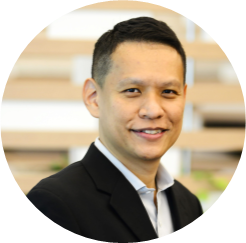
Prof Ho Han Kiat is currently an Associate Professor at NUS’ Department of Pharmacy and Deputy Head of the Department.
He received his B.Sc. (Hons) in Pharmacy from NUS in 2000, and subsequently his Ph.D. in Medicinal Chemistry from the University of Washington in 2005, under a scholarship from the Agency of Science, Technology and Research (A*STAR).
After completing a three-year postdoctoral stint at the Institute of Medical Biology, A*STAR, he joined NUS as a faculty member, building his own research programme focusing on drug-induced liver toxicity, as well as exploring new drug targets for liver cancer and liver fibrosis. In addition, he directs a toxicology division within a newly founded Drug Development Unit in NUS.
Prof Ho holds a joint appointment in the University Scholars Programme and is an elected fellow of the NUS Teaching Academy. He has published about 80 papers in internationally recognised journals and has won multiple faculty- and university-level teaching excellence awards.
Instructor’s Profile
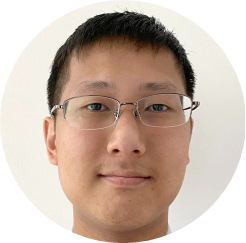
Dr Shawn Lee is a lecturer at the Department of Biological Sciences. He graduated with a B.Sc (Hons) in Life Sciences, with a specialization in Molecular and Cell Biology, and a minor in Forensic Science. He did his Ph.D at the Institute of Molecular and Cell Biology, A*STAR, with a focus on RNA Biology and viruses. Throughout this time, he remained active as a Teaching Assistant in various Forensic Science modules. In addition to conducting lessons for undergraduate and master students in Forensic Science, he is also currently active in the Forensic Science Research Laboratory, with interests in Forensic Entomology and Forensic Toxicology.
FSC4210 Experimental Forensic Science: From Data to Discovery (4 units)
Experimental Forensic Science: From Data to Discovery
Course description
This course offers an immersive research experience in forensic science, where students design and conduct their own experiments from start to finish. Statistical methods are taught in direct connection with students’ self-generated data, ensuring that concepts such as sampling, data visualisation, descriptive statistics, estimation, hypothesis testing, and regression are applied correctly and contextually meaningful. Through iterative experimentation, validation, and analyses, students gain hands-on expertise in both research design and critical data interpretation. The course culminates in professional scientific communication, equipping students with the skills to present rigorous, evidence-based findings to forensic and academic audiences.
Syllabus
Unit 1: Framing Forensic Research Questions & Exploring Data
Students are introduced to the CURE framework and formulate researchable forensic questions. They also learn basic descriptive statistics to summarise and explore small datasets.
Unit 2: Experimental Design in Forensic Science
Students design experiments with clear variables, controls, and replicates. Additionally, students will be taught basic experimental data collection including randomised controlled experiments and observational studies. Concepts of sampling, data distributions, error rates, biasness and other experimental errors will be introduced.
Unit 3: Method Validation and Reliability
The principles of sensitivity, specificity, and reproducibility are introduced. Students conduct a mini-validation and analyse baseline results using descriptive statistics and error estimates.
Unit 4: Data Types and Visualisation
Students distinguish between categorical and continuous data and consider measurement error. They present their validation datasets using visual tools such as histograms, boxplots, and scatterplots.
Unit 5: Hypothesis Testing I – Parametric Methods
Students learn how to test hypotheses using their own experimental data. t-tests and ANOVA are applied with attention to underlying assumptions.
Unit 6: Hypothesis Testing II – Non-parametric Methods
Students explore non-parametric methods as alternatives when assumptions fail. Their data is re-analysed using chi-square and rank-based tests to compare robustness.
Unit 7: Research Proposal and Peer Review
Students refine their projects into formal proposals that incorporate pilot data and statistical justifications. Peer feedback is used to strengthen design and methodology.
Unit 8: Experimental Execution I
Students begin conducting their main experiments with systematic data collection. Statistical planning is applied through replication strategies and randomisation.
Unit 9: Experimental Execution II
Students continue experimentation and troubleshoot methods while collecting replicates. Early trend analysis guides adjustments to ongoing research.
Unit 10: Regression and Correlation Analysis
Students investigate relationships between variables in their data. Correlation and regression techniques are applied to model trends and predictions.
Unit 11: Advanced Data Analysis and Interpretation
Students explore advanced methods such as logistic regression, likelihood ratios, and Bayesian reasoning. These approaches are used to critically interpret their own results.
Unit 12: Scientific Writing and Communication
Students learn how to present data clearly in written form, emphasising reproducibility and ethical reporting. Drafts of Results and Discussion are developed with attention to statistical clarity.
Unit 13: Final Research Dissemination and Reflection
Students present their findings through oral or poster formats and submit a final report. They reflect on the research process and how experimentation advances forensic science.
Assessment
Class Participation: 10%
Essays: 25%
Project/Group Project: 25%
Group Presentation: 20%
Individual Reflection: 10%
Peer Evaluation + Lab Notebook: 10%
Prerequisites and preclusions:
Prerequisite: FSC2101/LSM1306 (Forensic Science) or department approval*
Preclusion: LSM4211 or SP4263
*Non-NUS students may write to us via scisap@nus.edu.sg to check if they meet the pre-requisites.
Instructor(s):
Dr Lim Xin Xiang, A/P Stella Tan Wei Ling, Prof Choi Kwok Pui
Instructor’s Profile
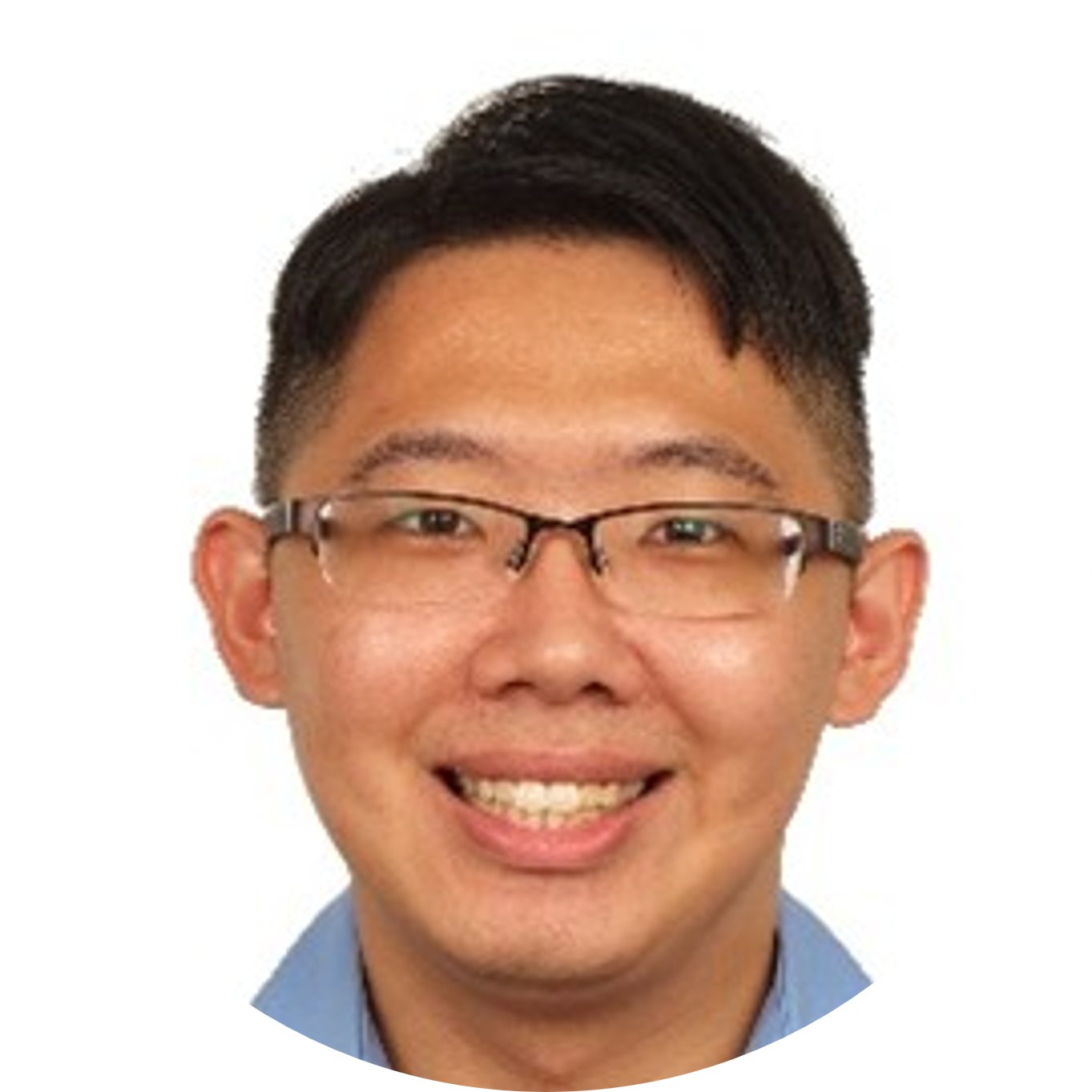
Dr Xin Xiang is a Lecturer in Forensic Science in the Department of Biological Sciences at the National University of Singapore (NUS). His teaching and research focus on forensic science, criminalistics, and the application of scientific evidence in legal contexts. He is actively involved in conducting forensic science research and in mentoring students through research-driven learning, guiding them in experimental design, data interpretation, and the articulation of forensic evidence for professional and courtroom settings.
Xin Xiang obtained his Bachelor of Science (First Class Honours) and PhD in Biology from NUS. Since joining NUS as a lecturer, he has led and supervised student research projects across diverse areas of forensic science, including forensic genetics, proteomics, chemistry, and interdisciplinary forensic applications. He is committed to developing students as confident, research-ready forensic scientists through authentic inquiry, case-based learning, and close mentorship.
Instructor’s Profile
Prof Stella Tan is the Faculty’s Assistant Dean (Undergraduate Studies and Student Life) and Director of the Forensic Science Programme in NUS. She possesses postgraduate academic qualifications in law, forensic science and science. She was a Dean’s Lister at NUS’ Law Faculty and graduated top of her postgraduate class under the tutelage of Dr Henry Lee, a renowned forensic expert, in the United States of America.
In her previous appointment as Deputy Senior State Counsel, Attorney-General’s Chambers, Prof Tan was the lead prosecutor for a wide range of cases, including murder, sexual assault and drugs. She also held the appointment of Director (Prosecution and Legal Policy) at the Health Sciences Authority, where she provided legal advice and practical training to forensic experts.
Prof Tan represents Singapore at the International Standards for Forensic Sciences. She is also the Principal Investigator of the NUS Forensic Science Laboratory, where her collaborators include the Massachusetts Institute of Technology, Singapore Police Force and Central Narcotics Bureau. She has co-authored papers on stem cell research, therapeutic cloning and germline modification for the National Bioethics Advisory Committee. She also delivers forensic science lectures at the Singapore Judicial College. Her interest in nurturing students won her consecutive Dean’s Meritorious Teaching Awards.
Instructor’s Profile
Dr. Kwok Pui Choi is a Professor of Statistics and Data Science in NUS. He obtained his BSc from the University of Hong Kong and his MSc and PhD in Mathematics from the University of Illinois at Urbana–Champaign. He specializes in probability and statistics and their applications, including forensic science and computational biology. His work in forensic science applies statistical and probabilistic methods to the design of experiments, estimation and prediction, hypothesis testing, and uncertainty quantification.
He has co-taught FSC42101, “Articulating Probability and Statistics in Court”, for many years with Dr Xin Xiang Lim and Prof Stella Tan.