AI for Science Gym
October 23, 2026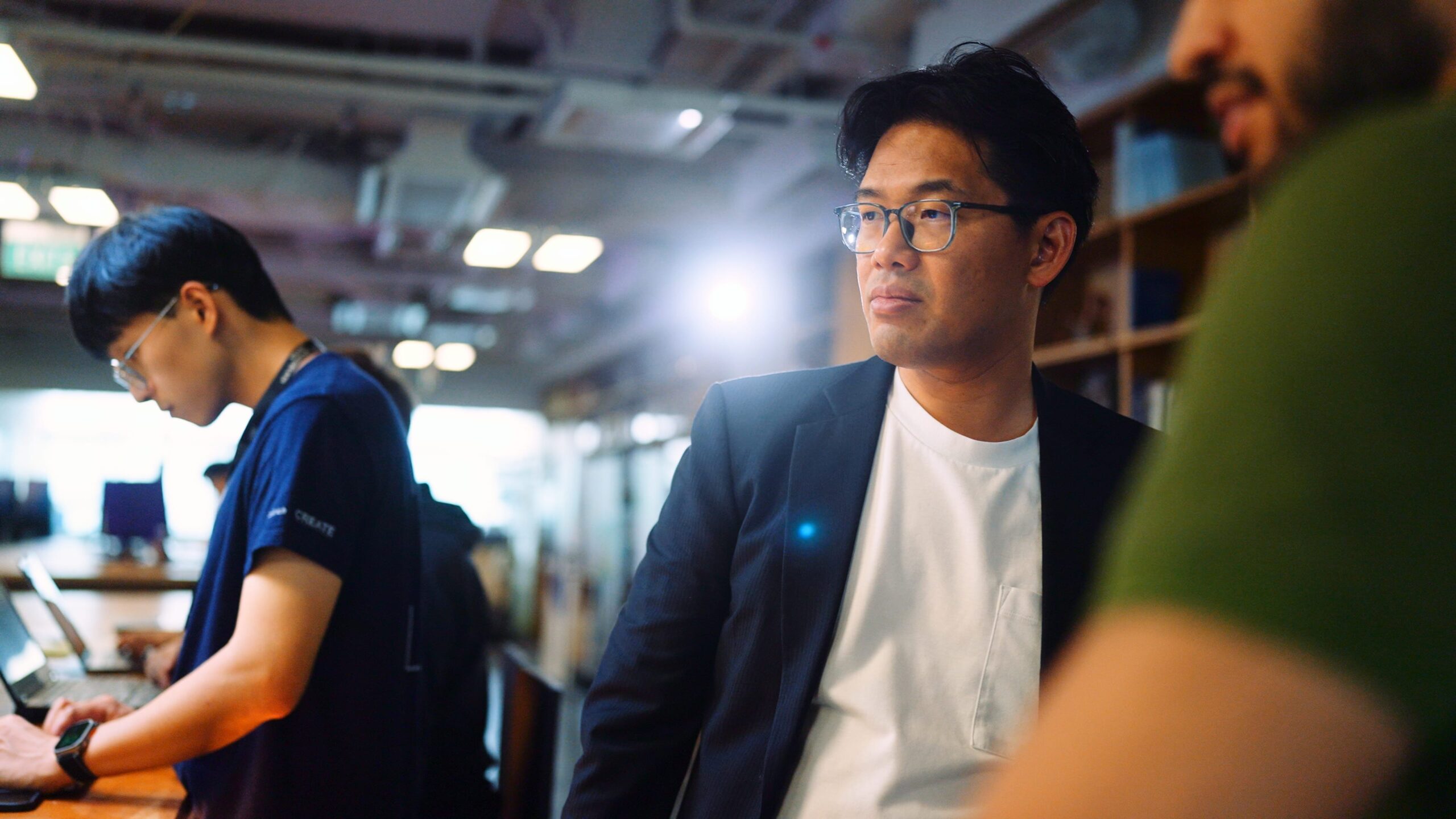
AI for Science Gym
Assoc Prof Duane Loh, the Faculty of Science’s first Vice Dean for AI Enablement, wants students and researchers to use more AI, on one condition: they must still do the work.
Students in AIS5104, a seminar course taught by Assoc Prof Duane Loh, submit questions through PollEverywhere during a visiting speaker’s Q&A. The queries on the screen look impressive. Then each student asks the speaker their question in person, without reading off the AI’s wording.
Those who understood the material ask without looking. Those who copied get stuck.
For Assoc Prof Loh, that moment captures the promise and the risk of AI in science. Getting the promise without the risk is now his task across the whole faculty.
He has been appointed its new Vice Dean for AI Enablement, the first time the Faculty has such a portfolio, to promote the use of AI in education and research. For research, that means using AI to speed up discovery and open up questions scientists could not ask before.
His own work shows what is possible. AI lets him learn new fields quickly and move between them, and he wants students to learn the same way, without being locked into a narrow specialisation. His point is a simple distinction: AI should be treated as equipment, not as an oracle. “The AI is like gym equipment. Excellent equipment, but the student still has to do the workout,” he says.
That idea guides his teaching. Students can use AI freely to explore problems during coursework, but exams and in-class quizzes are closed to it. “If you outsource the thinking, you never build the language,” he explains.
Those who use AI well, he has found, spend as much time on their work as students writing from scratch, if not more. They are not saving effort but putting it into understanding.
The same thinking drives the AI for Science Gym, a two-year pilot funded by NUS and NRF that breaks the scientific method into four training spaces. The Instrumentation Gym holds shared, carefully recorded data. On top of it, the Exercise Gym builds problem-solving skills with AI as a partner. The Discovery Gym brings researchers together to test ideas, while the Expression Gym trains people to translate between domains and languages.
The Gym offers scaffolds that spare students months of boilerplate code, so they can spot patterns in data sooner. That matters because discoveries lie in the gaps between what our models predict and what the world does.
None of this makes the teacher less important. AI can deliver material faster than any lecturer, but he believes the part that matters most still comes from people. He says,
“Scientific curiosity is contagious and we learn it from other people.”
If the pilot works, the Gym could become a blueprint for other communities training scientists fluent in both AI and their own field.
“This is the wager: that a human-centric scientific community trained on AI can turn AI’s arrival into the beginning of a wiser age.”