Young minds, big ideas
October 26, 2026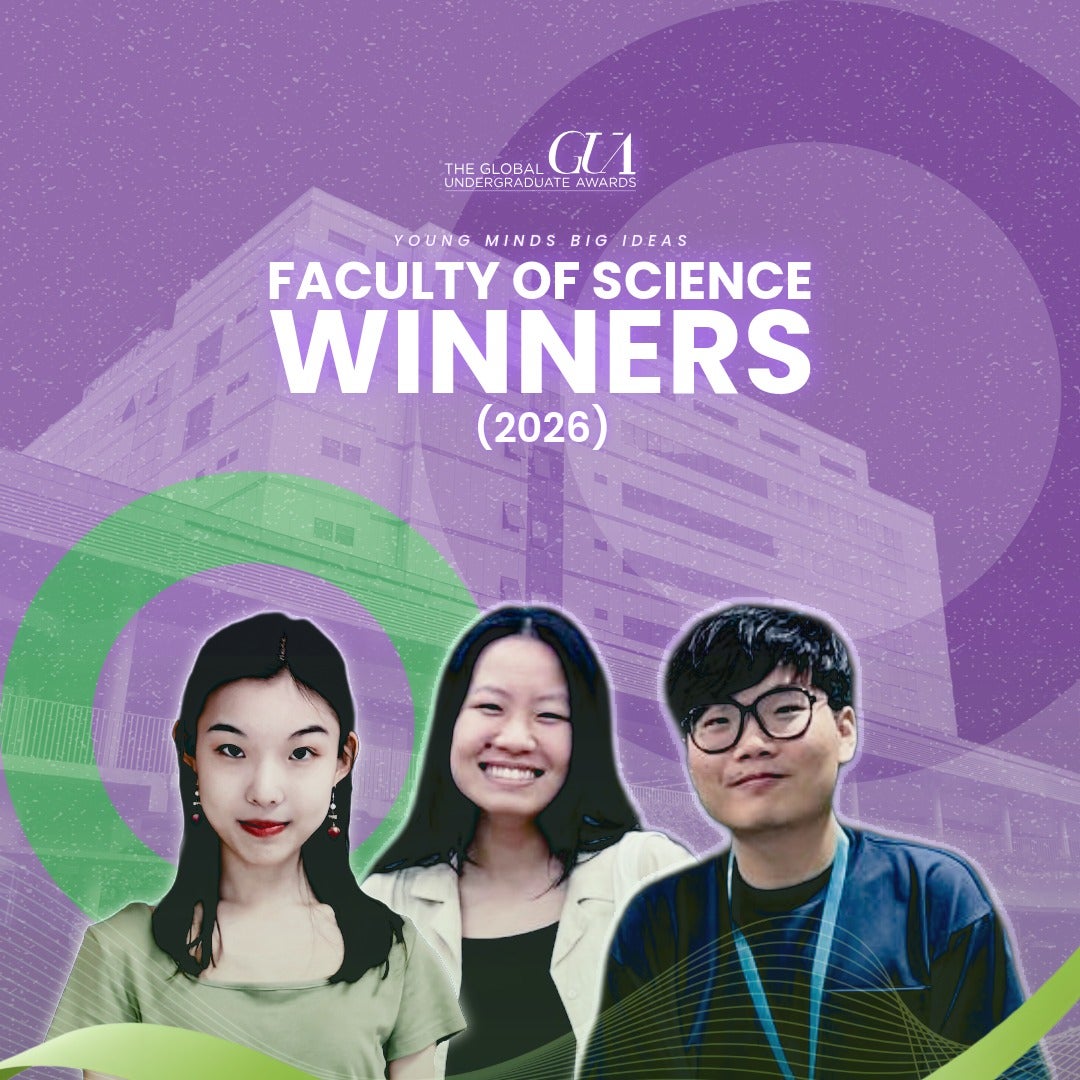
Our undergraduate researchers show that meaningful contributions to science can begin long before an established research career takes shape. For three College of Humanities and Sciences students recognised in the Global Undergraduate Awards (2026) – an international programme celebrating outstanding undergraduate research across disciplines – the honour affirms more than academic excellence. It celebrates the curiosity to ask difficult questions and the capacity of undergraduate research to challenge established thinking and create new knowledge.

The hidden world beneath mangroves
Janebelle Koh, Major in Environmental Studies
“This project taught me a rigour I’ll carry with me throughout my career.”
Mangroves protect coastlines and store carbon. Yet beneath their muddy surface lies a largely overlooked community of small invertebrates known as macrofauna, such as snails, worms and tiny crabs, that are vital to ecosystem health. Janebelle first encountered this rich ecological world through fieldwork experiences and volunteering at conservation activities, which then inspired her Final Year Project on how sediment conditions and root structures shape these communities.
Across various mangrove sites in Singapore, she collected sediment cores, then spent months processing root and sediment samples and sorting macrofauna in the lab. Her findings revealed distinct communities at each site, with fine root biomass emerging as a key predictor of macrofaunal community composition.
Awarded the Global Undergraduate Awards’ Thomas Clarkson Gold Medal, Janebelle’s research offers a fresh perspective on mangrove restoration. By identifying fine root biomass as a potential indicator of ecosystem recovery, her research could guide future restoration practices. She also plans to publish a species checklist of the macrofauna, creating a baseline reference for other researchers.
New insights into nerve cell damage
Wesley Leong, Major in Life Sciences
“I’m grateful to have contributed to work that might eventually help us better understand and treat human disease.”
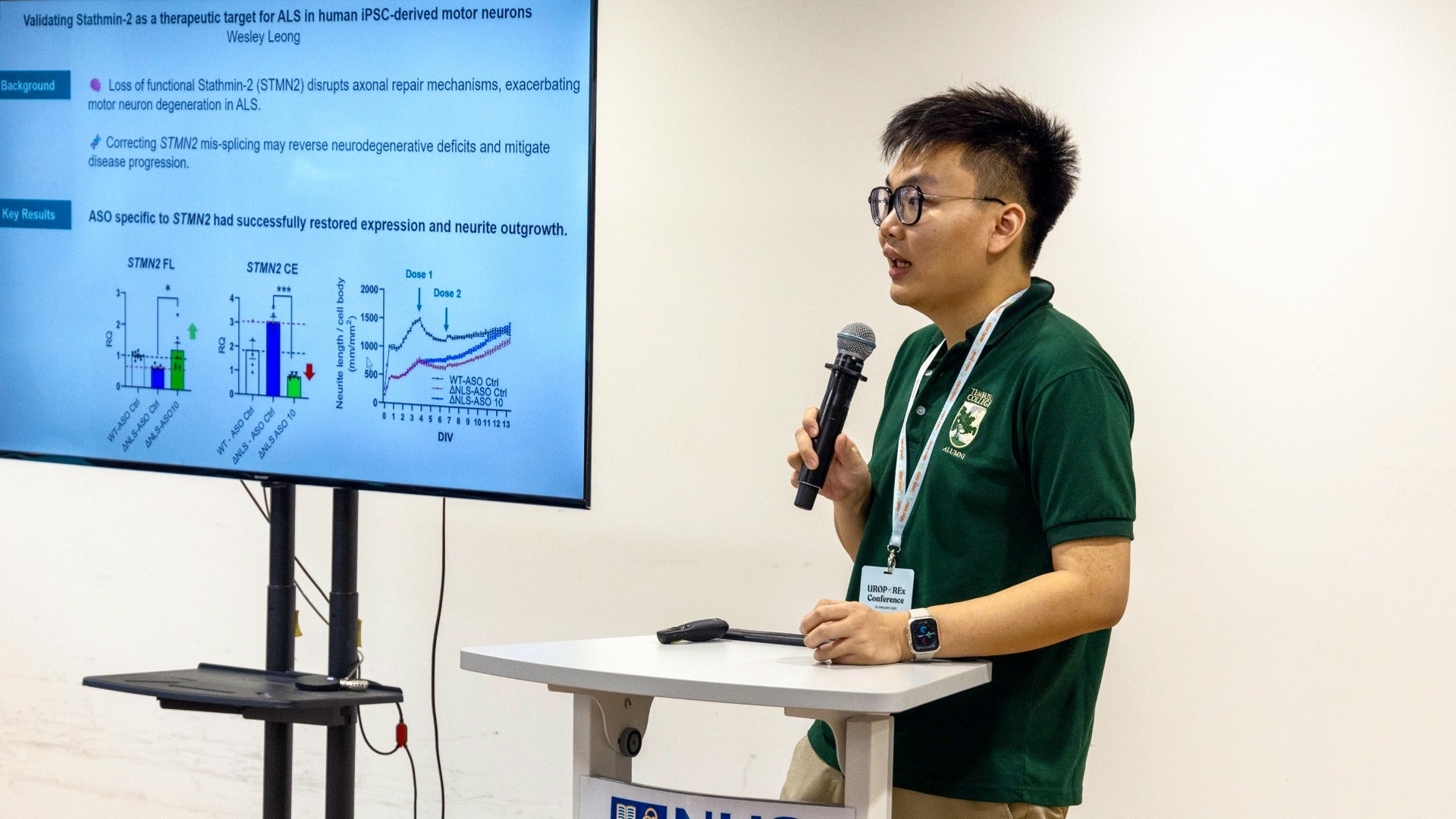
In amyotrophic lateral sclerosis (ALS), the nerve cells responsible for controlling voluntary movement progressively deteriorate, causing muscle weakness and increasing loss of mobility. TDP-43 is a protein that helps these nerve cells function normally. In most cases of ALS, however, it becomes depleted from the cell nucleus and accumulates abnormally elsewhere in the cell.
During the summer following his first year at university, Wesley undertook an external Undergraduate Research Opportunities Programme in Science (UROPS) project at MSD. The research team demonstrated that the loss of nuclear TDP-43 alone disrupts the processing of genetic instructions and impairs nerve growth. More promisingly, an experimental RNA-targeted treatment corrected a key molecular defect and rescued impaired nerve growth, suggesting a potential opportunity to intervene before irreversible nerve damage occurs in ALS. The findings were also recently published in Communications Biology.
Old theorems, new discoveries
Zihe (Julia) Zhang, Major in Mathematics, Minors in German Language Studies, Chinese Language and Asian Studies
“I felt the passion for this work at first sight. The award reassures me that the effort was worth it.”
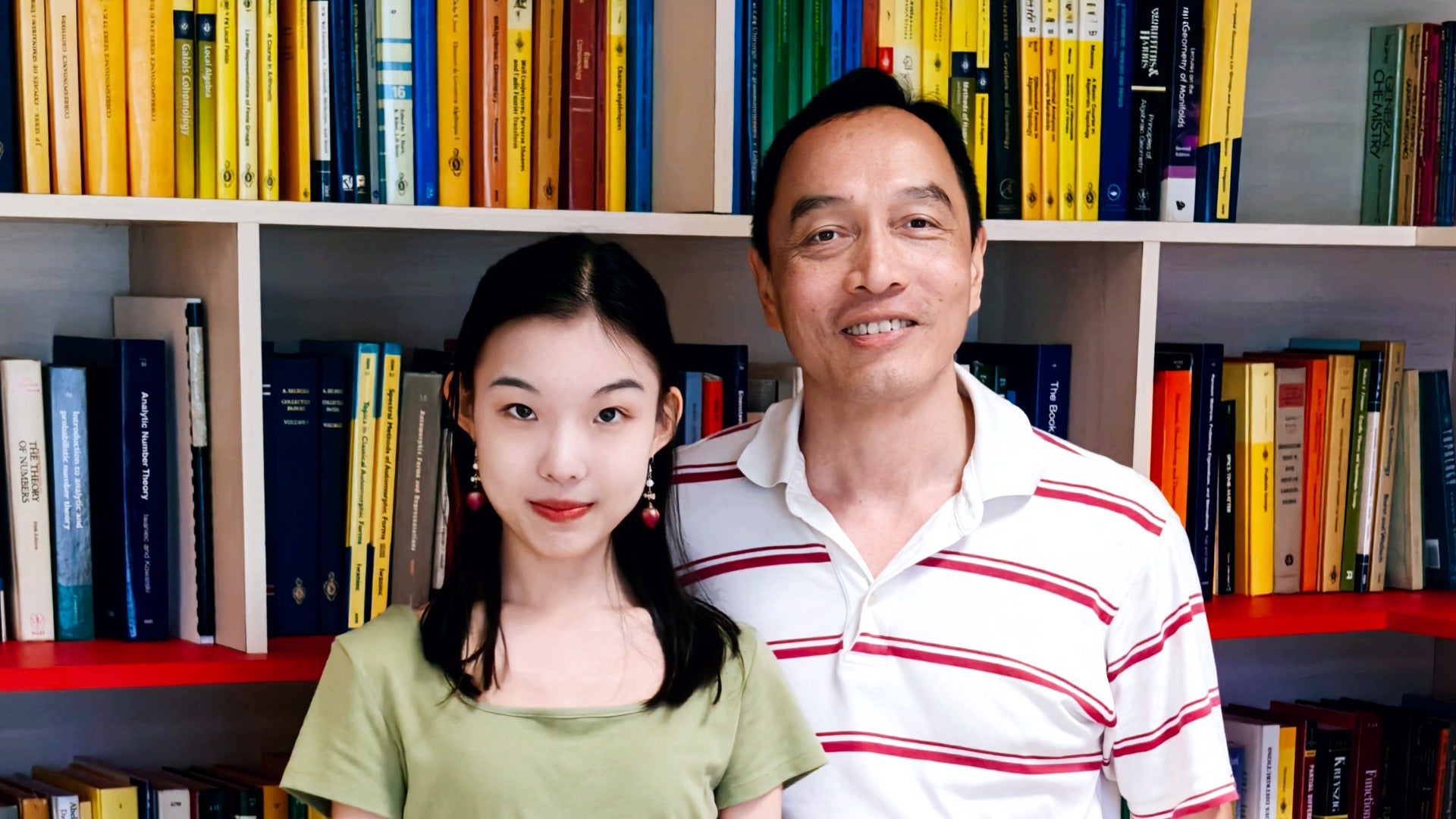
A century-old mathematical theorem still holds valuable insights into one of number theory’s classical problems: identifying quadratic number fields whose rings of integers have unique factorisation. Intrigued by Rabinovitch’s 1912 theorem, originally presented in German, Julia set out to make its ideas more accessible to modern mathematicians.
Going beyond a new exposition with detailed proofs, she revisited its mathematical foundations, filled gaps in the original proof and developed explicit constructions of its key techniques. Building on these insights, she substantially reduced the number of primality checks needed to apply the theorem. Her work shows how revisiting historical mathematics through a contemporary lens can yield interesting alternative proofs of established results – and open new avenues for exploration.