

From frustration to innovation
September 01, 2026
Image credit: The Straits Times
Turning his pain point into an innovation
For many jobseekers, the hardest part of receiving a job offer is not deciding whether to accept it. It is figuring out if the offer is fair.
For Data Science and Analytics alumnus Luqman Naqib, that lack of clarity became personal during his own job search after graduation. Friends offered salary advice, but their experiences were often anecdotal and difficult to compare. Even platforms such as Glassdoor could be outdated or incomplete.
Rather than add another opinion to the conversation, he decided to build a solution. “I wanted to create a tool that made the information easier to access, more useful and less dependent on hearsay,” he says.
That idea became Lowball, a salary-benchmarking tool designed to give jobseekers a clearer reference point when evaluating an offer.
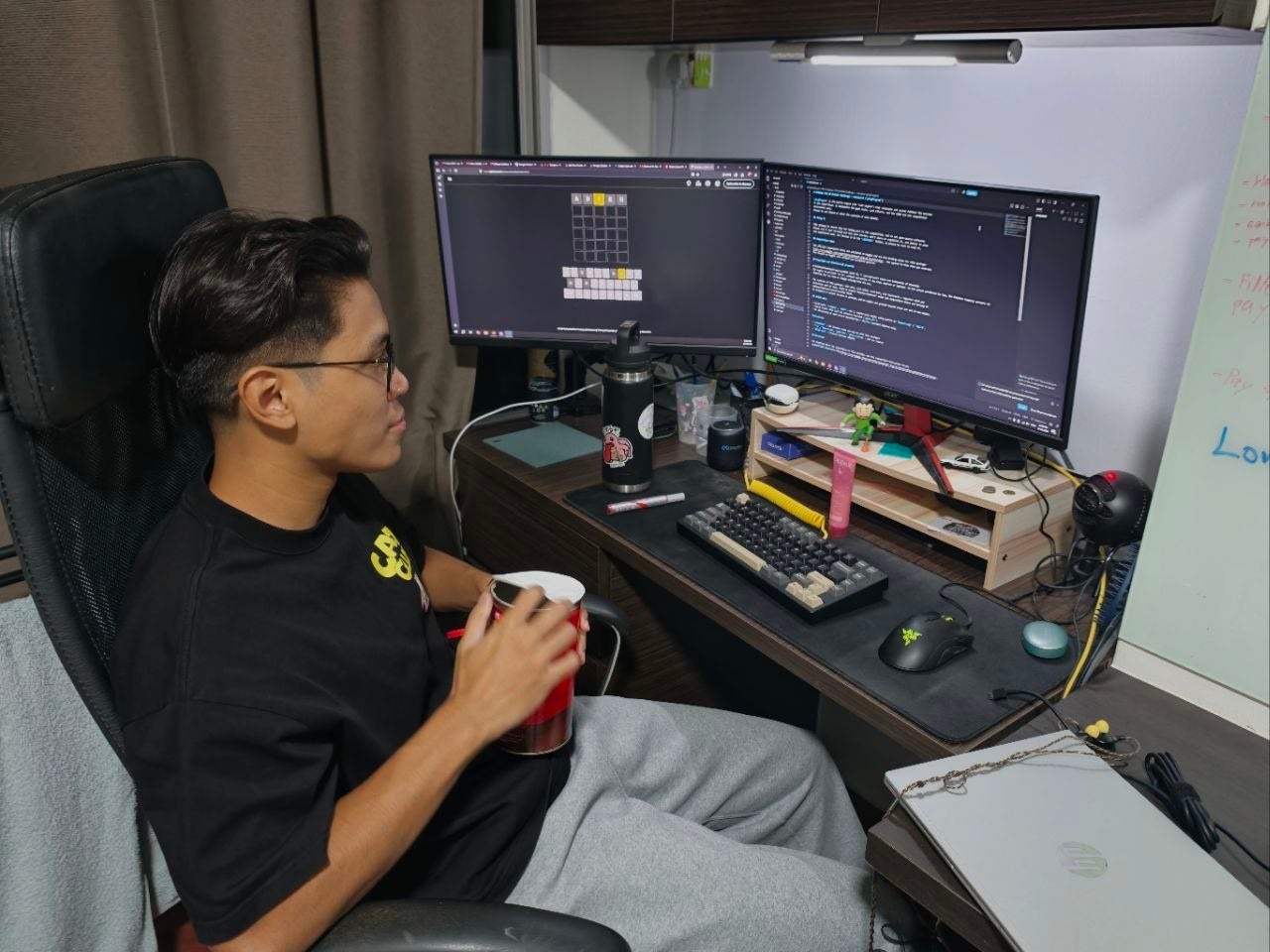
Creating Lowball
Lowball was built around a simple idea: jobseekers should be able to assess an offer by comparing it with roles that are similar, rather than relying on job titles alone or sifting through listings manually.
The platform uses semantic similarity to identify roles with comparable responsibilities based on their job descriptions. This distinction matters. A job title tells only part of the story and can be misleading. Two roles with similar titles can have very different responsibilities, while two differently titled positions can involve similar work.
By organising these comparisons, Lowball gives users a more structured way to assess an offer against relevant market information. The aim is not to overwhelm jobseekers with more data, but to help them focus on the data that matters.
A crash course in building through trial and error
Building Lowball gave Luqman the opportunity to apply his data skills in a setting far removed from the classroom.
Some of his most relevant technical experience came from previous internships, where he encountered retrieval-augmented generation systems and embeddings. That exposure helped him understand how semantic representations could support search and similarity-based matching.
Yet Luqman soon realised that technology alone would not determine if Lowball was useful. “Empathy and product thinking are just as important,” he says. “Building an innovation like Lowball is not only about the data. It is also about understanding users’ frustrations when trying to benchmark a salary offer.”
That insight shaped the product as much as its underlying technology, reinforcing a practical lesson in data science: real-world information is rarely clean or perfectly structured. Job postings vary in wording, detail and terminology; titles can be ambiguous, descriptions can overlap and salary information can be inconsistent. For all its technical sophistication, the system would have limited value, Luqman says, if users could not understand what it was telling them or why a comparison was relevant.
“Classroom problems are useful for building foundations but real-world applications compel you to think about practicality, ambiguity and user experience,” he says.
The experience also taught Luqman the value of restraint. In an era when Artificial Intelligence (AI) systems can surface enormous amounts of information, more data does not make a better product. “Choosing what matters and deciding how to implement it well – that was the guiding principle behind design choices in Lowball.”
Breaking, fixing, learning
That same discipline shaped how he approached building Lowball. By keeping the problem tightly defined rather than attempting to create an all-encompassing career platform, Luqman was able to move Lowball from idea to launch relatively quickly.
The process was highly iterative. He did not begin with a professional background in backend or frontend development, so much of the work involved learning through experimentation.
“I learned by doing,” he says. “A lot of the process involved trying things, breaking them, watching them fail, fixing them and repeating that cycle until it worked.”
The experience reinforced a lesson that extends beyond software development. Technical ability can get a project moving, but persistence is often what carries it across the finish line.
The more difficult challenge, however, was not simply getting Lowball to work. It was deciding what the product should actually do. Technically, Luqman had to determine how to make the system useful without overengineering it. From a product perspective, he had to decide which information users needed and how to present it clearly.
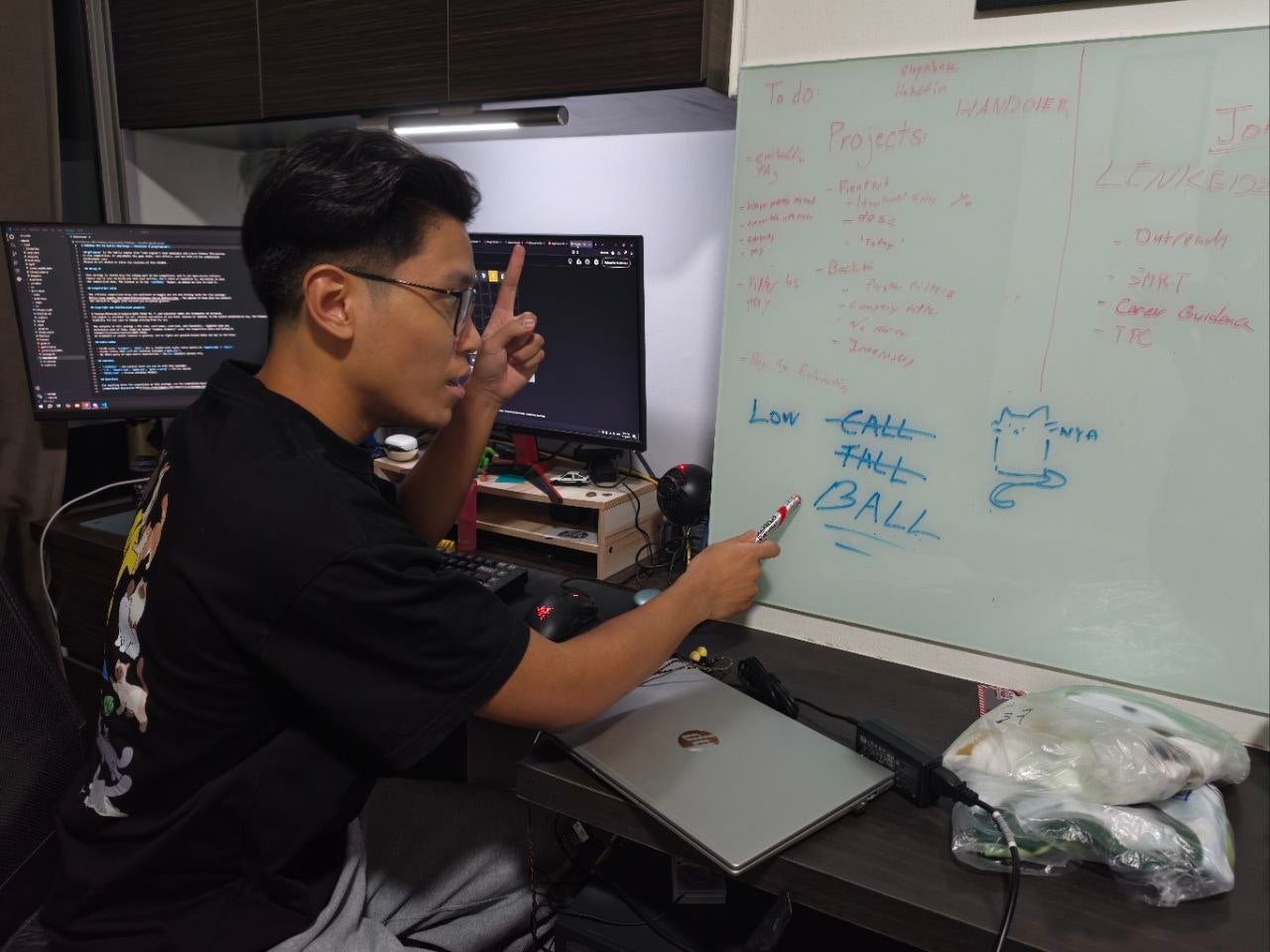
More clarity for career decisions
The questions Lowball addresses are rooted in a wider challenge: salary transparency. Conversations about compensation can feel uncomfortable and many are reluctant to ask how much others earn or disclose what they are paid. As a result, jobseekers may have little information when evaluating an offer.
Lowball is intended to chip away at that opacity. Its goal is not to provide a definitive answer to what someone should earn. Instead, it aims to make publicly available information easier to access, organise and compare – giving users another reference point when making career decisions.
Luqman is careful not to overstate the platform’s impact. But he believes there is value in making information visible. “My hope is that the tool helps democratise access to salary information and in a small way, helps keep companies more accountable too.”
For now, Lowball is still evolving. There are technical improvements to explore, including potential refinements to its embedding model. There has also been interest in benchmarking against Ministry of Manpower data, Luqman says, although incorporating that would require careful consideration on how the information is interpreted and presented.
Luqman’s immediate priority is more modest: refine the product, improve its usefulness and build something that can stand the test of time.
He is also thinking about how AI could shape salary benchmarking and career planning. The most valuable tools, he believes, will not simply surface more information. They will make sense of it – understanding context, drawing meaningful comparisons and cutting through uncertainty without overwhelming the user.
Over time, that could evolve into more personalised career guidance. But the underlying principle remains the same: helping people make better decisions when the information in front of them is complex or incomplete.
From pain point to opportunity
Lowball has also clarified his interest in entrepreneurship. For Luqman, a pain point sparked a product idea but that was only the beginning. “I aspire to build and own something that creates impact for others,” he says.
Lowball has given him a glimpse of what it takes to turn that aspiration into reality – and shown him that building something useful involves far more than identifying a problem and developing a solution. Creating a public-facing tool requires constant judgement, Luqman says: what to build, what to leave out, how much complexity users can tolerate and which trade-offs are worth making.
Beyond salary benchmarking
That mindset is already evident in Luqman’s professional work.
As an AI Engineer at Oncoshot, a cancer clinical trial matchmaking startup, he applies the same approach to another high-stakes challenge: helping clinicians and clinical researchers make better-informed decisions. His work focuses on addressing specific operational pain points, improving workflow efficiency and building AI systems that turn complex information into actionable insights.
The context may be different from salary benchmarking but the underlying philosophy is similar. Whether the problem is an opaque job market or voluminous, messy clinical information, the challenge is not simply to collect more data. It is to make that information understandable, relevant and useful to those who have to act on it.
Lowball has also reinforced a lesson he now carries into his job: good solutions sit at the intersection of technical expertise, empathy and practical problem-solving. “The ability to define and understand the problem, not just build the technology, is what turns an idea into a useful innovation,” he says.
Check out Lowball at https://sglowball.vercel.app/