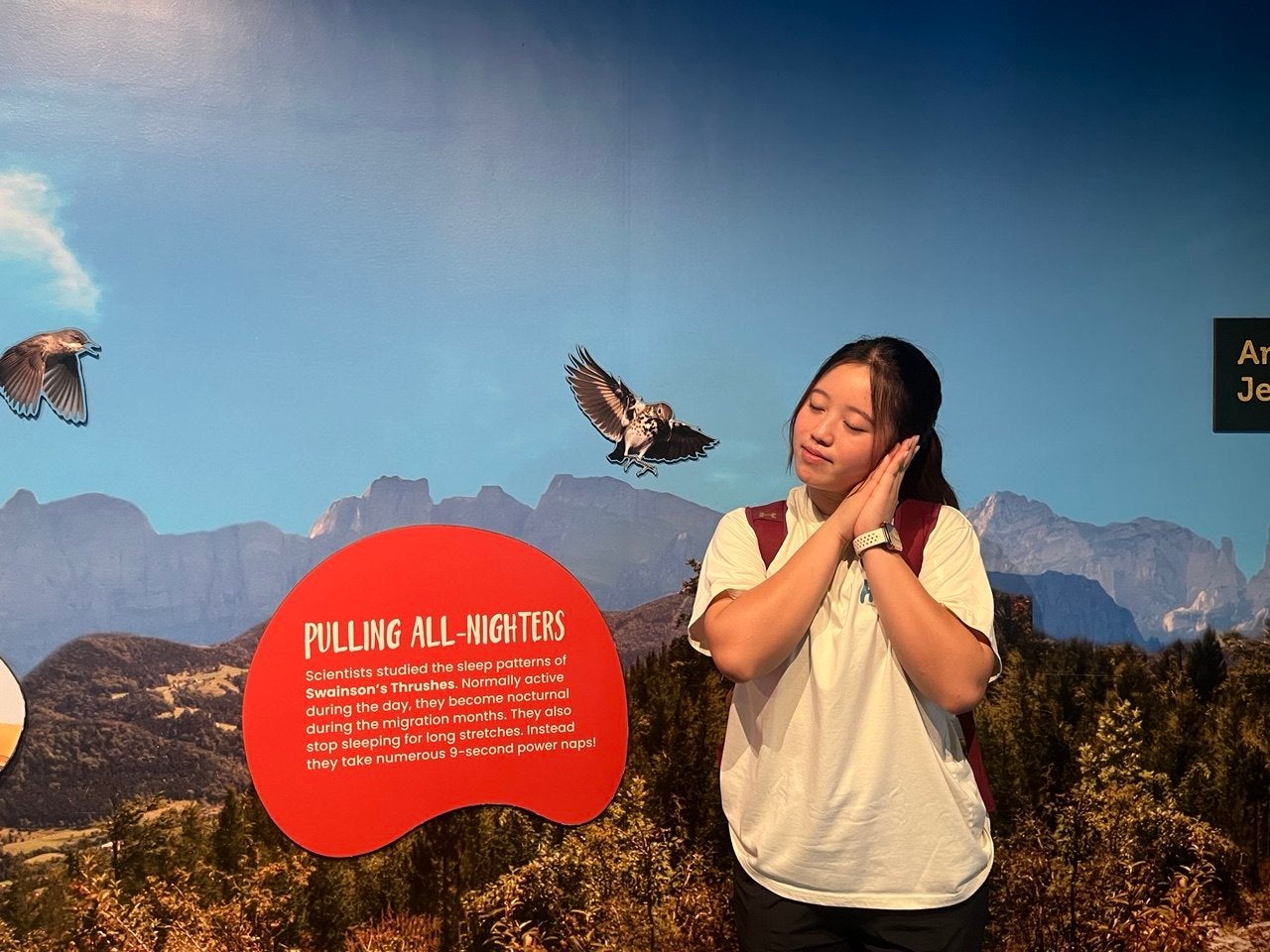

Hope for a vanishing species
July 29, 2026As a child, Lee Tyen Cee rarely left a zoo or natural history museum without coming back to the same lingering question: what can a layperson do to keep endangered species from disappearing forever?
That early curiosity grew into a clear ambition – to become a veterinarian. At the Faculty of Science, she pursued the biomedical track in Life Sciences, convinced her future lay in animal medicine.
She never imagined that path would instead lead her into wildlife conservation.
“If you had told freshman Cee that I’d be working on conservation of endangered birds in my Final Year Project (FYP), I wouldn’t have believed you,” she says.
Yet that unexpected turn led her to one of the world’s rarest songbirds – the critically endangered Blue-crowned Laughingthrush – where she studied its breeding behaviour at Bird Paradise to support its conservation.

A species on the brink
Cee has long been fascinated by how animals behave, communicate and adapt to their environments. Birds, in particular, captured her imagination.
“We see birds everywhere but rarely stop to think about how complex their behaviours really are,” she says. “They’re so intertwined with our daily lives yet often go unnoticed.”
While searching for an FYP topic, she came across the Blue-crowned Laughingthrush and was immediately drawn to its story. Endemic to a small region in China, the species has suffered a steep decline in the wild due to habitat loss and human activity. Its vibrant plumage and social personalities stand in stark contrast to the reality that it could one day vanish.
“The thought that they might be gone really motivated me,” she says. “My FYP allowed me to combine behavioural science with conservation and contribute in some small way to securing their future.”
Science for conservation
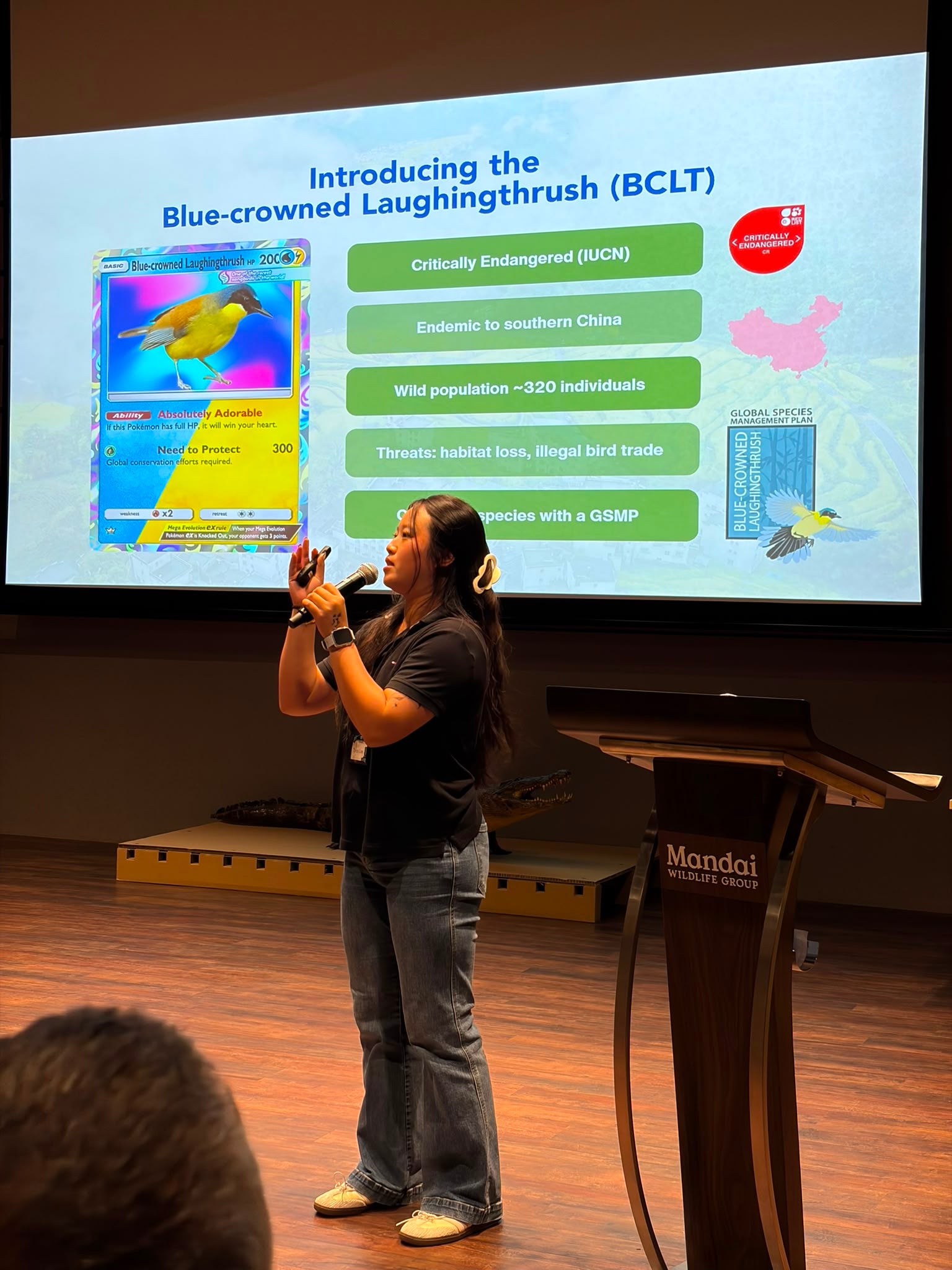
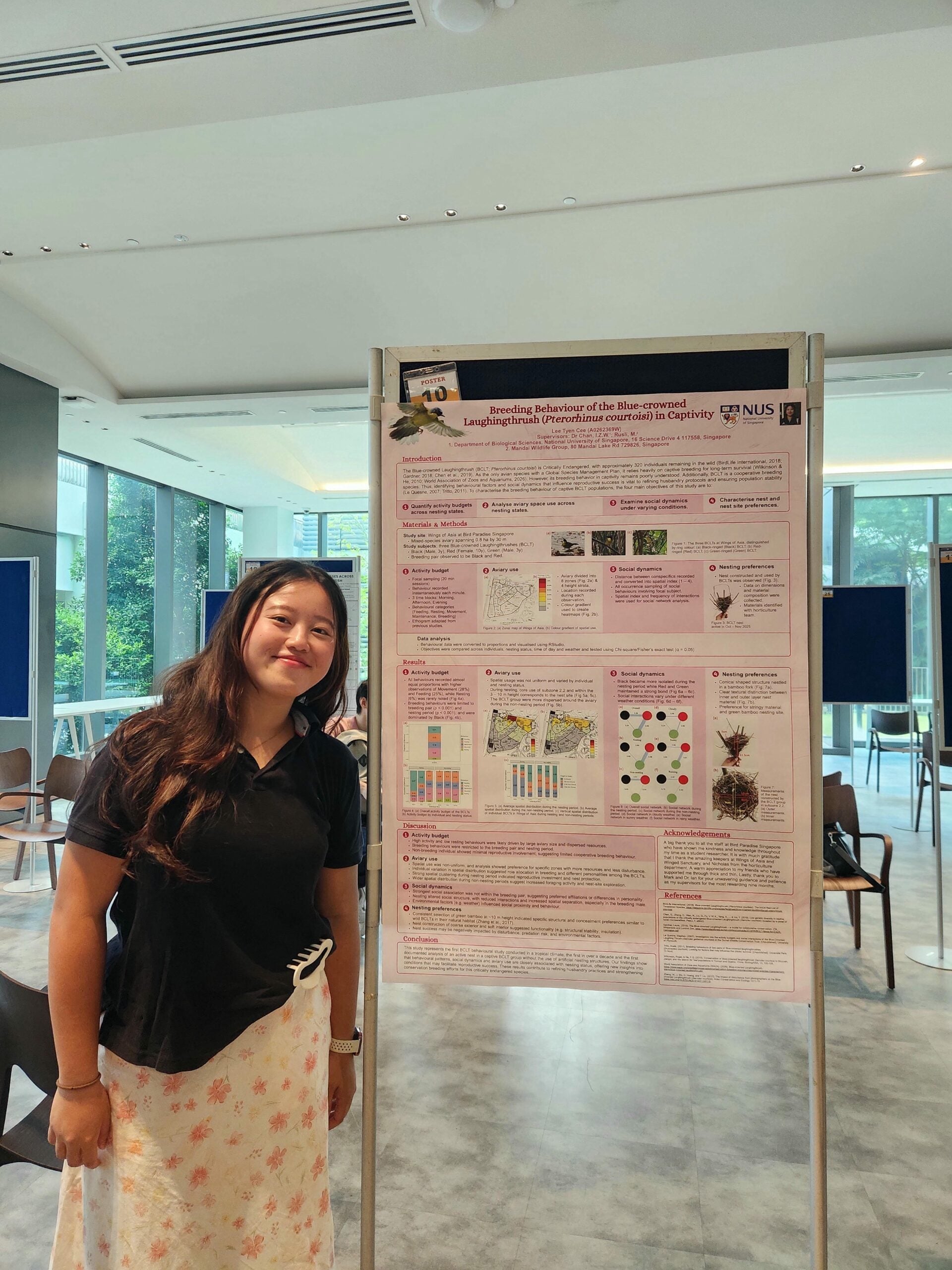
Her research addresses a critical question: why does the Blue-crowned Laughingthrush struggle to breed in captivity? As the only avian species under the Global Species Management Plan, successful captive breeding is vital to its survival. With limited existing research, Cee set out to investigate how factors such as captive environments and stress influence breeding behaviour.
Her findings could help refine breeding protocols – from enclosure design to pairing strategies – reducing costly trial-and-error approaches that risk already vulnerable individuals. “Hopefully, this can improve success rates while safeguarding the birds,” she says.
More broadly, her work highlights a larger issue. “Many species are under threat because humans have disrupted their habitats and food sources,” she says. By examining how these pressures affect behaviour and reproduction, her research offers insights that could inform both captive management and future efforts to restore wild populations.
 |
 |
Changing minds and futures
Beyond its scientific contribution, it is Cee’s hope that her work reshapes how people view zoos. Modern zoos have evolved beyond simply displaying animals and play a vital role in conservation through breeding programmes, research and collaborations.
“Many work closely with international organisations to protect endangered species and improve animal welfare,” she says. “They’re part of the solution.”
Ultimately, she hopes to see the Blue-crowned Laughingthrush recover – from critically endangered to endangered and, one day, no longer be at risk.
It is an ambitious goal. But for Cee, every data point gathered, every behavioural insight documented and every successful breeding attempt brings that future a little closer.