

Highlights
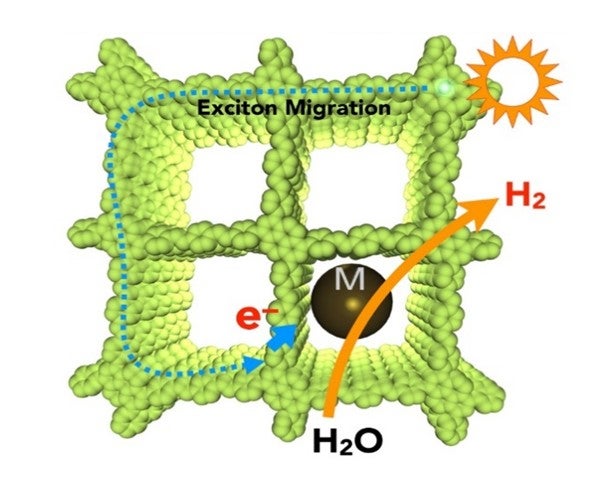
Photocatalytic hydrogen production from water
October 09, 2019NUS chemists have developed carbon-conjugated covalent organic frameworks for visible light-driven catalytic production of hydrogen gas from water. Hydrogen gas…
Read More
Universal latent anion donors for ultralow work function solution-processable electrodes
October 04, 2019NUS scientists reported in Nature (26 September) the discovery of latent universal electron donors from common anions, like oxalate, which can potently…
Read More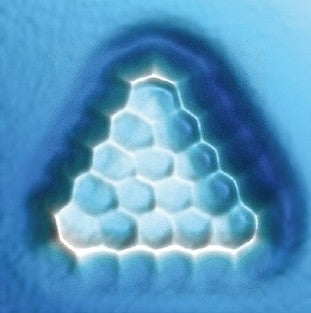
Synthesis of molecule with high magnetic spin
September 05, 2019NUS chemists have synthesised and characterised π-extended triangulene molecules with ferromagnetically coupled edge states for molecular spintronic devices. When triangular…
Read More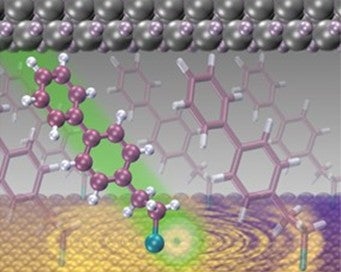
Directional plasmon excitation at molecular scales
August 26, 2019NUS scientists have developed a method for directional excitation of plasmons at molecular length scale with electrically driven sources. Photonic…
Read More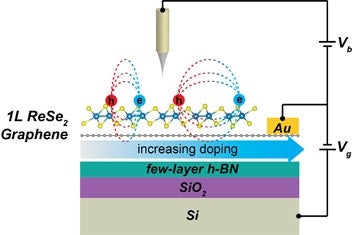
Control of excitons in a 2D semiconductor
August 13, 2019NUS scientists have developed a method to control the binding energies of excitons in a two-dimensional (2D) semiconductor for advanced…
Read More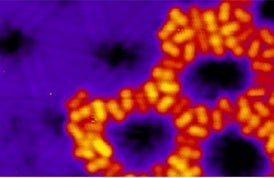
Organic porous structures on 2D defect networks
July 09, 2019NUS scientists have developed a method for self-assembly of hexagonal organic porous structures on molybdenum diselenide (MoSe2) film to create ..
Read More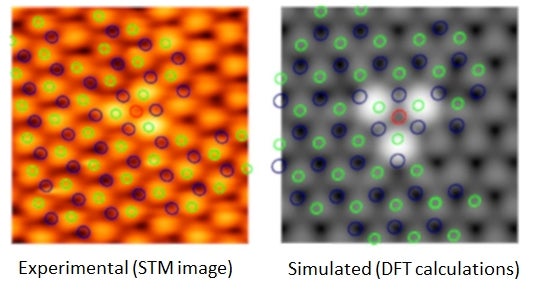
Localised excitons in 2D materials for integrated quantum optics
July 08, 2019NUS scientists have found that the oxygen interstitials in single-layer tungsten diselenide (WSe2) enable it to function as single photon emitters …
Read More
Photodoping in 2D materials for fabrication of logic devices
May 07, 2019NUS scientists have discovered a method for photoinduced electron doping on molybdenum ditelluride (MoTe2) heterostructures …
Read More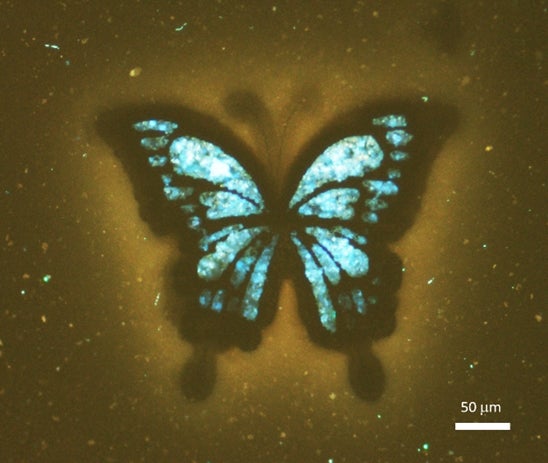
Recovered carbon black for multicolour fluorescence displays
April 18, 2019NUS physicists have discovered that recovered carbon black powder can be transformed by laser treatment to give a wide range…
Read More
Phase transition dynamics in two-dimensional (2D) materials
February 12, 2019NUS scientists have discovered the mechanism involved when transition metal dichalcogenides on metallic substrates transform from the semiconducting 1H-phase to…
Read More
Highly complex two-dimensional tessellation in the molecular world
February 11, 2019NUS scientists have developed a method to construct highly complex molecular tessellations using a single molecular building block. Tessellation is…
Read More
Molecularly thin hybrid perovskite for advanced optoelectronic applications
December 06, 20186 Dec 2018. NUS scientists have discovered that the light emission properties of molecularly thin two-dimensional (2-D) hybrid perovskite can…
Read More