Where industry meets the classroom
June 18, 2026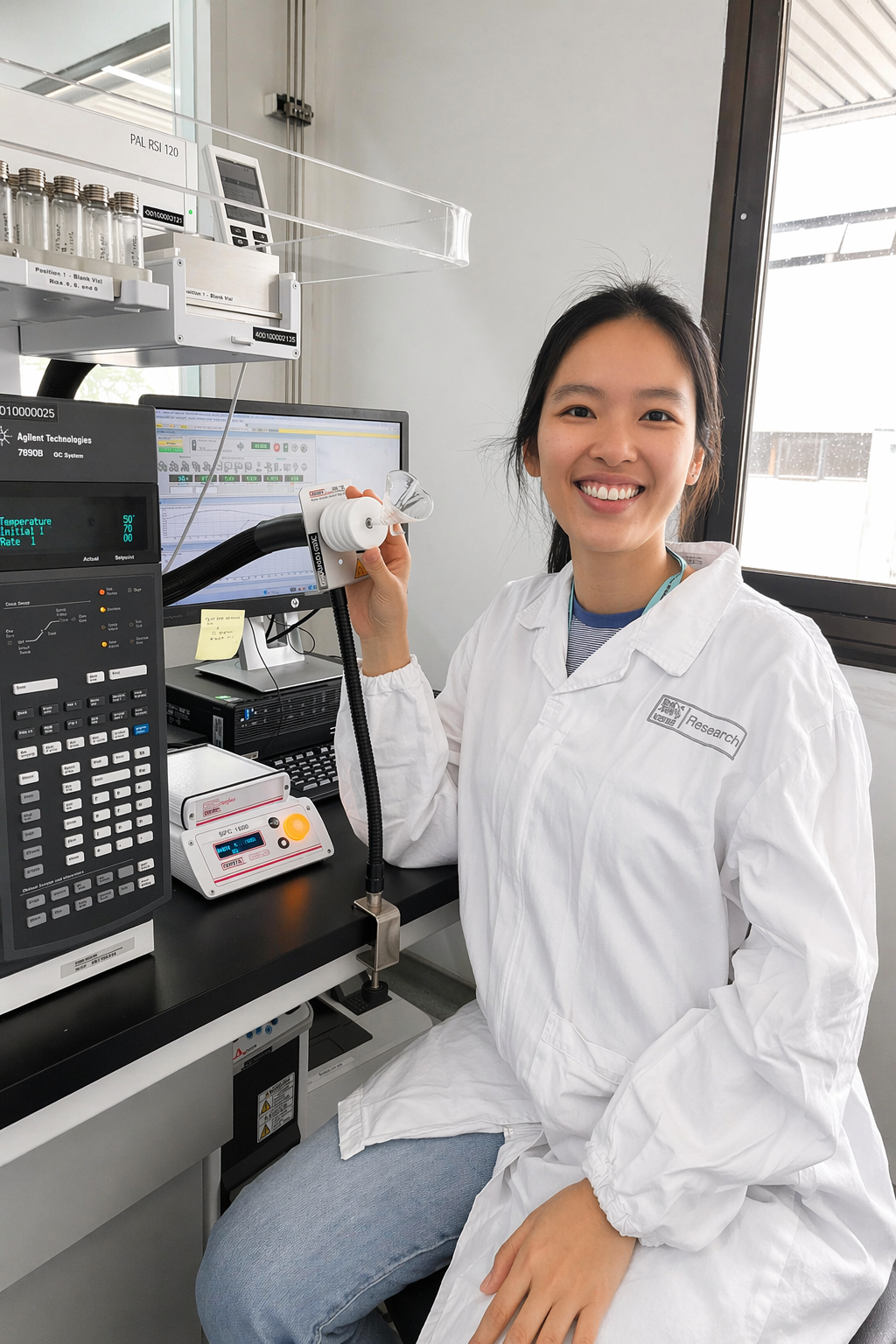
The future of work is arriving faster than curricula can keep up. As industries transform under the weight of technological change, universities are grappling with a key challenge: preparing graduates not just for today’s roles, but for jobs that have yet to be defined.
One answer lies in the classroom itself – in the growing presence of industry practitioners who teach alongside academic faculty, bringing with them current workplace experience and real-world problem-solving skills.
Among them is Dr Andrea Koo, a Food Scientist at Nestlé’s R&D Center in Singapore and a PhD alumnus from the Faculty of Science. For her, the value of industry-informed teaching is rooted in her own experience as a student, where lessons led by professionals stood out for their immediacy and relevance. Case studies did more than illustrate concepts; they revealed how scientific concepts operated beyond textbooks and laboratories.
“I strive to recreate that learning experience for my students,” she says.
As part-time faculty for the MSc course FST5225: Advanced Current Topics in Food Science I, she is part of a growing group of industry practitioners who help ensure that university programmes remain aligned with workplace realities and emerging industry needs.
What began as a one-off teaching opportunity has since evolved into a deeper commitment. “Witnessing moments when everything suddenly clicks for students is truly rewarding – when they realise that real-world problems rarely have textbook answers, yet the fundamentals they have learned equip them to design effective workarounds,” she says.
These ‘aha’ moments, she adds, capture the true purpose of scientific education – not just acquiring scientific knowledge, but learning how to think like a scientist.
Bringing perspectives together
Industry-led teaching is most effective when it is collaborative, Dr Koo says. Together with her fellow adjuncts, course design is a joint effort with full-time faculty – aligning objectives, identifying relevant content, removing overlaps in topics and closing gaps to ensure a coherent learning journey.
“Each industry practitioner brings different areas of expertise,” she says. “This approach creates a learning experience that integrates diverse perspectives while remaining structured and aligned with intended outcomes.”
The result is a curriculum grounded in strong scientific foundations, yet responsive to the realities of the rapidly changing food industry.
Learning from real-world challenges
A defining feature of the course is its industry-informed innovation project, where students address problems currently facing in the food sector. Rather than relying on static case studies, themes evolve annually to reflect emerging issues – from the impact of soaring cocoa prices to the opportunities and challenges of plant-based alternatives.
Students are tasked with proposing solutions that balance technical feasibility, consumer needs and commercial viability – which mirrors the complexity of real-world decision-making, where the best scientific ideas must ultimately stand up to business realities.
Recent iterations of the course place greater emphasis on the responsible use of artificial intelligence (AI). While AI tools can accelerate data analysis and ideation, Dr Koo highlights the importance of critical judgement and discernment.
“As scientists, we need to remain custodians of these tools,” she adds. “We must apply scientific judgement rather than rely on outputs uncritically.”
Alongside AI, the course addresses broader industry priorities such as sustainability and consumer-centric innovation, reflecting how products are developed and evaluated today.
Moving beyond the textbook
The food industry Dr Koo works in is markedly different now, shaped by advances in artificial intelligence, sustainability pressures, changing consumer behaviour and global supply chain disruptions. Preparing students for this landscape requires more than technical knowledge alone, she says.
This is where industry practitioners bring a unique perspective. For Dr Koo, her industry experience informs not only what she teaches, but how she teaches. Lessons are designed around real-world scenarios, where ambiguity, practical constraints and competing priorities are part of the learning process.
“In practice, scientific challenges rarely have a single correct answer,” she says.
Rather than guiding students toward fixed solutions, she encourages them to explore alternatives, weigh trade-offs and ground their decisions in scientific evidence. In doing so, students learn to balance scientific rigour with consumer expectations and operational realities.
Where insight flows both ways
For all that she brings into the classroom, teaching has given her something in return.
Preparing lessons and explaining concepts requires her to step away from the pace of day-to-day work and revisit familiar ideas from a different vantage point. In breaking down complex problems and articulating the reasoning behind them, she often uncovers new possibilities and fresh angles – a reminder that expertise, too, must be continually re-examined.
“Engaging with students provides valuable insight into how the next generation of scientists think, communicate and approach problems,” she says. “It helps me stay connected to new ways of thinking.”
In that exchange, between experience and curiosity, learning goes both ways. And in a landscape defined by constant change, the ability to keep learning may be one of the most valuable lessons.