The future of employability: Why thinking trumps training
April 27, 2026On paper, the pairing might seem unlikely: a chemistry graduate stepping into a global risk advisory firm, and a senior hiring leader scanning a competitive talent pool for future client advisors.
But at Aon, that intersection defines employability – less about what you study, and more about how you think, connect and grow.
From science to strategy
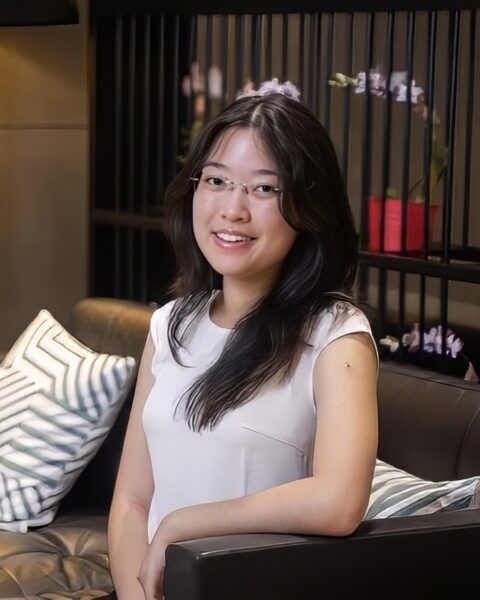
When Chemistry alumnus Marie Ang first considered her career options, she was not turning away from science but towards its meeting points with business and technology.
At university, she deliberately stepped outside her core discipline, taking courses in accounting, finance, and marketing. “I value being well-rounded in technical knowledge and business savvy,” she says. “This made me realise I also enjoy this line of work.”
That journey of discovery eventually led her to the Aon Graduate Program, where structured rotations offered a way to bridge her academic learning with real-world exposure. The firm’s involvement in the energy sector – which is closely tied to her academic interests – was another key defining factor.
Today, Marie works in Credit Solutions under the Commercial Risk track at a regional level across a spectrum of specialties – trade credit, structured credit, surety and political risk solutions – each designed to help businesses manage uncertainty in different ways.
The role is inherently client-facing, she says. She observes how her team navigates client interactions, listens, frames advice and builds trust. Behind the scenes, she supports research on prospective and existing clients – laying the groundwork for the day she leads those conversations herself.
Within her first two weeks, she became part of a small focused team assigned to research and develop the first draft of the briefing deck for Aon’s global CEO for Commercial Risk Solutions addressing Asia’s credit solutions landscape for a high-level external meeting.
“I was excited and nervous. The task was very new to me,” she says. “With my team’s support, I learned how to prioritise information that is important and how best to present it to senior leaders. This gave me a great sense of pride.”
The essentials: Life skills
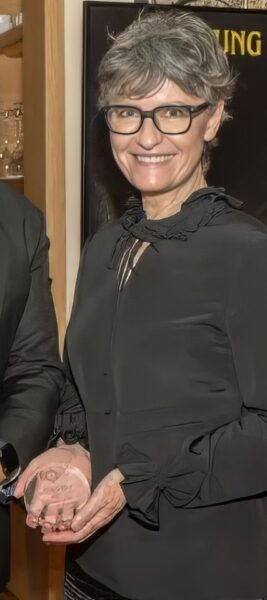
On the hiring side, Ms Helen Clark, Aon’s Chief Broking Officer, Credit Solutions, Asia, meets candidates at the final stage of the recruitment process, when technical competency is already validated.
“The quality of candidates is high as our assessment and filtering process is robust,” she says. “They’re smart, hardworking and deliver great results.”
So what sets someone apart?
Not technical expertise – at least, not initially. “We don’t require that at this stage. Aon will provide the training and exposure,” she says. Instead, she focuses on something less tangible but equally, if not more important: soft skills and life experience.
She looks for curiosity and self-awareness: candidates who push their boundaries, pursue experiences beyond academics, “be it through travelling off the tourist track, extracurricular pursuits or interests that call for dedication.”
But more importantly, she observes how they engage with others and manage themselves.
“Do they make me interested in what they’re saying? Can they listen, respond, adapt and contribute? Can I see them in front of a client one day- someone the client would trust?” she asks.
The science edge
For Ms Clark, hiring a science graduate like Marie isn’t a divergence – it’s a strategic advantage.
“Bringing a scientist into a risk-based, data-driven environment is a no-brainer,” she says. Scientists, she notes, are trained to think critically, analyse patterns and approach problems in a structured way – skills that are vital in industries that drive the global economy, from commodities to renewables, financial technology and climate solutions.
Her advice is simple: “Come with an open mind. Think about objectives, outcomes, how to strategise and execute – that’s where your value lies.”
Marie’s experience reflects this perspective. She leans on her analytical training to make sense of complex financial structures, while collaboration across teams broadens her view.
“My team never lets my lack of business background limit me,” she says. “Some even see it as a plus.”
Finding her voice
If there is one skill Marie is still actively building, it’s proactivity.
“I am usually more comfortable following instructions,” she says.
Now, she pushes herself to initiate conversations, reaching out to colleagues across departments, setting up coffee chats and exploring how different parts of the business intersect.
Often, her scientific background becomes a talking point that opens doors. “People are surprised that I studied chemistry, and they want to know more.”
These exchanges have uncovered new opportunities and reinforced a key insight for her: employability grows through initiative, continuous learning and the willingness to step forward and engage – even when it feels daunting.
Ms Clark agrees. “Without a doubt, soft skills,” she says, when asked about critical competencies for the workplace. Technical skills can be taught, she says, but communication, the ability to get on with people, reliability and teamwork – these are essential.
Beyond silos
Underlying both perspectives is a shared belief that traditional boundaries – between disciplines, roles and even industries – are increasingly irrelevant.
“The worlds of science, arts and humanities overlap tremendously,” Ms Clark says. “It’s old school to silo people by their degrees. Individuals are multifaceted – they evolve.”
She points to history’s polymaths – physicians who became celebrated writers like Sir Arthur Conan Doyle, Michael Crichton, Anton Chekov – as proof that careers are rarely linear. Adaptability, she argues, is the defining skill of the modern workforce.
Marie is now living that reality. As she looks ahead to her next rotation, possibly with Aon’s energy team, she remains open to where the journey might lead.
“Prospecting for clients is something I’d love to explore,” she says. “It’s hard to say where I’ll land – but that’s what makes it exciting.”