
A digital educational resource on natural healthcare products
September 08, 2025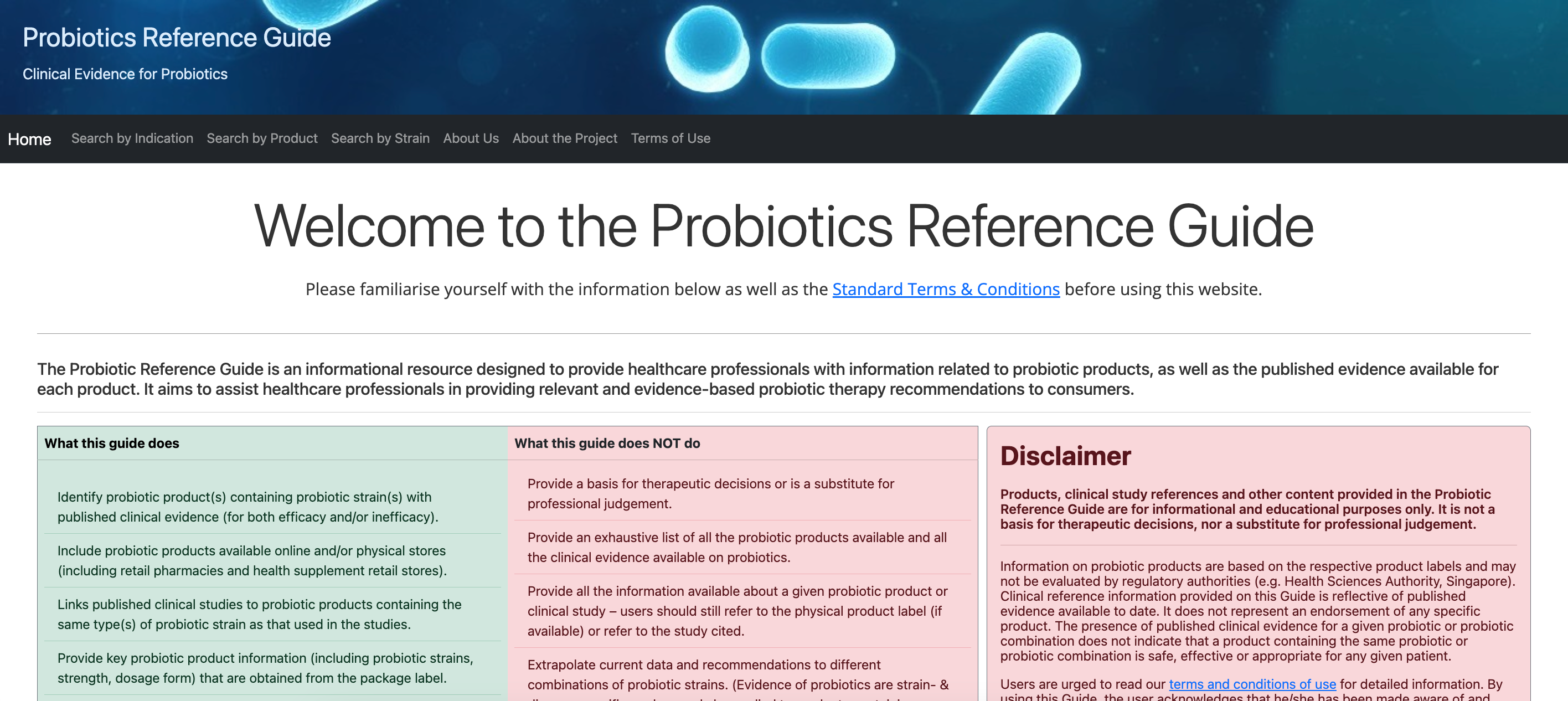
Probiotics and complementary and alternative medicines (CAMs) are gaining popularity worldwide. However, patients and healthcare professionals face the challenge of navigating a vast landscape of products and claims.
The lack of definitive local guidelines and reliable, evidence-based information on CAMs for clinical decision-making as well as the sheer plethora of commercially-available products pose a challenge for healthcare professionals and consumers in selecting appropriate probiotics / CAMs for their needs.
To address this gap, a group of Pharmacy undergraduates led by Year 4’s Low Yu Teng developed a digital resource suite that consolidates essential knowledge on CAMs – which enhances both the educational experience of pharmacy trainees and the clinical support they can offer to patients.
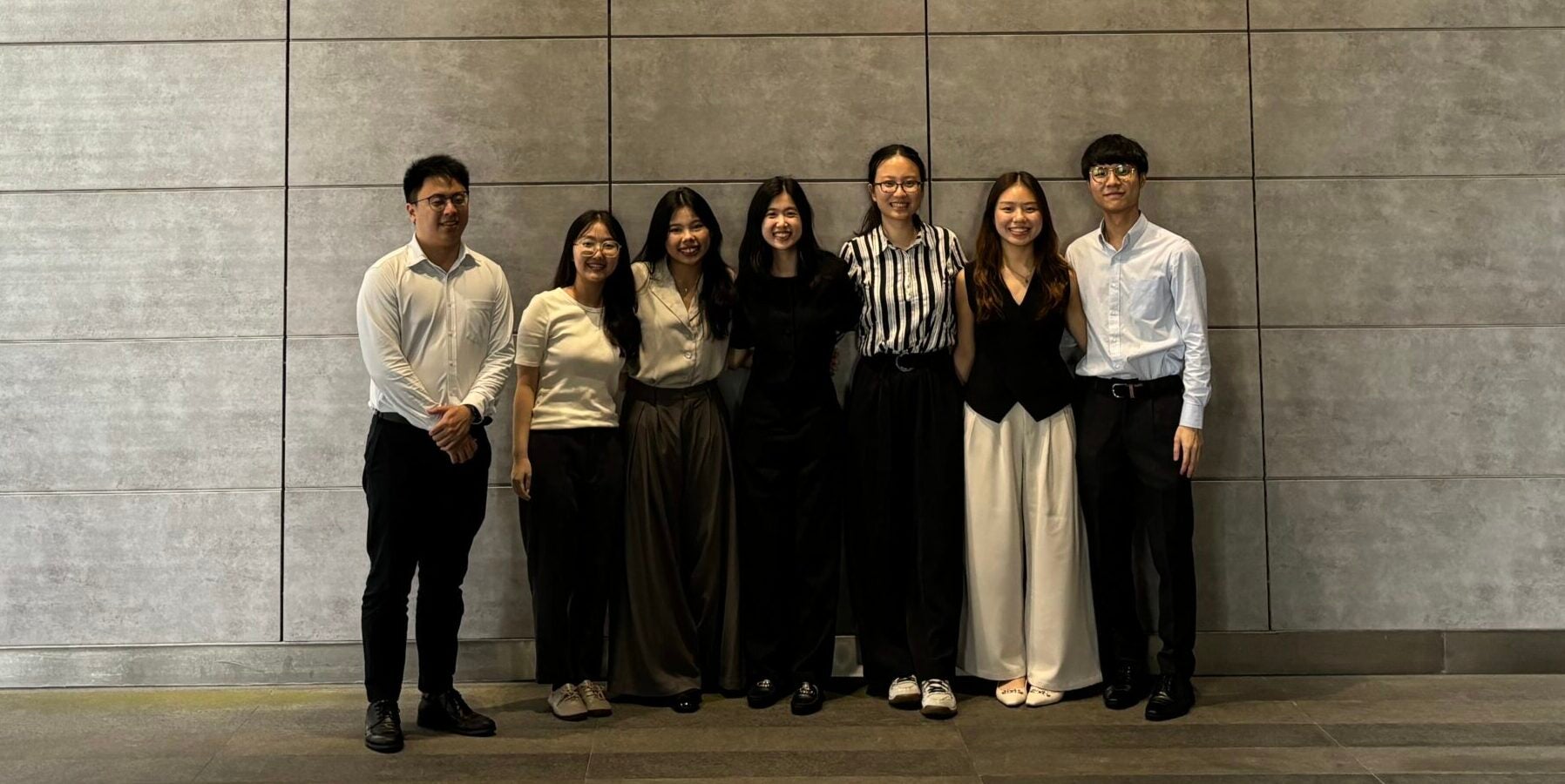
(From left to right): Low Yu Teng, Samantha Ong, Ng Yi Xuan, Tricia Tay, Toh Wen Qi, Andrea Yeo and Wong Huai Hai
The team first evaluated the efficacy of probiotics and CAMs in disease prevention through a systematic review and assessed the quality of probiotic information provided by Generative Artificial Intelligence (GenAI) chatbots using an in-house rubric based on criteria used in prior GenAI literature.
They then developed a suite of four in-house digital resources to provide user-friendly and up-to-date information on probiotics and CAMs to clinicians, learners and consumers.
Their digital resources comprise: a Probiotic e-reference guide (PEG), CAM e-reference database (CED), Probiotic / CAM generative artificial intelligence chatbot (ProCAM-Advisor) and Probiotic / CAM educational metaverse (ProCAM-Eduverse).
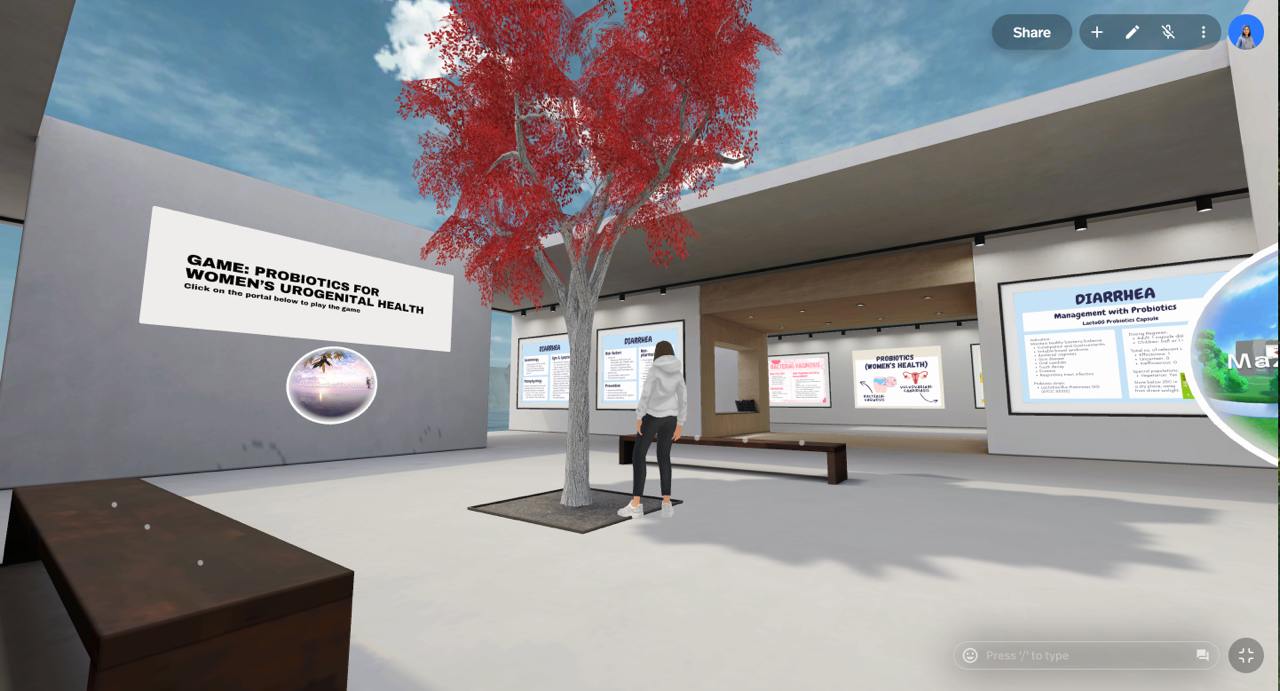
Currently, PEG provides information on over 1,000 healthcare products in Singapore, while CED provides information on over 170 CAMs products. ProCAM-Advisor mimicked a probiotic-CAMs expert and provided users with information in a conversational approach. Visitors can also access the ProCAM-Eduverse and play simple games like identifying conditions and products, to learn more about the use of probiotics / CAMs in different situations.
“Our pilot study on user perception and experience received a positive response,” Yu Teng says. “The participants found it easy to locate information through the user interface. The accuracy of information provided was particularly useful. Another benefit of using the digital resources was time savings.”
He adds, “This project improved my understanding of natural products, and how we can laymanise and present this information using digital mediums. Beyond the technical aspects, the project also inculcated a strong sense of interdisciplinary teamwork, as we had to learn skills and knowledge outside of our major to make this project work.”
In the future, the team plans to enhance their resource suite to better support educational and clinical practices.