
When chemistry clicks
May 21, 2026Dr Bernard Ng (Chemistry 2006 / 2007 / 2017) still remembers the reactions people give when he tells them he teaches chemistry. “Chemistry was my worst subject in school,” some would say. Others admit that they could “never understand atoms and stuff.”
For many, chemistry evokes ideas of bewildering equations and intimidating concepts. But for Dr Ng, these reactions are the very reason he is inspired to teach differently – to transform chemistry from a subject students fear into one they can understand.
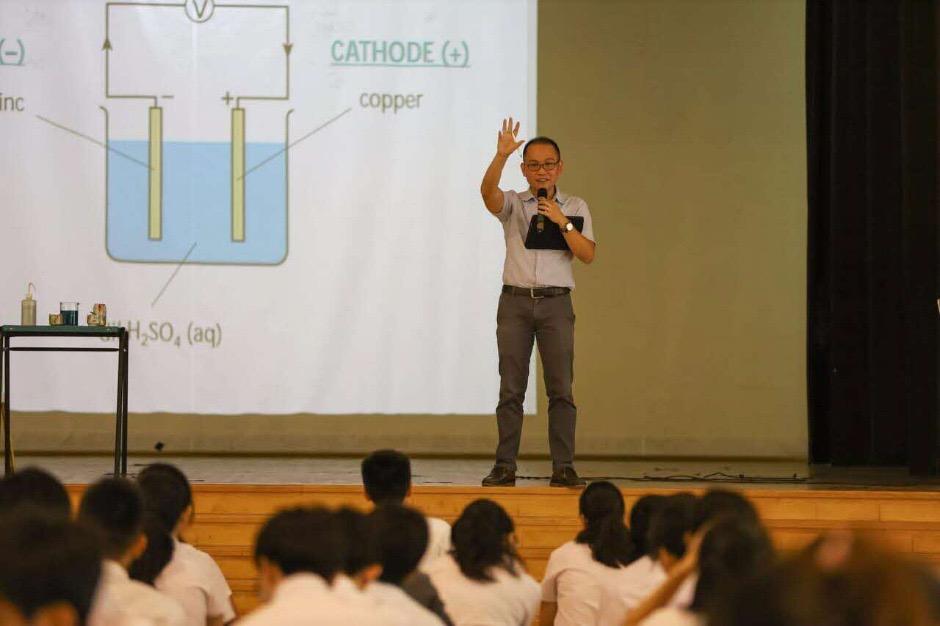
Today, as an educator at Edgefield Secondary School and a digital content creator, he has built a growing community of learners by making science accessible, engaging and even enjoyable. At the heart of his work lies a simple belief: with the right instruction, chemistry can be easy – and fun.
From chemistry mastery to mentorship
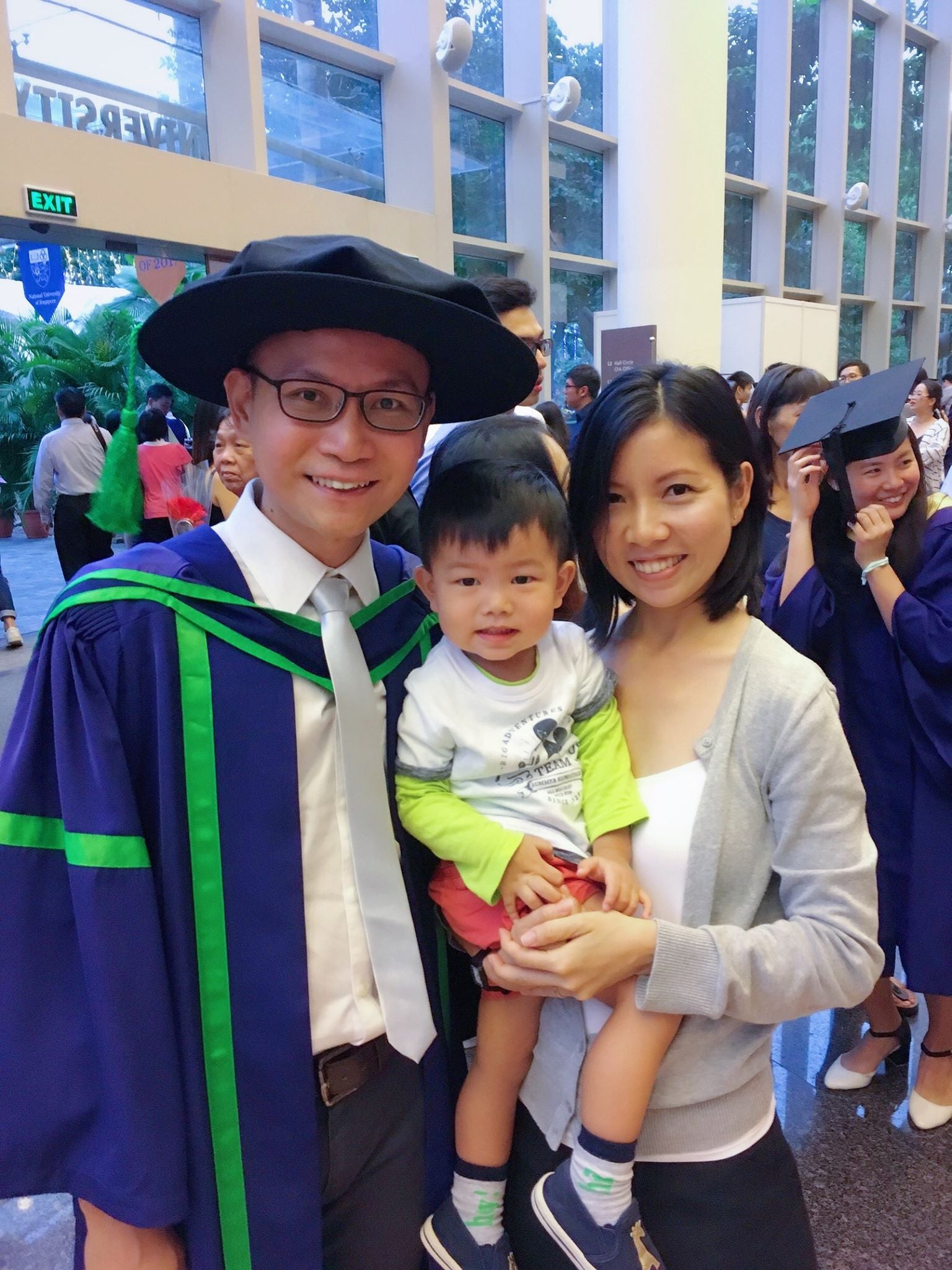
His time at the Faculty of Science provided more than subject mastery; it shaped how he approaches teaching.
“The comprehensive curriculum gave me confidence in the content I teach,” he says. “It also trained me in critical and inventive thinking, scientific communication and research skills that I still draw on today.”
Those competencies now inform his work, from curriculum planning and instructional mentoring to guiding students through research projects.
His postgraduate experience in frontier research added another dimension. Instead of teaching concepts in isolation, he often connects textbook theories to real-world phenomena and emerging scientific applications. That ability to bridge abstract concepts with tangible examples injects vibrancy into his lessons and sparks curiosity in students who struggle to see the relevance of science.
Bringing science to life
Beyond the classroom, Dr Ng found another avenue to engage learners: digital content.
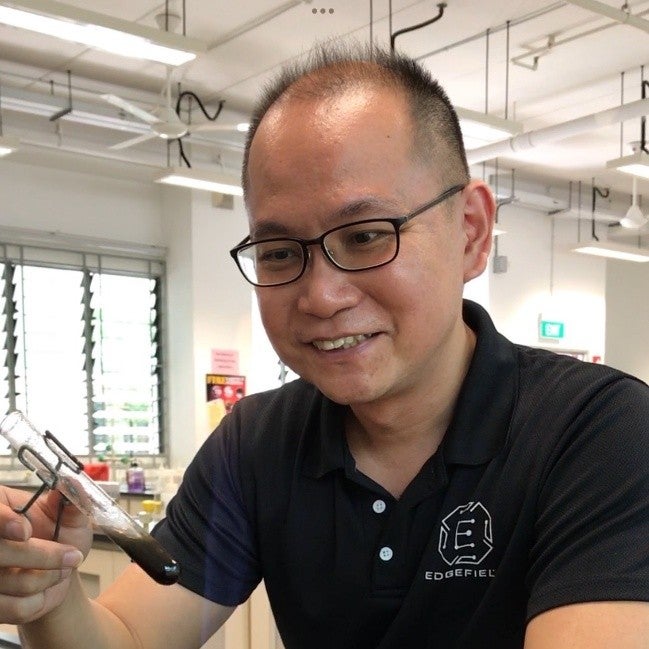
Driven by the desire to make chemistry more “palatable,” he began producing instructional videos and online resources carefully designed to simplify difficult concepts in the hope that a better understanding would help learners appreciate “the beauty of chemistry.”
His content creation journey, however, was not without challenges. In the early days, it felt tedious and overwhelming, especially before systems were established. What made the difference was investing time to build systems, such as standardising his recording setup, microphone, slide templates and thumbnails. Once these were in place, content creation became significantly more manageable.
He also drew inspiration from James Clear’s Atomic Habits, embracing the idea of simplifying workflows. “For something to be sustainable, you need to reduce the number of steps between you and the desired behaviour,” he says.
Some of the skills that later proved invaluable came unexpectedly from hobbies he pursued during university vacations. Long before he was creating educational videos, he was exploring music content, vector drawing, HTML coding and video production.
For students, he has this advice. “Invest time during university vacations to pick up fun peripheral skills. They may become useful in time.”
Growing as a teacher leader
His experience at the Teacher Leaders Programme (TLP1), a milestone programme for senior teachers in Ministry of Education, reinforced his commitment to grow as a teacher leader with “competencies as a pedagogical leader and instructional mentor to better serve the teaching fraternity.”
Over 10 weeks, the TLP programme covered topics ranging from learning theories and assessment strategies to design thinking, e-pedagogy, instructional mentoring and action research. That commitment to continual growth reflects the same mindset he encourages in his students: curiosity, adaptability and lifelong learning.
The future of learning
For Dr Ng, educational technology has fundamentally reshaped how science can be taught and experienced.
“Only a decade ago, learning science took place primarily in laboratories and lecture theatres,” he says. “Today, the proliferation of instructional videos and remote learning platforms mean that learning is no longer limited by physical space.”
He is particularly excited by technologies such as animations and virtual reality, which allow students to visualise atomic-level interactions once impossible to see.
“There is value in getting more people interested in science,” he says, pointing to creators who make scientific concepts entertaining and digestible. And while he sees edutainment platforms like TikTok and Instagram as useful entry points for cultivating interest in science, these platforms are still largely designed for recreational use and are not substitutes for deeper learning, he notes.
The impact of his work is already evident, in messages from grateful learners and in the delight of students who discover their teacher featured in media interviews and online videos.
For him, such moments are more than just amusing encounters. They are reminders that a teacher’s influence, when paired with passion and creativity, can inspire understanding and reach far beyond the classroom. Looking ahead, he is exploring more ways to bring chemistry to life through digital media — and hopes to connect with others in the community who share that same passion.
Check out some of Dr Ng’s digital content here.
Science stories
https://youtube.com/shorts/eQYMYEQo9Js
https://youtube.com/shorts/ZfzGPBzrGXU
Instructional content
https://youtu.be/vC84D7uPjZU
https://youtu.be/k5lpaZR63QQ
Song
https://youtube.com/shorts/rZUx5RTus9Q
Apps
https://ngchb.github.io/bernardng/
Brainwave entrainment and podcast
https://youtu.be/DwKeowr0EgA
https://youtu.be/7YELvEx6mw8