Bringing ovarian research to the world: An Amgen scholar’s reflections
August 20, 2025
Some of our brightest undergraduates are making their mark in the world of research, beyond campus borders. For Life Sciences’ Wee Juin Shin, talent meets opportunity through the Amgen Scholars Program, a global initiative designed to provide these students immersive research experiences, hands-on exposure to cutting-edge biomedical science and the opportunity to work alongside leading scientists at top institutions worldwide.
In Singapore, the Amgen Foundation has partnered with NUS’ Faculty of Science since 2018 to host the programme locally. Scholars here are mentored by NUS faculty, gain behind-the-scenes insights into life at a global biotechnology company and engage with industry leaders on STEM career development – experiences that help lay a strong foundation for future careers in the life sciences.
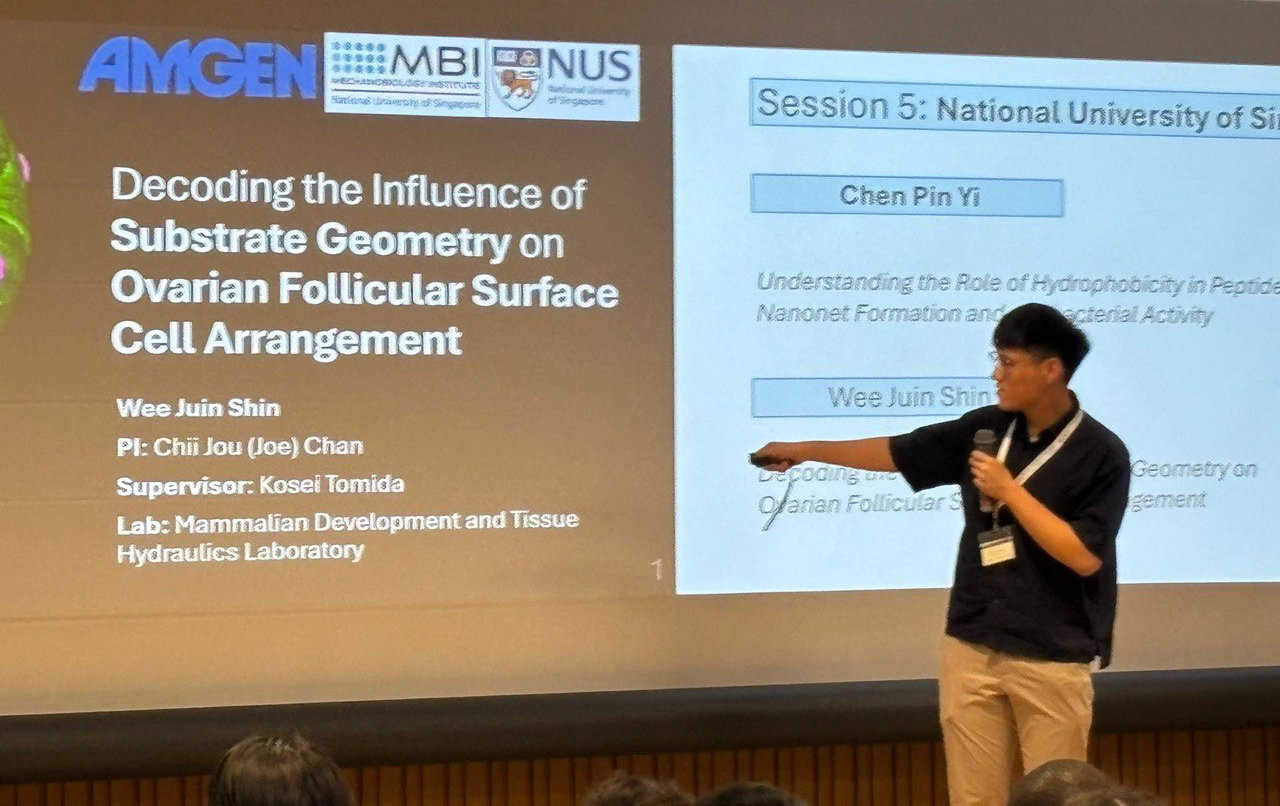
Juin Shin studies how theca cells (TCs), a key component of ovarian follicles, sense and respond to cues in their native microenvironment – research that lies at the interface of developmental biology, mechanobiology and quantitative imaging.
There were several “compelling” factors that sparked his interest in this research, he says. These include the opportunity to work with physiologically relevant tissue models, as well as the integration of cutting-edge experimental wet laboratory techniques with computational tools.
The ovary is a highly structured organ where geometry and intercellular communication are tightly intertwined. Densely packed TCs often come into contact, creating curved interfaces between neighbouring follicles. Previous studies show that TCs move across these curvatures and influence follicle development. However, the role of physical cues in follicle development remains unclear.
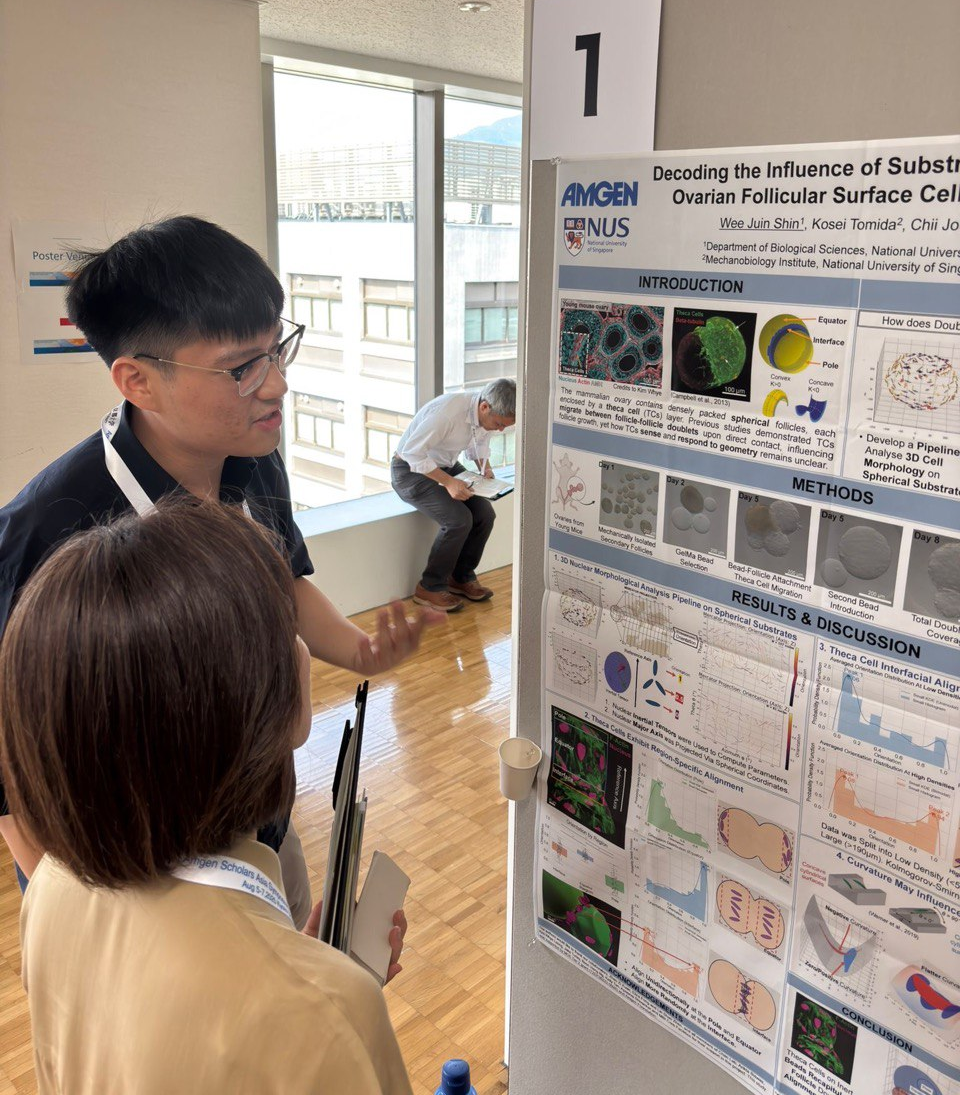
To address this, Juin Shin developed a three-dimensional nuclear morphological analysis pipeline to segment and quantify TC orientation, density and shape on spherical modified gelatin beads mimicking follicular curvatures.
The insights from his study do not merely advance knowledge of ovarian biology; they support better oocyte maturation, with potential translational applications in reproductive health and fertility treatments. In addition, the insights also reflect general mechanobiological mechanisms of how cells respond to curvatures, which are relevant for understanding tissue organisation in other curved environments, such as organoid development and regenerative tissue engineering.
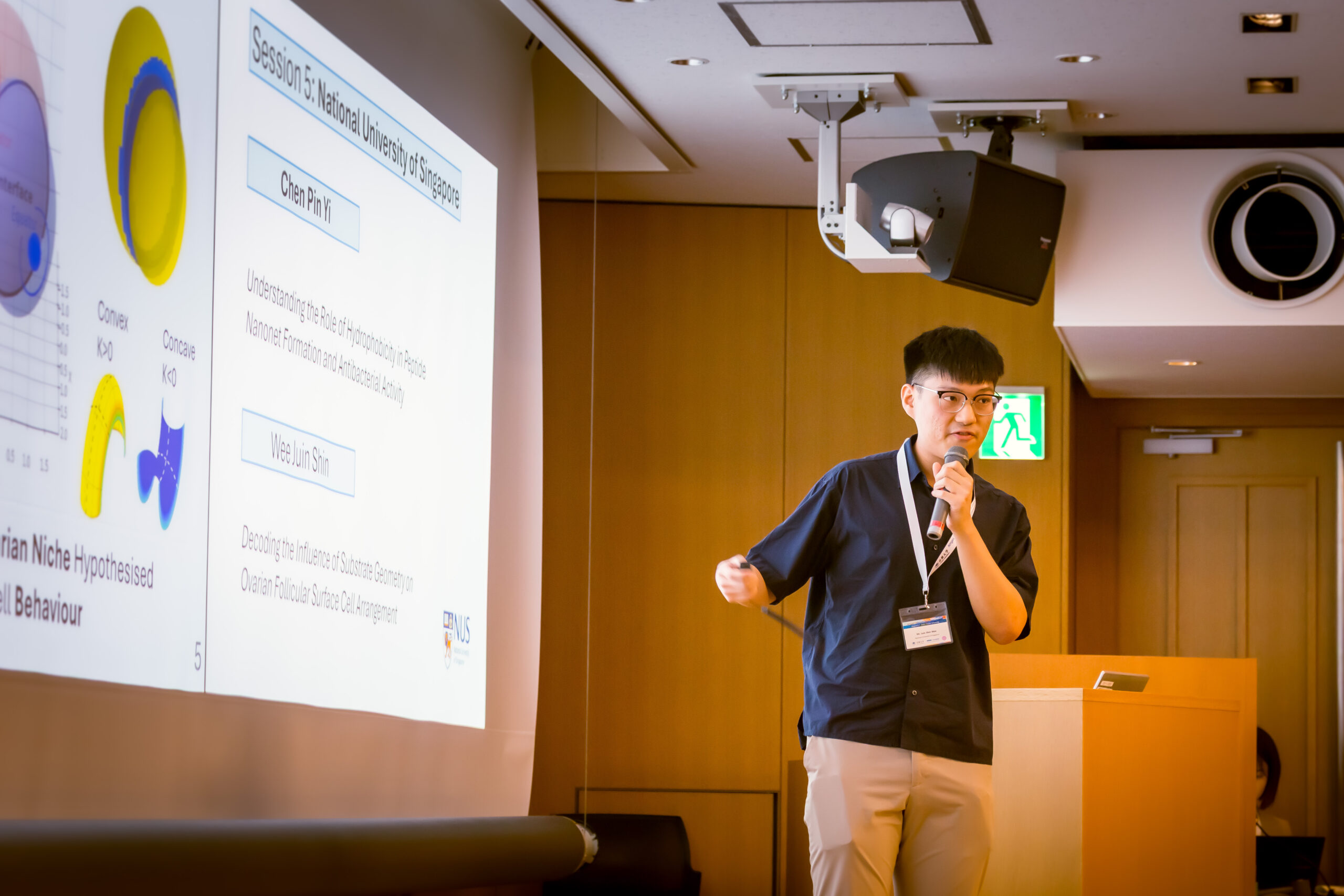
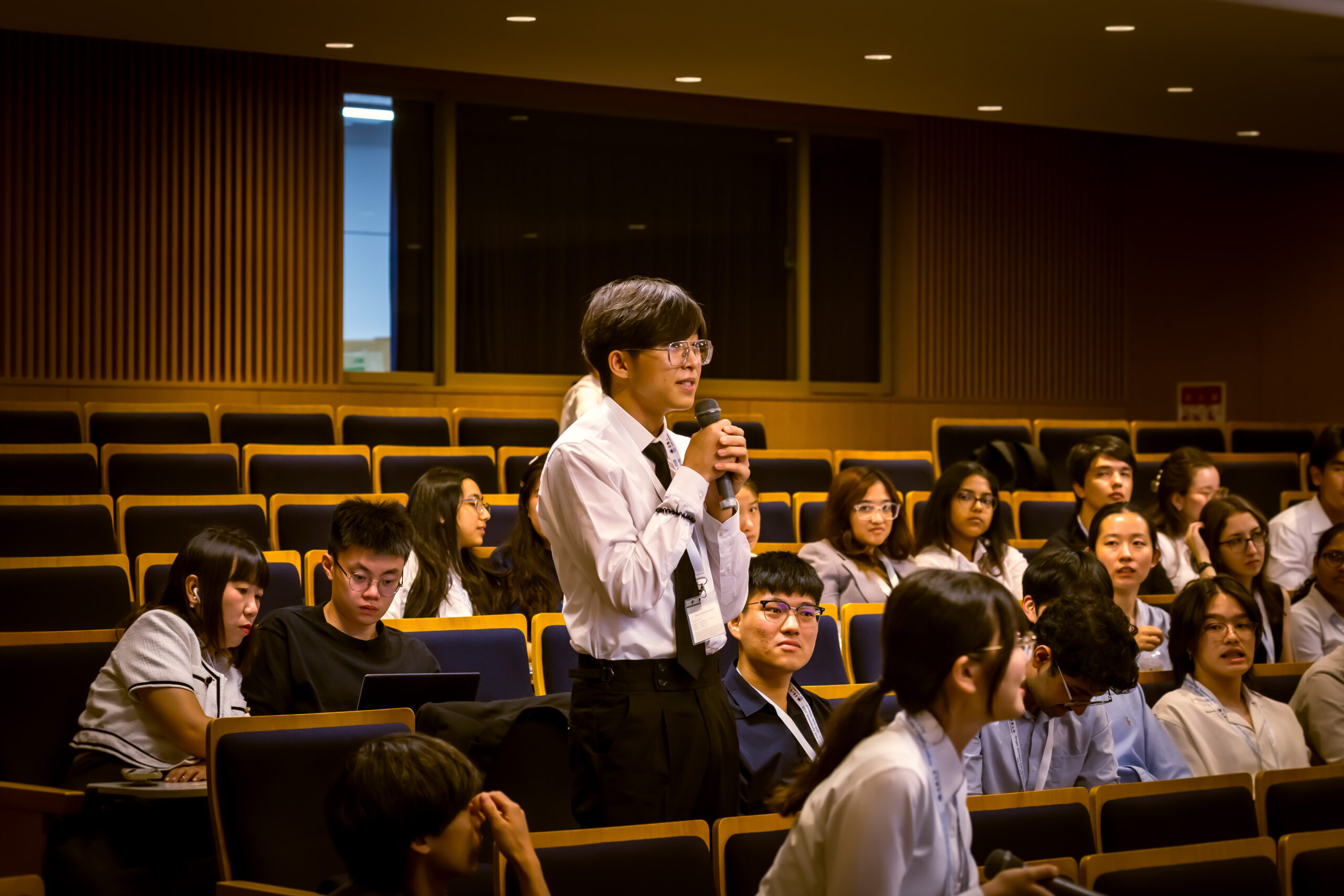
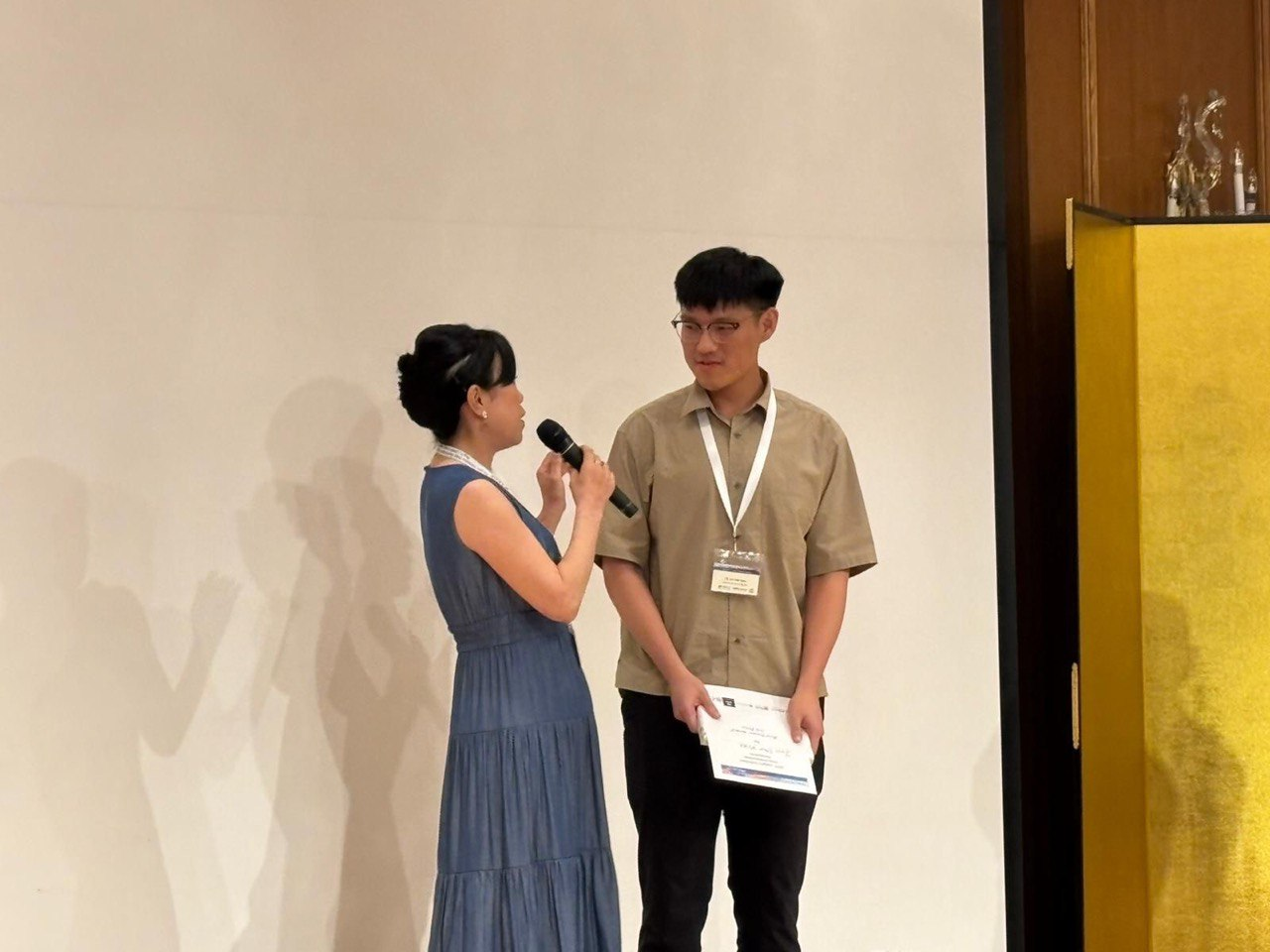
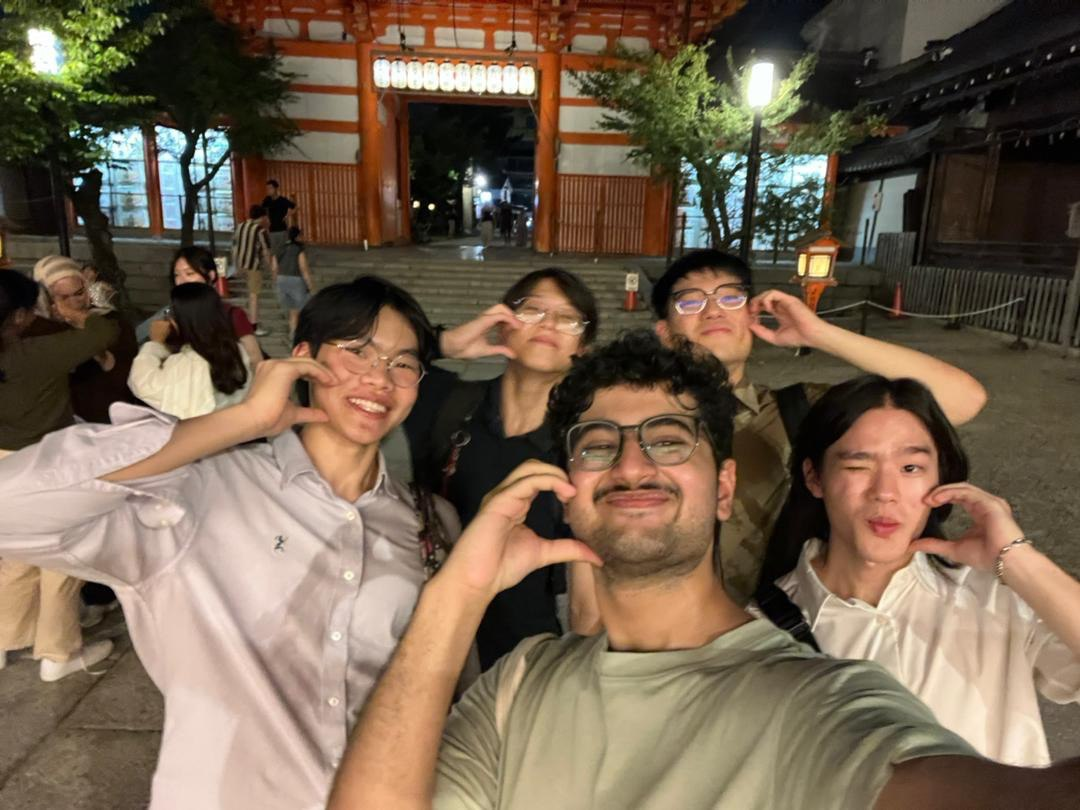
Juin Shin had the opportunity to present his work at the Amgen Scholars Asia Symposium, held in Kyoto in August 2025.
“This was both an exciting and transformative experience,” he says. “It was my first experience sharing my research with a global audience of peers and experts. Scientific discussions and feedback from experts in reproductive biology and mechanobiology nudged me to think critically about the broader implications of my work.”
His overall learning takeaways from the symposium extend far beyond the scientific content of his project. Presentations from experts across diverse fields spotlighted the impact of connecting biology with engineering, computation and physics – providing valuable academic insights into how interdisciplinary approaches drive meaningful discoveries.
Networking with professors and fellow scholars brought to light the importance of collaborative science, where progress depends on sharing knowledge, exchanging feedback and building supportive relationships. Immersing himself in an international research environment, while also experiencing Kyoto’s rich culture, gave him a broader perspective of what it means to be part of the global scientific community.
Interacting with fellow Amgen Scholars from other universities and countries – whose unique academic journeys were shaped by their different scientific disciplines, diverse cultural backgrounds and training – was one of the most enriching aspects of the programme, Juin Shin says. “I had the privilege of listening to, and learning from their stories, passions and dreams, which was inspiring and deeply motivating.”
He adds, “It was incredibly rewarding to see my work spark interest and conversation. This gave me the confidence to continue pursuing ambitious research questions and reinforced my passion for tackling fundamental biological questions with experimental and analytical rigour. Ultimately, this one-in-a-lifetime experience strengthened my desire to pursue research that bridges basic science with meaningful applications in health and medicine.”
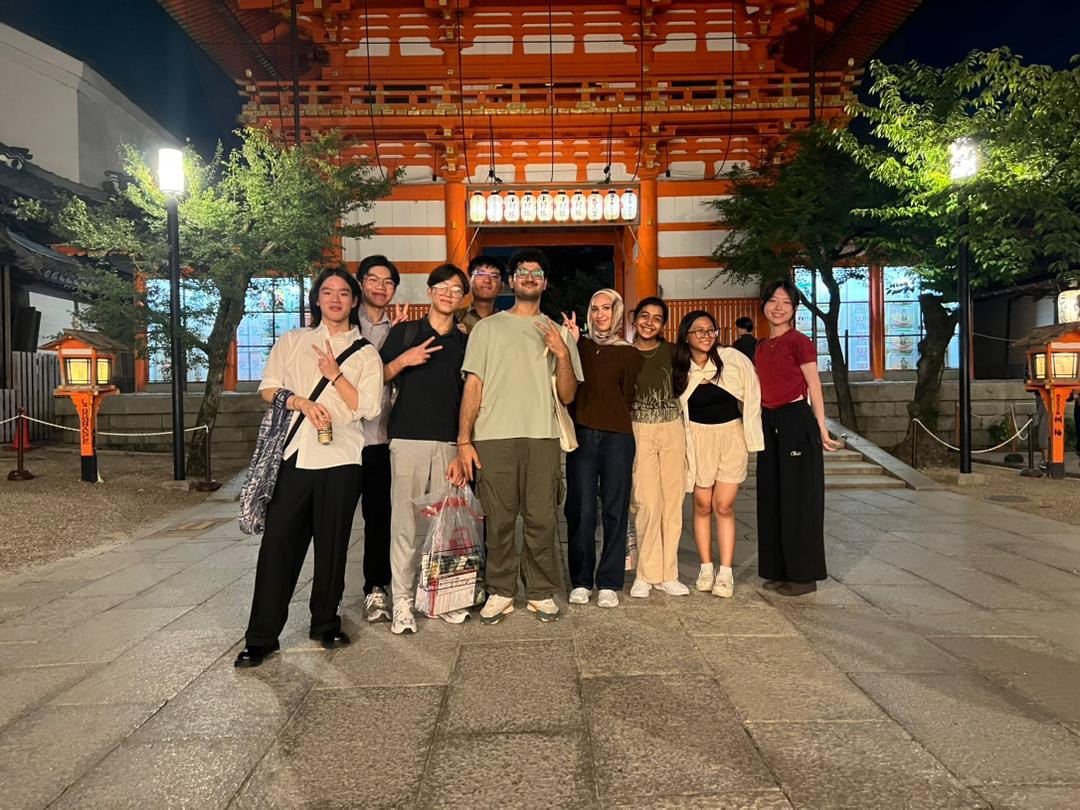
Beyond the symposium, Juin Shin “deeply enjoyed” immersing himself in Kyoto’s culture, exploring its historic temples, traditional streets and unique cuisine. The blend of scientific exchange and cultural discovery made his time in Kyoto “professionally enriching and personally rewarding.”
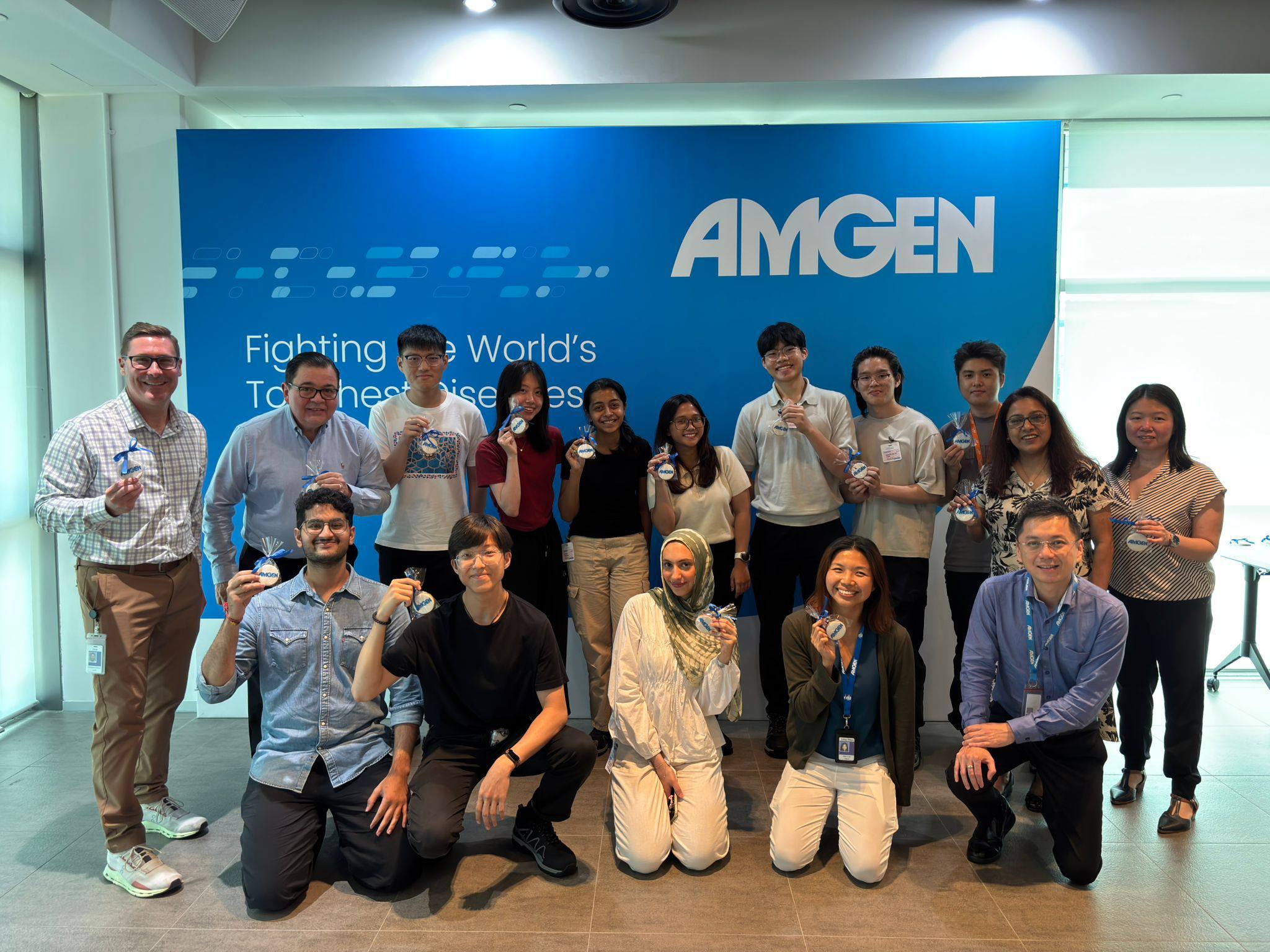
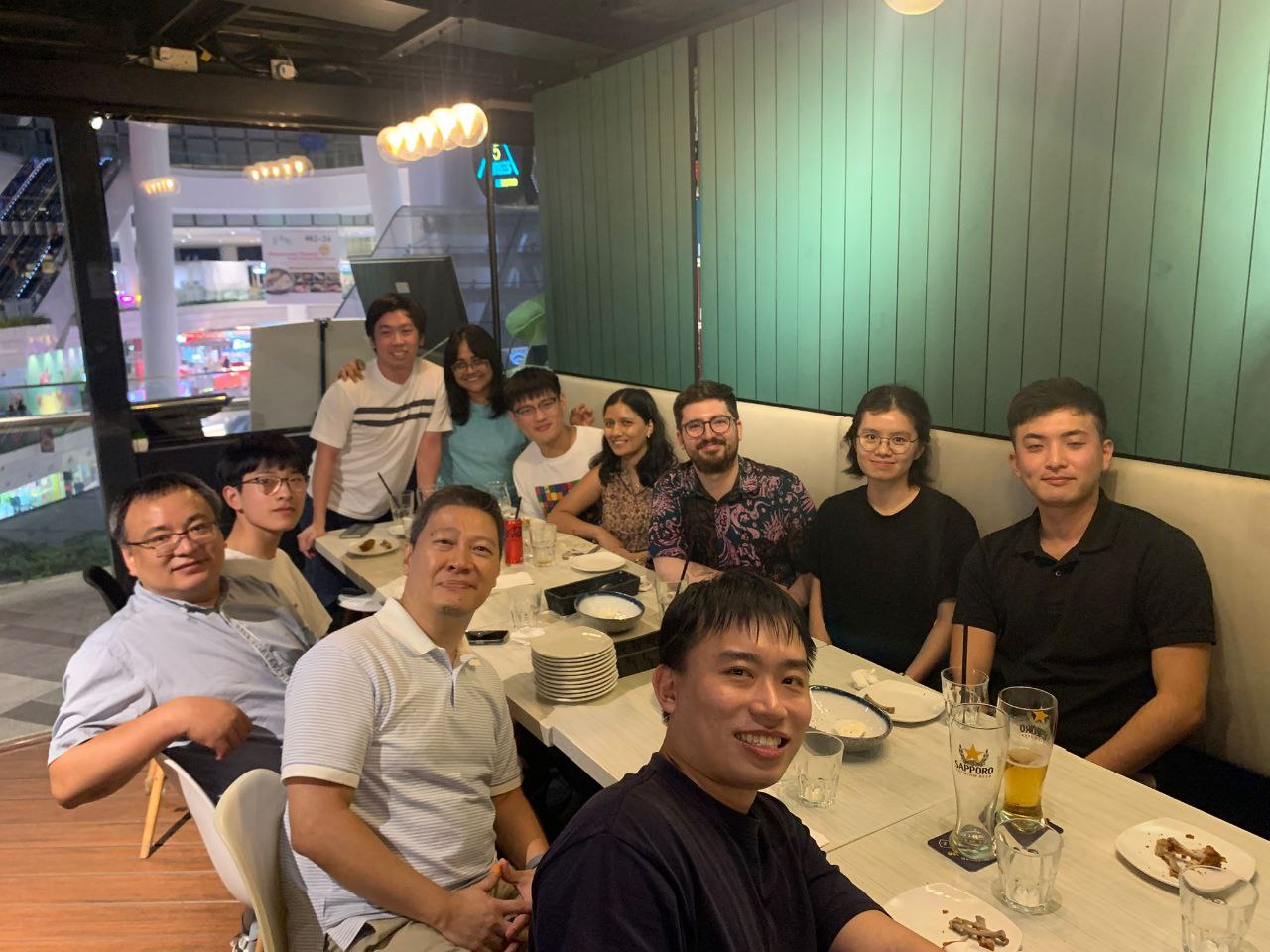
In the Singapore leg of the programme, Juin Shin visited Amgen’s NextGen plants, where he had the opportunity to see firsthand how drug development and quality control are carried out.
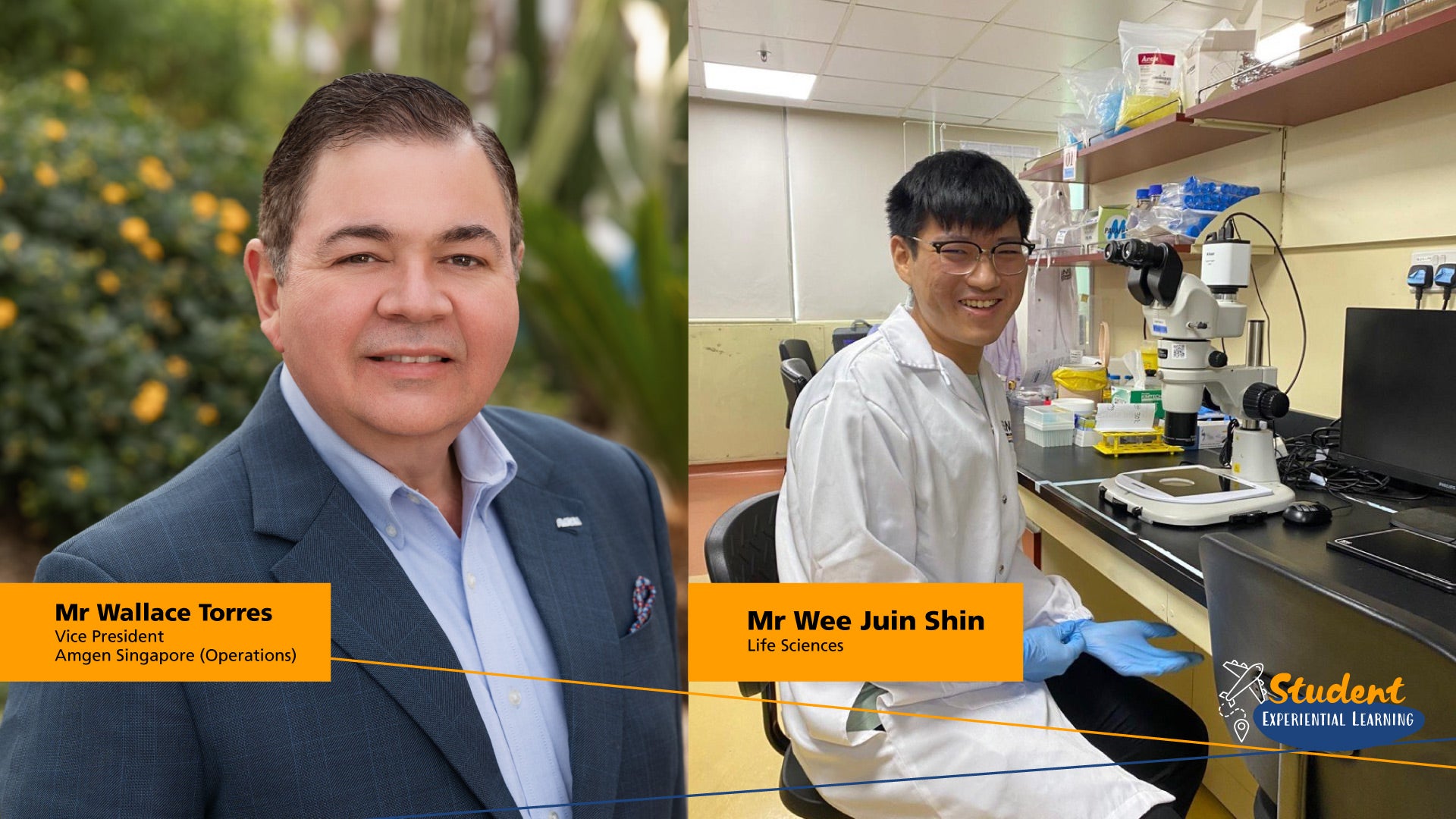
Mr Wallace Torres, Vice President, Amgen Singapore (Operations), says, “Juin Shin’s achievements and his participation reflect the spirit of scientific curiosity and excellence we aim to cultivate through the Amgen Scholars Program. We’re proud to support young researchers as they take bold steps toward advancing biomedical discovery.”
“I learned that the research process is as much about adaptability and persistence as it is about technical skill. The uncertainty and initial setbacks in follicle isolation and image analysis forced me to refine my approach repeatedly and this led to more rigorous and reproducible results. Through it all, I discovered that I enjoy the iterative nature of research in an environment that demands both creativity and precision,” Juin Shin says.
The Amgen Scholars program in Singapore has, to-date, nurtured 80 aspiring young scientists and continues to play a pivotal role in advancing innovation within Singapore and the regional life sciences ecosystem.
“We have barely scratched the surface of Timor-Leste’s biodiversity. New discoveries can have profound impacts on conservation and policy-making.”
In August 2022, we led an expedition to Timor-Leste in collaboration with Conservation International and the government of Timor-Leste. The Museum’s herpetologist, Dr CHAN Kin Onn, discovered a new species of bent-toed gecko which was named Cyrtodactylus santana, in reference to the Nino Konis Santana National Park, in which the gecko was discovered.