
His job did not exist a few years ago
March 30, 2026Chia Kwang Yang (Class of 2025) works in a role that, not too long ago, hardly existed. As an AI Engineer at Huawei, he builds intelligent agents – systems designed to collaborate, plan and execute tasks.
When he first set his sights on the field, the landscape looked very different. Back then, data science dominated and Machine Learning Engineer roles – requiring a blend of machine learning expertise and software engineering skills – were far less common. But as Large Language Models (LLM) surged in prominence, alongside emerging techniques like Retrieval-Augmented Generation (RAG) and agentic AI, the role began to evolve. The future he had been preparing for was no longer distant; it was unfolding before his eyes in real time.
By his third internship, Kwang Yang finally had his first real opportunity to step into that space. “That’s when I got to do AI engineering work properly,” he says. From there, his trajectory was set – one that carried him through the rest of his university years and into the role he holds today.
Finding direction by exploring
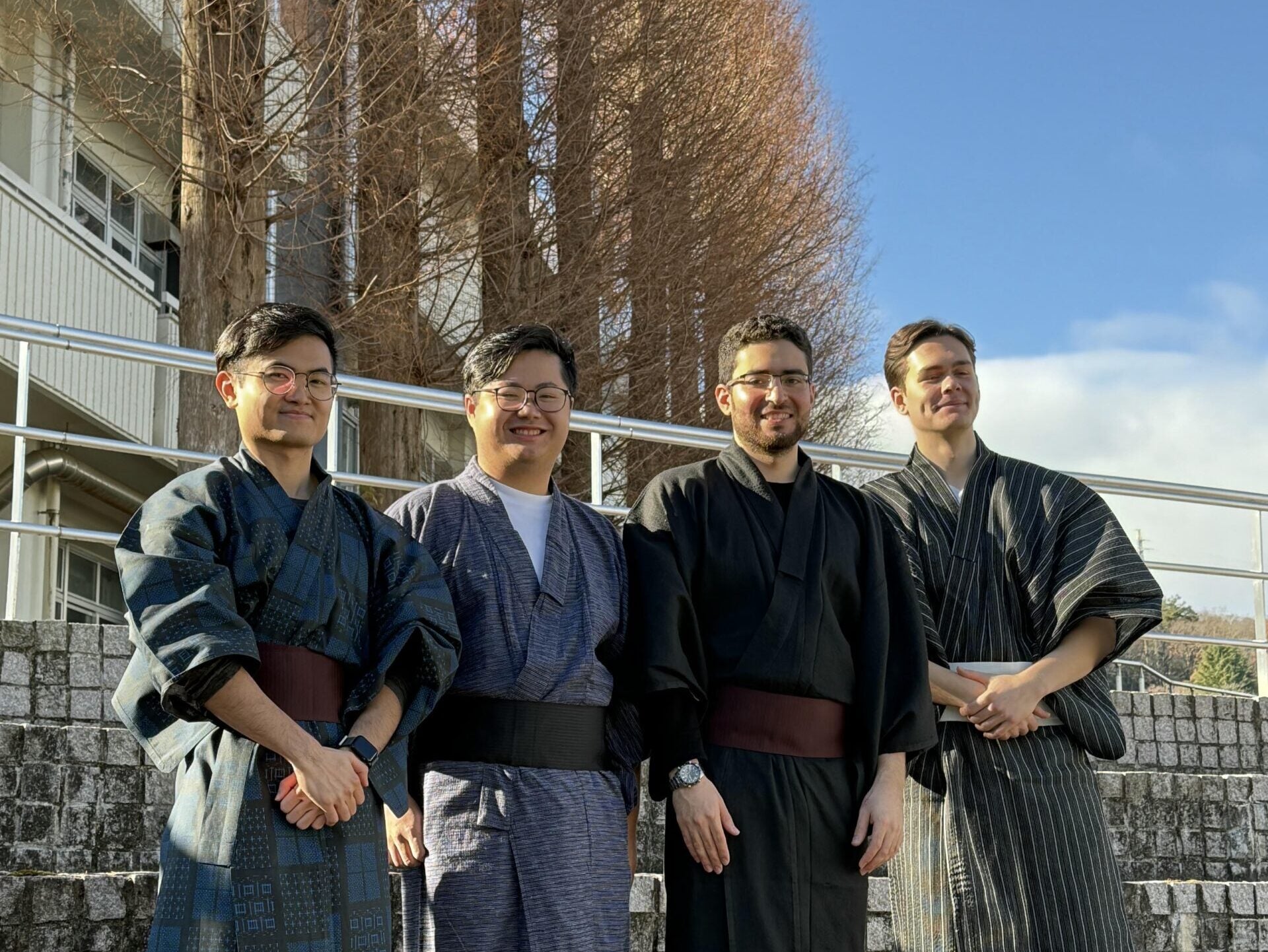
That sense of direction was hard-won. During National Service, he spent two years exploring widely, before discovering natural language processing (NLP) and explainable AI.
“I found that I really liked NLP because I was fascinated by how languages could be understood by AI,” he says. This fascination marked a turning point, convincing him that data science was where he wanted to be.
Each internship added clarity. He began with statistical analysis and data visualisation, then moved gradually into AI engineering, working on different parts of AI such as RAG mechanisms and AI-integrated software solutions for various companies. “These experiences validated my interest and helped me distinguish between product engineering and research,” he says.
Working in fast-paced startup environments also taught him essential lessons. “You learn how fast you can pick things up, how to prioritise and how to manage time to avoid burning out.”
Learning by doing
Kwang Yang’s time at the College of Humanities and Sciences (CHS) was defined as much by hands-on learning as by academic study. His final year project (FYP) is a case in point. He developed a system to combat toxicity in online gaming using LLM, analysing in-game chat histories to detect harmful behaviour – an idea that combined technical depth with social impact.
“This led me to consider how systems work, their limitations and how to deploy them in real-life,” he says. “It also shaped how I design solutions and metrics – a skill I now apply in my job.”
Even a Minor in History (which he could not complete) proved unexpectedly valuable. “In the real world, the line between right and wrong is often ambiguous. The humanities and social sciences help us navigate that complexity and analyse different perspectives to understand what our users want.”
Stepping to the frontier
When Huawei approached him, the move seemed like the next logical step. As a Chinese technology giant at the forefront of AI innovation, the company offered exposure to a new culture and broader research opportunities. “I wanted to experience working at a Chinese company because of China’s advances in AI.”
Based at a research centre, Kwang Yang now works at the intersection of research and engineering – a fitting reflection of his academic journey and internship experiences. Recently, he helped build infrastructure for Huawei’s new framework, openJiuwen, an emerging foundation for agent-based technology. While much of the work remains under wraps, he points to early developments as a glimpse of its potential. “We’ve built an agentic browser extension and even our own version of OpenClaw, called JiuwenClaw, that utilises the framework as a portable harness for our agentic systems,” he says.
Learning on the job
Transitioning into the role came with its own set of challenges. Working in a Mandarin-speaking environment meant brushing up on his language skills, while also adapting to a steeper learning curve than ever before.
“It was something I was used to from internships but the scope here is very different,” he says. He found himself working with agent systems at a much larger scale and picking up new programming languages within weeks, like JavaScript, which pushed him beyond familiar territory.
Yet, he embraces that uncertainty. “In AI, the only constant is change,” he says. “I don’t know what the next five years will look like – but that’s what makes it exciting.”
For students entering a competitive job market, his advice is grounded on experience. “Be open to opportunities, but don’t be opportunistic,” he says. “Explore your options early, build your foundations and connect your interests to your major. And pace yourself – burnout helps no one. Most importantly, be happy with what you do.”