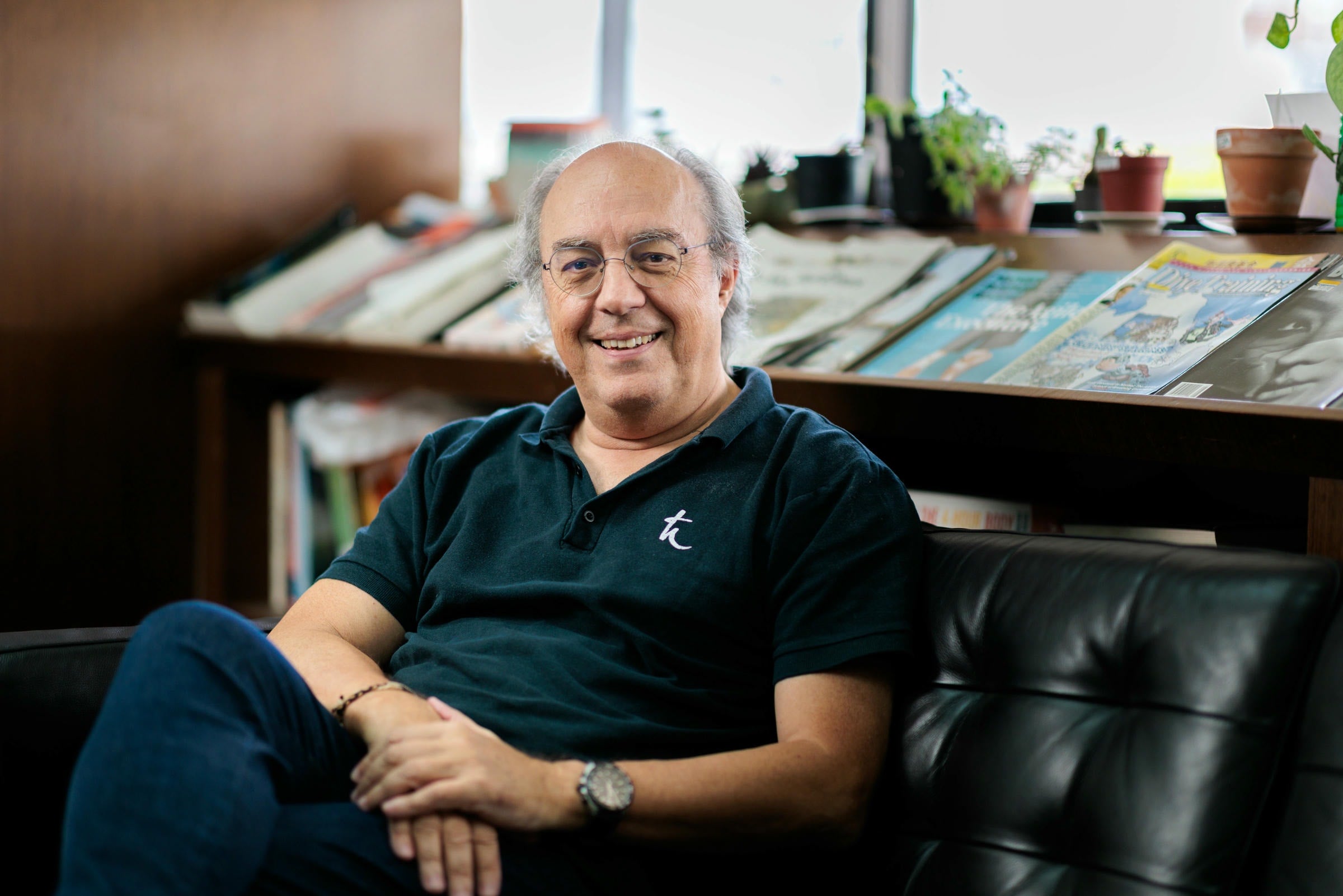
A question hangs over quantum computing: which physical platform will deliver the first truly useful devices? Neutral atoms, trapped ions, superconducting qubits – each offers promise, yet all face challenges. For Prof José Ignacio Latorre, Director of the Centre for Quantum Technologies (CQT), this uncertainty is not a setback but the engine of discovery.
“We do not know if we have found the best way to build devices like quantum computers yet,” he says. “It is important that we continue to explore the building blocks.”
This openness to possibility explains why physics sits at the centre of Singapore’s quantum ambitions. Founded in 2007 by a small group of physicists intrigued by the emerging field of quantum information, CQT has grown into a national centre shaping Singapore’s scientific standing – and public understanding – in quantum science.
That visibility was unmistakable during the International Year of Quantum Science and Technology, when CQT researchers joined colleagues from Singapore’s quantum ecosystem at the American Physical Society’s Global Physics Summit, the world’s largest physics event. Back home, CQT partnered with the ArtScience Museum and Science Centre Singapore to bring quantum concepts to the public through festivals and exhibitions. These initiatives – designed to inform without hype – have helped position Singapore as a trusted voice in global conversations in this field.
At the heart of this momentum is CQT’s partnership with NUS’ Physics Department. Nearly half of CQT’s research groups are led by physics faculty, creating an environment where theory and experiments evolve together.
“We can only do good research by having good people,” Prof Latorre says, noting the importance of strategic recruitment, including the recent joint appointment of quantum cryptographer Prof Hoi Kwong Lo.
The Physics-CQT alliance supports some of Singapore’s most ambitious quantum programmes. The National Quantum Strategy, launched in 2024 with nearly S$300 million in investment, backs focused national programmes, funds CQT’s basic research and builds new training pathways. Physics undergraduates train in CQT laboratories, while postgraduates are supported by the National Quantum Scholarships Scheme.
What makes the partnership distinctive is its comfort with uncertainty: it builds devices for today’s frontiers while leaving space for foundational questions that may redefine the field tomorrow. The result is a scientific ecosystem that links classrooms, national programmes and experimental platforms into one coherent effort. Years of groundwork are now translating into motion, with local startups emerging and global companies seeking to anchor their research in Singapore.