Making cancer visible – and more treatable
January 21, 2026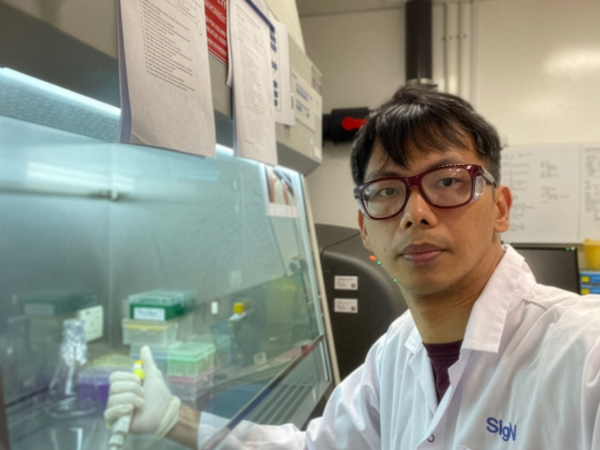
For Chemistry alumnus Dr Lim Jackwee, science has never been confined to the walls of a laboratory. From the onset, it has been about people – and about applying knowledge in ways that can make a tangible difference to human lives.
What began as intellectual curiosity has grown into a career that bridges academic research and entrepreneurship, with a clear focus on one of the most challenging medical problems: cancer.
Where curiosity takes root
As an undergraduate at the NUS Faculty of Science, Dr Lim first discovered that science could move beyond theory and test tubes to address real-world needs. He was part of the Applied Chemistry programme pioneered by Associate Professor (retired) Stephan Jaenicke, which brought academia and industry together. Through this exposure, he saw how scientific ideas could be translated into practical applications – an experience that sparked his interest in industry-led research.
That interest deepened during his doctoral studies under Professor Yang Daiwen, who became a formative mentor. Dr Lim began to view proteins not merely as nutrients, but as central players in human health and disease, influencing everything from metabolism to immune function. Just as importantly, the experience taught him resilience: “I learned to adapt quickly and constructively from failed experiments,” he says.
A global scientific education
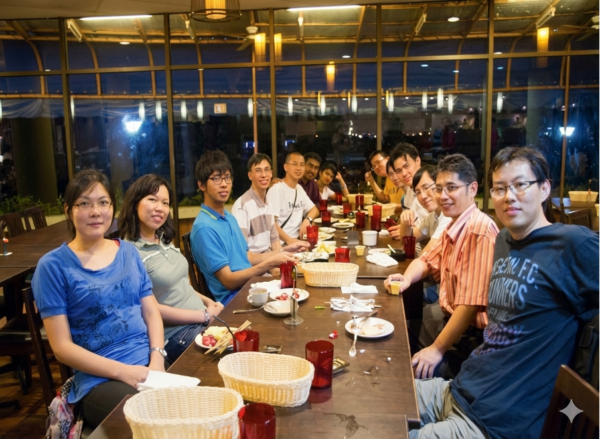
Dr Lim’s training did not stop in Singapore. Awarded the prestigious Agency for Science, Technology and Research (A*STAR) International Fellowship, he spent time at the University of Pennsylvania and the European Molecular Biology Laboratory. These experiences placed him alongside world-class scientists and entrepreneurs, broadening his perspective on how discovery, translation and impact can take different forms across research cultures.
However, one insight stood out clearly: “luck” is when preparation meets opportunities. “Entrepreneurship is the bridge that moves fundamental research beyond scientific journals into viable products that help patients,” he says.
Where research meets real-world impact
Some of his most meaningful work has taken place at the intersection of research and industry. Under Singapore’s Technology for Enterprise Capability Upgrading (T-UP) programme, his team developed a porcine viral antigen vaccine in response to an outbreak in Thailand, translating laboratory expertise into a public health solution.
In another advancement, Dr Lim developed a technology that helps scientists identify hard-to-detect immune targets which conventional methods may miss. This innovation has opened new possibilities in how immune responses are studied and applied, particularly in vaccine development and cancer research.
Making cancer visible
Driven by a deep passion for intellectual discovery, Dr Lim decided on research as a lifelong path, focusing on a critical question in cancer biology: how cancer cells evade the body’s immune defences.
Healthy and unhealthy cells display “signals” on their surfaces. These signals help the immune system decide which cells to protect or destroy. Some cancer cells, however, are adept at obscuring these signals, effectively hiding in plain sight.
Dr Lim’s research aims to uncover how cancer cells escape immune detection. By shedding light on this, his work contributes to disease detection, earlier diagnosis and the design of immune-based therapies that help the body recognise and fight cancer more effectively.
This discovery eventually led Dr Lim to entrepreneurship. Together with Dr Amit Jain from the National Cancer Centre Singapore, he recognised a gap between clinical needs and emerging immunology technologies. The A*STAR spin-off was Otter-Bio, a biotherapeutics company dedicated to developing next-generation cancer immunotherapies.
At Otter-Bio, the goal is to make elusive cancers more “visible” to the immune system. By rapidly and accurately identifying proteins on cancer cells that serve as clear flags for the immune system, the company’s technology enables the immune system to mount stronger and more targeted responses to fight cancer.
Cancer peptide vaccines, Dr Lim explains, “stimulate the patients’ immune system to produce immune memory.” Studies suggest that patients with sustained immune activity often experience better clinical outcomes. The goal, he says, is to support longer-lasting immune responses that reduce the risk of relapse and extend these benefits to a wider range of cancers.
Otter-Bio is focusing on solid cancer targets that are shared across patients which include cancer mutations and cancer associated viruses – areas where therapeutic options remain limited, especially for older patients.
Looking ahead
For Dr Lim, the long-term goal is both bold and pragmatic: to render solid tumours curable – or, at the very least, transform them from a lethal diagnosis into a chronic condition. Identifying the right antigens, he believes, is the key to tipping the balance in favour of patients.
This vision is no longer purely theoretical. Around the world, biotechnology companies have begun clinical trials for next-generation cancer vaccines, with early results offering cautious optimism. Otter-Bio’s innovations are now approaching clinical development, marking an important step in translating research into patient impact.
Cancer immunotherapies will continue to evolve, Dr Lim says, driven by advances in artificial intelligence that can uncover critical biological pathways. His own research will remain focused on identifying novel antigens that drive immune evasion and suppression – and on turning those insights into new diagnostic tools and therapeutics.
“If clinical trials are successful, new cancer vaccines could reach patients where current immunotherapies fail,” he says. “Our goal is to see Otter-Bio’s work developed into approved treatments that make a real difference in patients’ lives.”