
Forensics in action: Learning how evidence speaks
January 16, 2026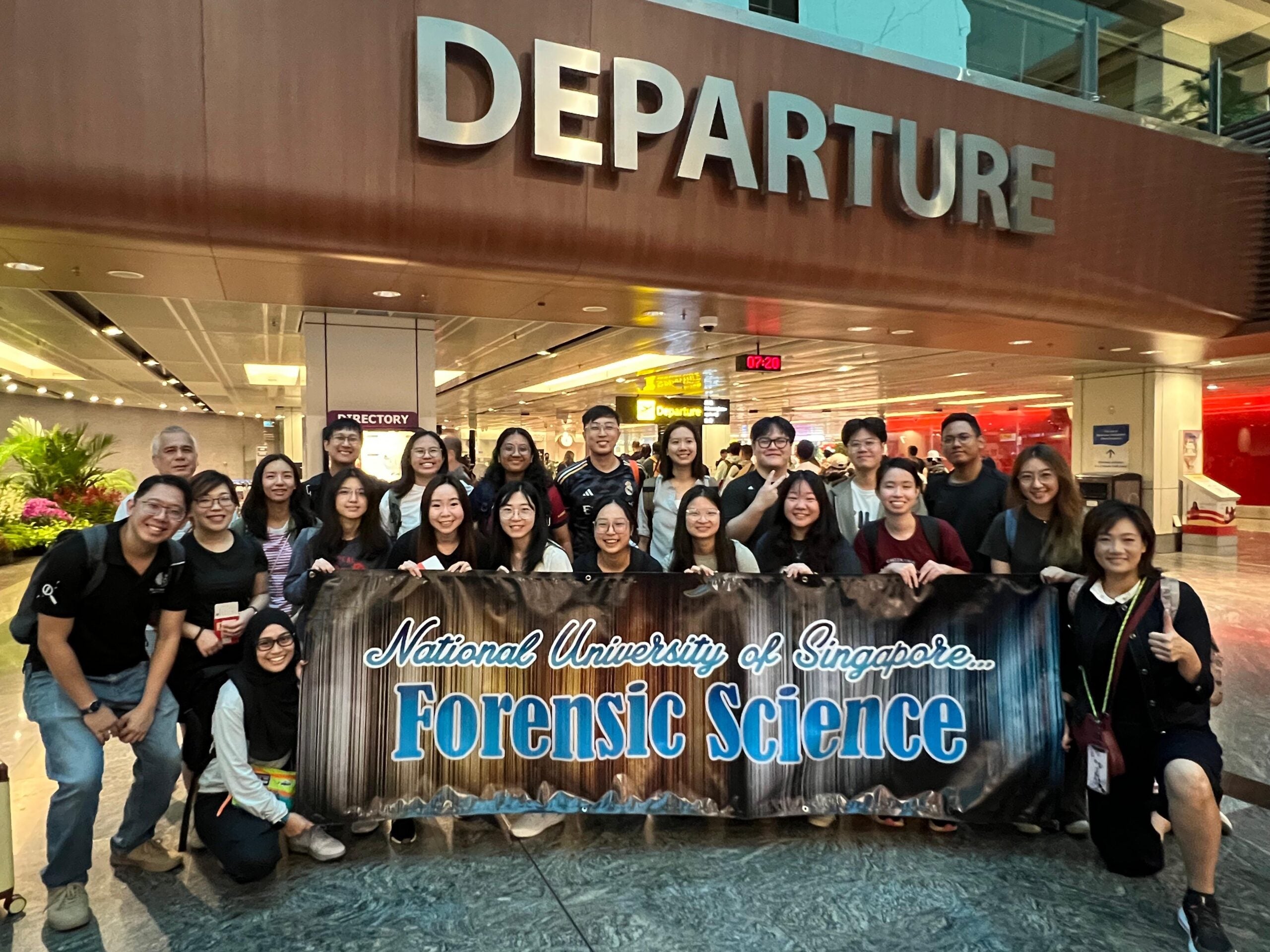
A single week in Taiwan reshaped how an interdisciplinary team of students understood forensic science – not as isolated techniques, but as a living system where science, people and justice intersect.
Stepping beyond the classroom, the students immersed themselves in the FSC4204 Criminalistics: Evidence and Proof course, which is designed to show how forensic science is practised in real-world settings.
Assoc Prof Stella Tan, Director of the Forensic Science programme, says, “This course presents a unique opportunity to observe and practice forensics in a different legal and cultural context. Students get to see how the concepts they have learned across multiple courses come together in real life.”
Where theory becomes reality
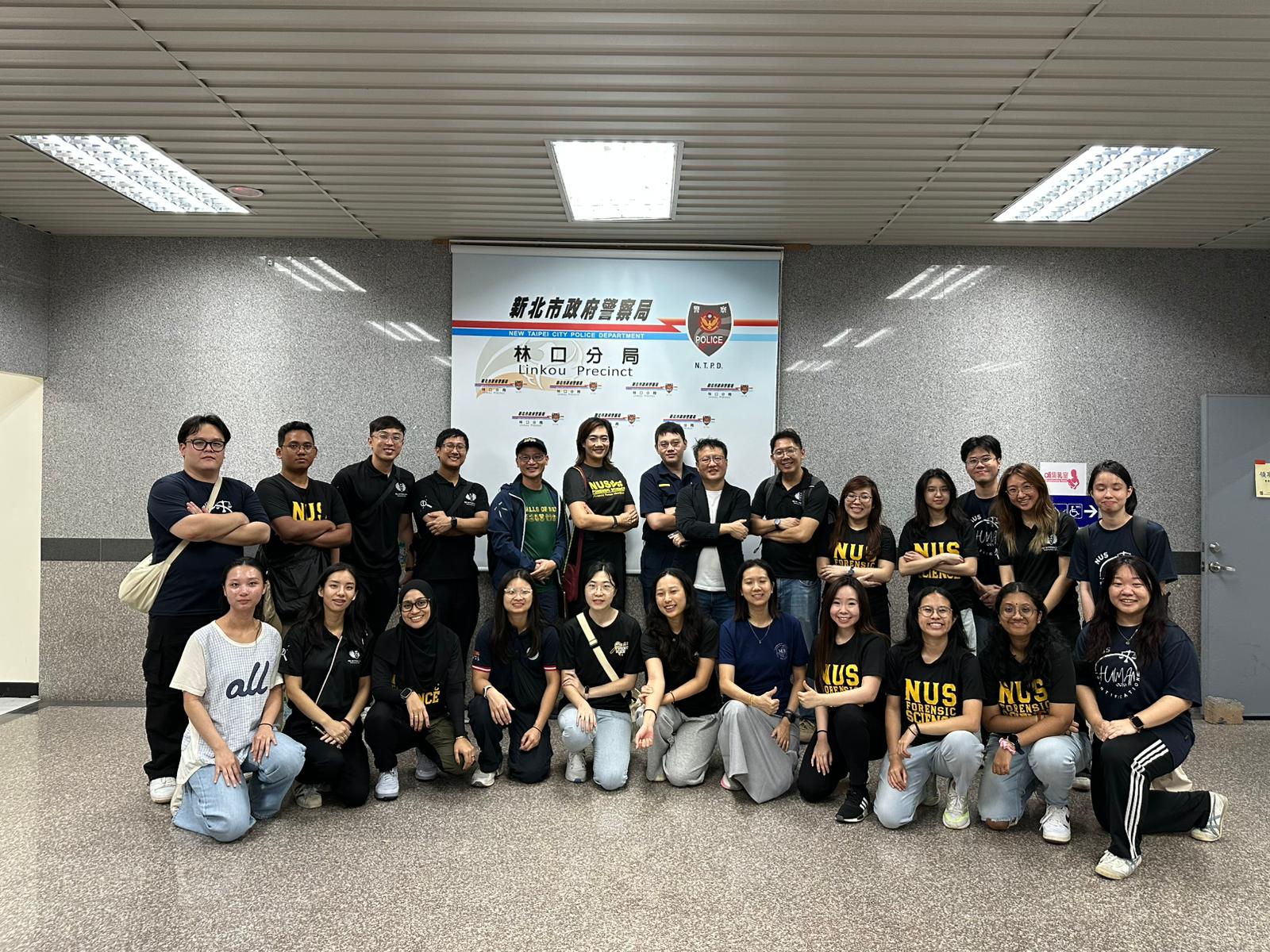
The programme offered more than lectures – it was an immersive journey through Taiwan’s forensic ecosystem, with practical sessions and site visits to institutions such as the Central Police University (CPU), Forensic Science Centre, the Criminal Investigation Bureau (CIB), the Institute of Forensic Medicine under the Ministry of Justice, and police precincts in Luzhou and Linkou.
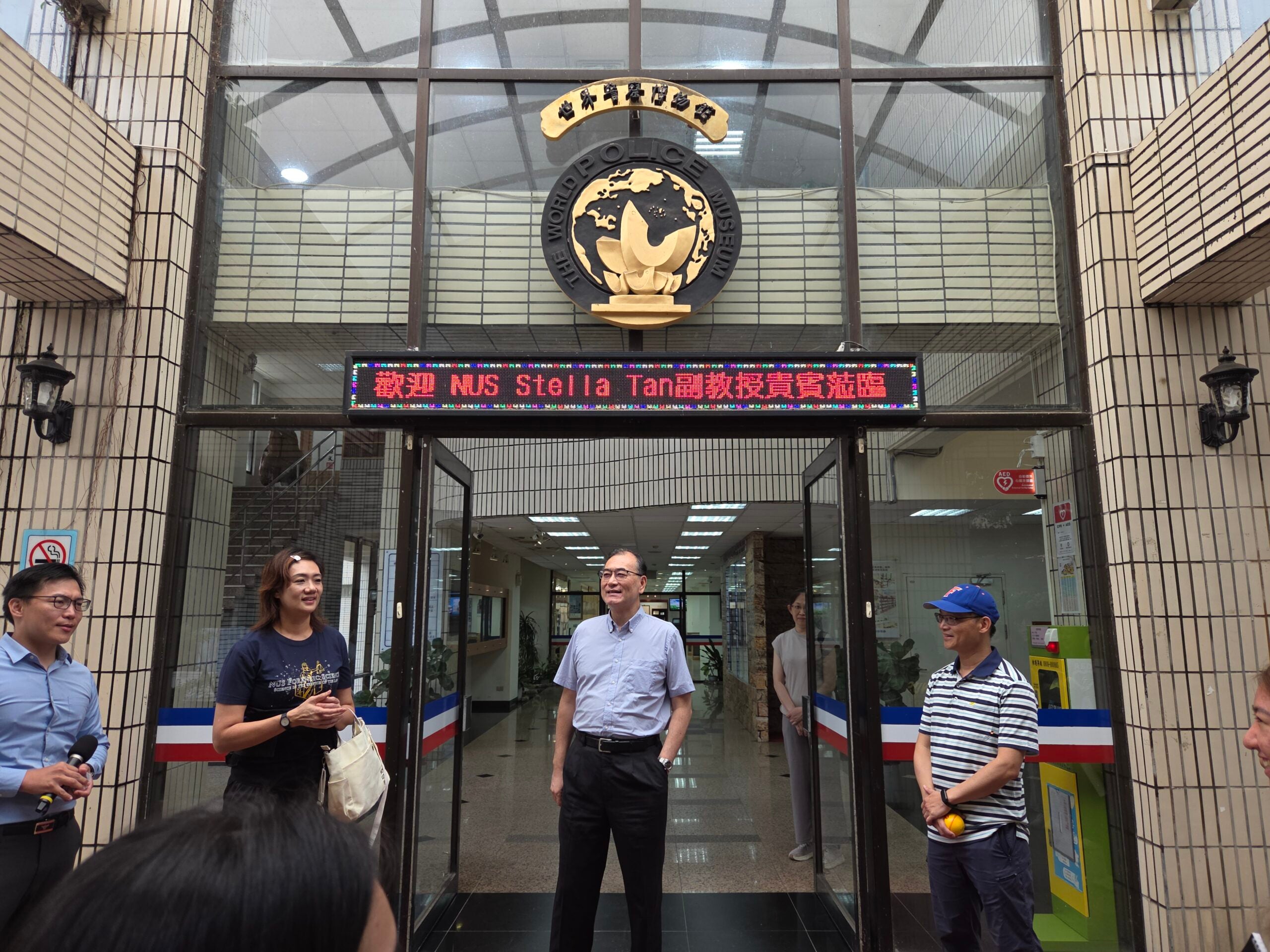
Meeting professors, investigators and frontline officers transformed theory into reality. Conversations onsite and opportunities to ask candid questions revealed the decision-making behind forensic processes, offering insights that no textbook can fully capture.
“The programme brings to life how science operates within legal frameworks, systems and cultural contexts,” says Prof Tan.
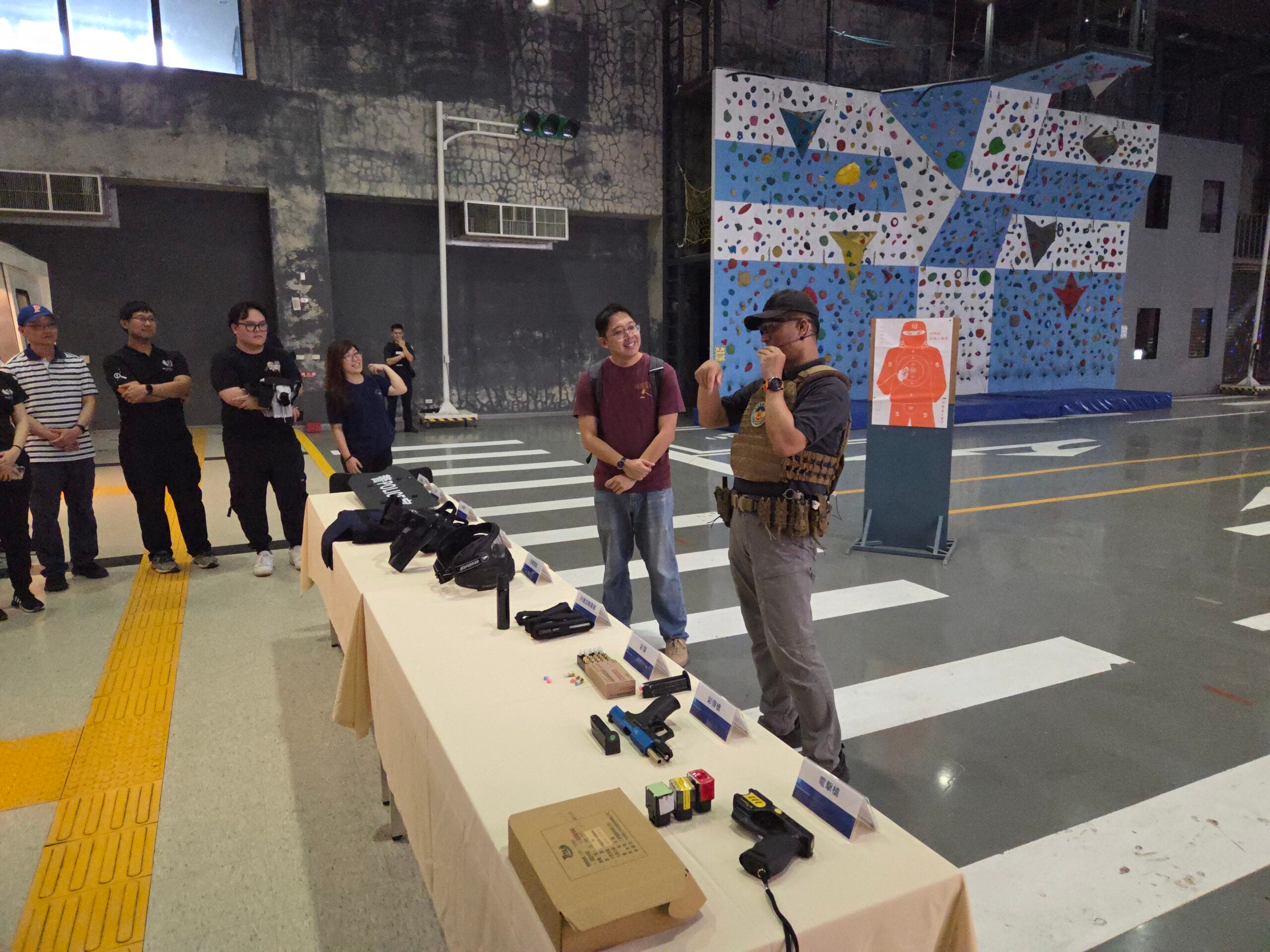
The fast-paced programme was a packed one, challenging the students to adapt quickly, collaborate closely and think critically. One day might begin with evidence collection at a simulated crime scene – fully suited in Personal Protective Equipment (PPE)- before moving into the laboratory to enhance latent fingerprints on challenging surfaces like mirrors or metal utensils.
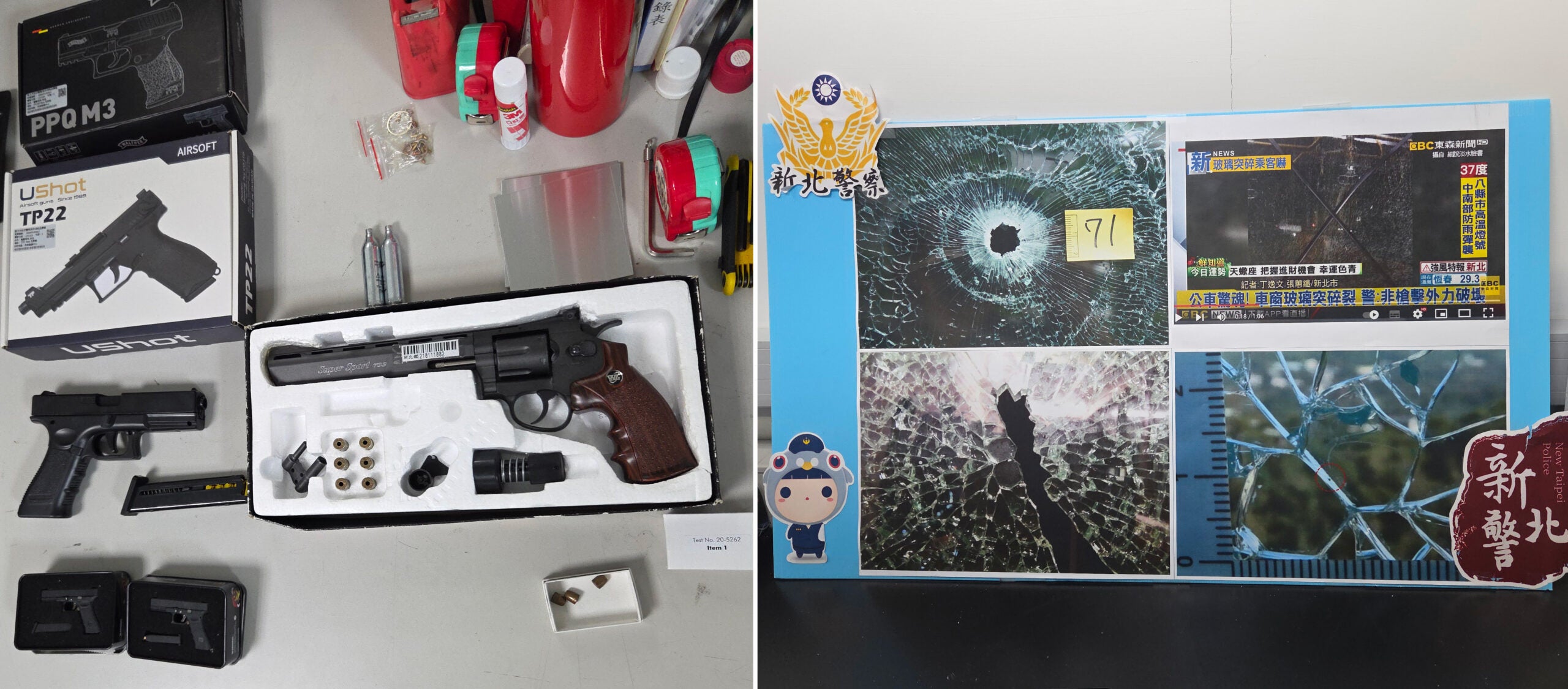
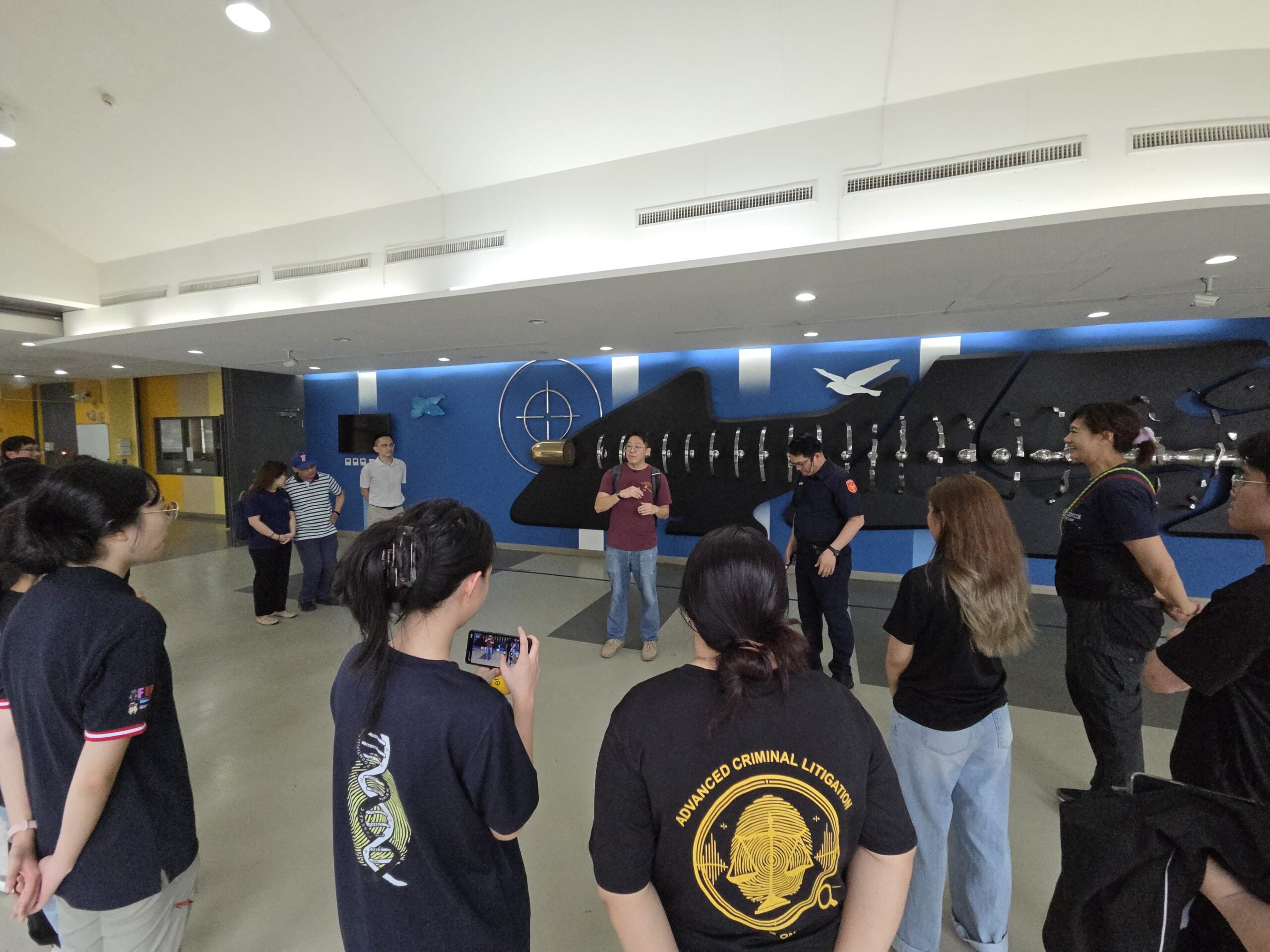
Another highlight was exposure to technology-driven training at CPU, where virtual reality and eye-tracking-assisted marksmanship simulations showed how officers refine skills through immediate feedback. Visits to specialist laboratories at the Institute of Forensic Medicine underscored the importance of standard operating procedures on evidence management, documentation and chain of custody, while sessions at CIB introduced ballistics recovery and discussions on polygraph use, prompting comparisons between forensic practices across countries.
Turning challenges into lessons
Challenges were inevitable. Protocols and terminology are different across agencies. The students responded by developing shared checklists, assigning roles within their groups and holding quick debriefs to align their understanding. When technical concepts, like ballistics striations or optical methods for fingerprints, became too complex, they leaned on one another – asking questions, linking new information back to prior lectures and pooling notes to reinforce learning.
Support from Assoc Prof Tan and her team and the openness of their Taiwanese hosts turned these hurdles into some of the programme’s most valuable lessons.
Building connections through shared moments
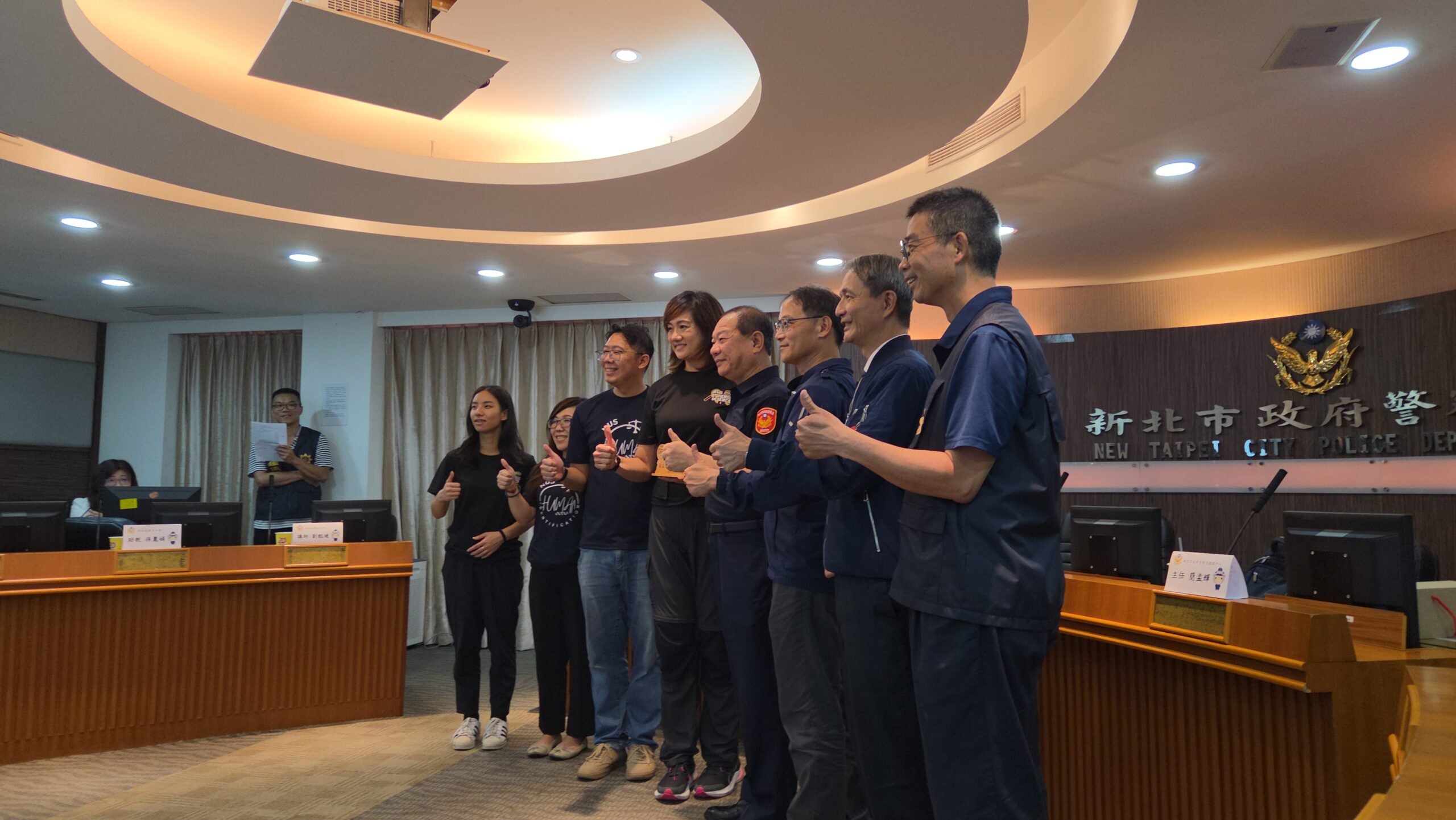
Beyond the briefings and work visits, cultural exchanges added depth to the experience. From a light-hearted moot-court-style presentation on Taiwanese produce to learning about the ‘guaiguai’ tradition of placing a snack near equipment to ensure smooth operations, small moments like these shed insights into local workplace culture.
“Conversations with CPU students Jimmy, Ai and Chen Po-Chen about campus life, food and study habits gave us a sense of what it is like to learn criminalistics in Taiwan,” says Life Sciences student Lexis Aw.
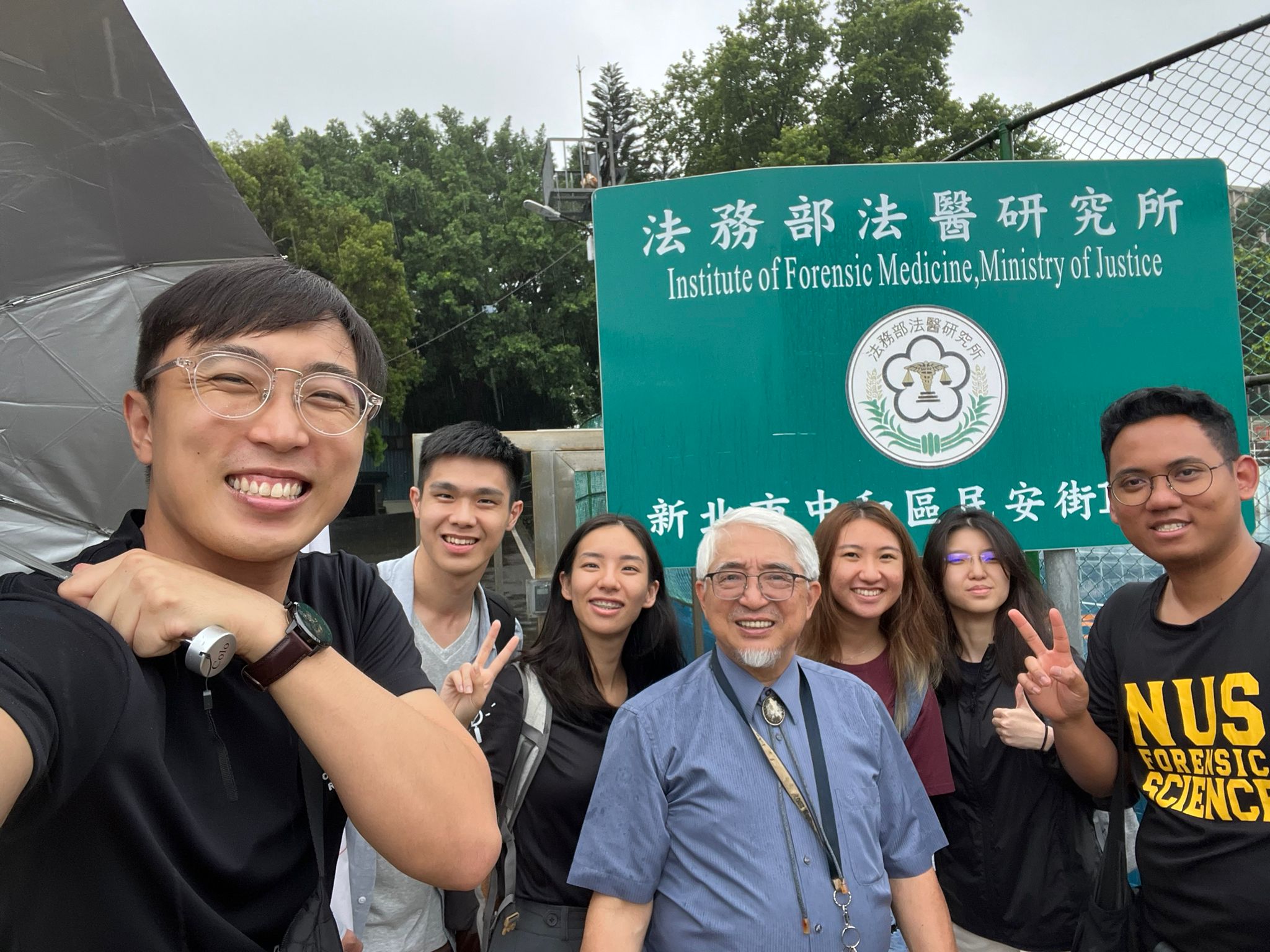
“We also interacted with Kevin, an investigator pursuing a PhD, during our sharing session. Hearing how he bridges operational work with doctoral research helps us picture realistic pathways from the classroom to the field and to scholarship,” adds Mohammad Afiq Ihsan Bin Mohammad Hussien Afiq, a Chemical Engineering student.
Unplanned moments also left lasting impressions: singing on the bus, sharing meals and evening wanderings through night markets like Raohe and Ximending.
“The trip did not only broaden our students’ understanding of criminalistics. They also came away with a better understanding of how multidisciplinary the programme is. It does not only draw on chemistry, physics, engineering and behavioural science – but it also illustrates how science, systems and people come together in practice,” Assoc Prof Tan says.