
Academic Mentorship (Resources)

Welcome to the Academic Mentor Resource page.

The Faculty of Science Academic Mentorship Programme is designed to support Year 1 students as they begin their university journey. By connecting new students with faculty members, the programme aims to provide guidance, foster personal and academic growth, and help students navigate the opportunities and challenges of university life. 

This page gathers essential resources to support your role as an academic mentor. Whether you are meeting your mentees for the first time or guiding them through academic and personal decisions, this page is here to help. Each section offers tools and information to help you provide informed, compassionate, and well-rounded support—covering academic guidance, personal development, campus life, and mentor growth. 

Academic Matters

Stay updated on curriculum structures, academic policies, and key academic milestones. This section will help you respond to academic queries or direct students to the appropriate contacts. 

The College of Humanities and Sciences (CHS) integrates FASS and FoS students under a common interdisciplinary framework, combining a shared curriculum with major requirements and electives to equip students with core competencies and flexible academic pathways. Read more here.  

Refer to up-to-date information on majors, second majors, or special programmes, and more. Specific graduation requirements and information on minors or specialisations can be found on their respective pages. 

For any academic inquiries, please contact the undergraduate team here.

Understand the range of overseas exchange programmes available to students. This section helps you effectively guide students in exploring global learning opportunities and planning their exchanges.

The Faculty offers [as of Jul 2025] eight concurrent degree programmes, as well as semester/year-long student exchange, or overseas summer research programmes. Students are also able to self-source overseas opportunities 

NUS Enterprise offers the NUS Overseas Colleges programme, popular with students keen on exploring entrepreneurship. The Global Relations Office also offers overseas opportunities with a wide variety of summer and winter programmes. Do note, partner universities may be exclusive to either the summer or winter. 

Additionally, the Faculty offers several financial assistance schemesoverseas student exchange loansscience student overseas exposure fund to support students’ participation in overseas programmes. 

Access information about internships, industry attachments, and career preparation programmes. Important for guiding students to start exploring professional pathways, looking to build relevant experience and develop professional skills.

Additionally, the Faculty offers an Undergraduate Professional Internship Programme (UPIP) worth 4 credits, if taken in the special term, or 12 credits, if taken during the regular semester. UPIP gives Science undergraduates practical on-the-job training through structured internships during their undergraduate study. In order for an internship to be considered for UPIP, it needs to be a full time position (minimum 35 weekly working hours) and the job scope needs to be related to major of study and able to add value to your degree programme. 

In collaboration with CFG, the university offers global internship programmes (CFG2101, worth 4 credits) along with financial aid for Singaporeans and Permanent Residents. This is distinct from the vacation internship programme which is not credit-bearing.  

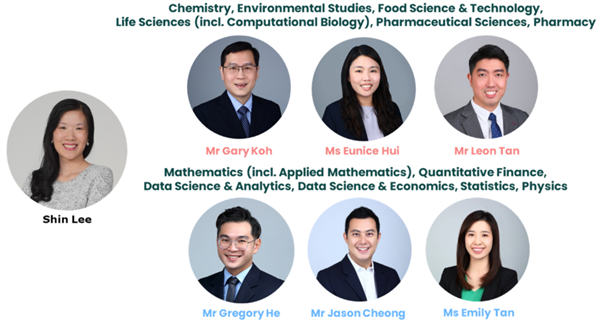
For any queries, students may contact the Faculty’s CFG career advisors here. 
A new career preparation initiative for the College of Humanities and Sciences (CHS) students, the Career Compass Series,comprises four courses to be completed over four years of studies. These courses constitute the main structure of our 4-year Career Readiness Roadmap, which aims to provide a formal framework to help students with their career and personal development across the whole duration of their undergraduate journey.

With effect from Semester 1 of Academic Year 2021/2022, the courses will be allocated to CHS undergraduates, one course for each year, and delivered by the Centre for Future-ready Graduates (CFG). These courses will apply to all CHS undergraduates Cohort 2021 onwards, including students in special programmes (Double Degree Programmes (DDP), Joint Degree Programmes (JDP), Concurrent Degree Programmes (CDP) and Cross-Disciplinary Programmes (XDP)). The courses will not apply to Pharmacy students or DDP students whose first degree (home course) is not in CHS.
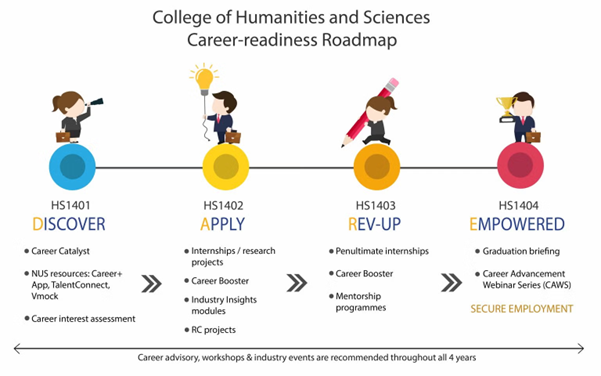
You can find more information regarding Career Compass here.

Other Opportunities

The Undergraduate Research Opportunities Programme in Science (UROPS) provides students with the opportunity to work closely with faculty on independent research projects. It offers valuable exposure to scientific inquiry, mentoring relationships, and skills in communication, critical thinking, and collaboration, complementing classroom learning and preparing students for future careers or postgraduate study.

Eligibility & Levels:

  • Level-2000: At least 1 semester completed, GPA ≥ 3.00
  • Level-3000: At least 3 semesters completed, GPA ≥ 3.00

Units & Duration:

  • 4 Units (1 semester): Register for XX2288 or XX3288; graded at semester end.
  • 8 Units (2 semesters): Register for XX2288/XX3288 (IP grade after 1st sem) and XX2289/XX3289 (final grade after 2nd sem).

Departments will decide on the format of evaluation/examination. For more information, please contact them directly. More information on UROPS here.

Explore the rich co-curricular life of the university—from clubs and societies to faculty and university-level events. This section can help you encourage students to build friendships, develop soft skills, and engage with campus life. 

NUS Science Club represents undergraduates in the Faculty of Science. Students may join any of their 10 academic societies to contribute to student life activities as listed below: 

Students can also join the Science Journalism Club, managed by the Office of Student Affairs. Students can get involved by visiting this page.  

Students may also refer to NUSOne, launched in August 2024 to provide a snapshot of student life at NUS and useful information for matriculating freshmen. You may find their freshman guide here. As part of the  NUS community, one could (1) engage and explore, (2) empower, and/or (3) serve.. 

  1. Engage and explore – students can find a directory of student organisations to join on NUSync. Current students may view or edit their CCA record here. 
  1. Grow and Empower – quick links for personal development, global exposure, and career compass. 
  1. Impact and serve – students could build leadership and volunteer by engaging with communities and/or joining Teach SG – an NUS initiative where students could mentor children and youth from disadvantaged backgrounds. 

Learn about the university’s support ecosystem, including peer supporters, student supporter managers, mental health services, and financial aid schemes. This section is useful when students face personal, social, or financial challenges and need additional help. 

Well-being and mental health support – below is a list of contacts for emergency situations: 

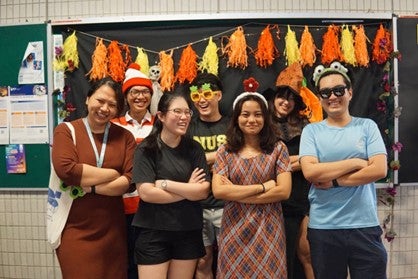
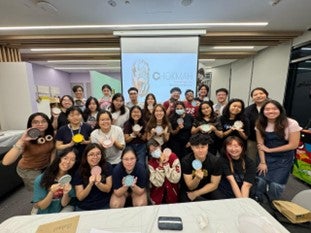
Apart from the listed sources, students may also choose to approach peer student supporters (PSS) – fellow undergraduates from the Faculty trained to render academic and emotional support. They are here to listen, empathize, and help students find the resources they need on campus. They have a dedicated space at Pitstop@FoS (above Frontier canteen) and are stationed there from Monday to Friday, 1-5pm. Students can also connect with them on Instagram or through the uNivUS app.

Some of the events the PSS have had in the past are:

  • Table tennis tournament
  • Halloween sales
  • Welfare distribution (Old Chang Kee)
  • Coaster making workshop


  1. Financial assistance 

Students may check their eligibility for financial aid here. They may also refer to the aid calculatorapplication guide, and calendar. 

There are several means of financial aid at the University level – tuition fees and living cost schemesresidential programme bursaries, and NUS scholarships. Other student life scholarships include the community impact scholarship, sports scholarship, or performing and visual arts scholarship. For more information, students may explore this scholarship website.  

Additionally, the faculty can support students via the annual Science Student Fund (SSF) bursary or the case-by-case and ad hoc SSF emergency aid. 

  1. For any queries or further information, mentors and students may contact Ms May Koh, Mr Vincent Teo, Ms Eliza Tan.

Find suggestions, ideas, and tools for building rapport and maintaining meaningful conversations with your mentees. Whether you are reaching out for the first time or looking to deepen connections, this section offers practical approaches for engaging students in a way that is respectful and supportive. 

To better support your mentees, you may find a copy of the FoS Mentor Handbook here. 

Discover faculty-organised workshops, resources, and reflection tools designed to enhance your mentoring experience. A valuable space to connect with other mentors, share practices, and grow your mentoring skills. 

Here are some of the past mentor workshops: 

  • Empowering Students to Design Their Academic Journey 
    Professor Kathy Takayama — January 2024 
  • Elite Sport and Academic Performance: Mental Health in Higher Education 
    Associate Professor Emily Ortega — April 2024 
  • Improving Student–Faculty Interactions Outside (and Inside) the Classroom 
    Dialogue with Professor Peter Felten, 2024 Educator-in-Residence Fellow — September 2024 
  • Empowering Neurodiverse Learners: Practical Strategies for Inclusive, Compassionate Teaching 
    Mavis McAllister — January 2025 
  • Faculty of Science,  Mentors’ Refresher Workshop: Supporting Student Life, career preparation and Academic Guidance 
    Faculty of Science Mentorship Programme — August 2025 
    Designed to equip mentors with updates and resources to better advise students on academic planning, career development and student life. 

If you are interested in discussing or learning on specific topics please share with us by indicating your interest here . 

If you are a faculty member at or associated to the Faculty of Science and you are interested in becoming a mentor please contact us! 

Dr Linda Sellou
Asst Dean

Ms Lim Jia Jia
Asst Manager

Ms Jessica Raj
Senior Executive