Prof Chen Wei is the Faculty of Science’s Vice Dean (Research). He oversees the strategic development and advancement of the Faculty’s research initiatives and capabilities, including fostering interdisciplinary collaborations.
Our stories of impact: Where science meets purpose
A copper-free high-temperature superconducting oxide
Published in Nature (March 2025)
Superconductivity is a macroscopic quantum phenomenon in which certain materials conduct electricity without resistance. Most known superconductors operate only at ultralow temperatures or under ultrahigh pressures, limiting practical use. Prof Ariando’s team designed a nickel-oxide compound using pulsed laser deposition and achieved high-temperature superconductivity at around 40 kelvins in a new copper-free oxide, without applied pressure. This discovery advances the search for higher-temperature superconducting materials beyond copper and opens possibilities for energy-efficient technologies.
“Our findings represent a major step towards the development of next-generation superconducting materials.”
Building tomorrow’s security - at the quantum level
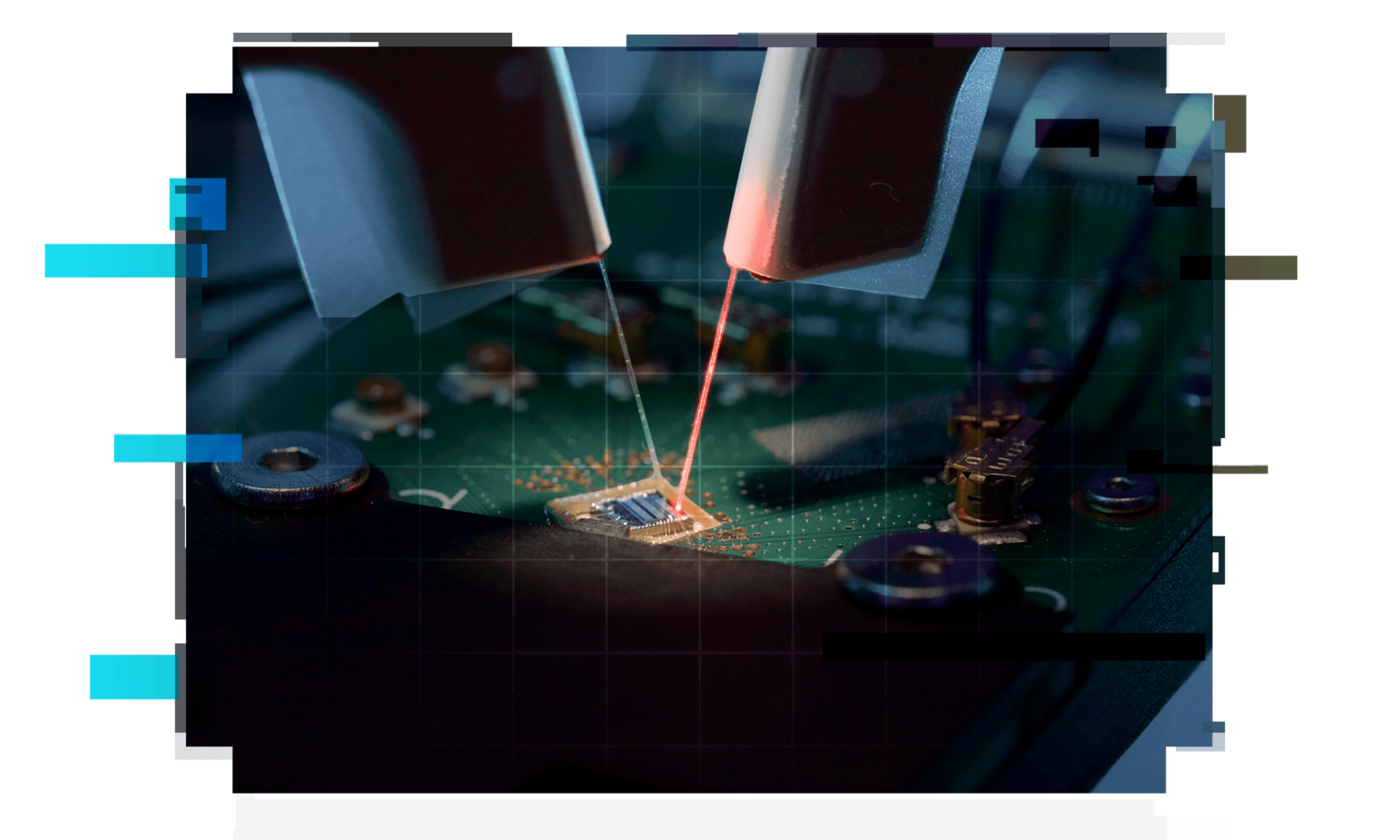
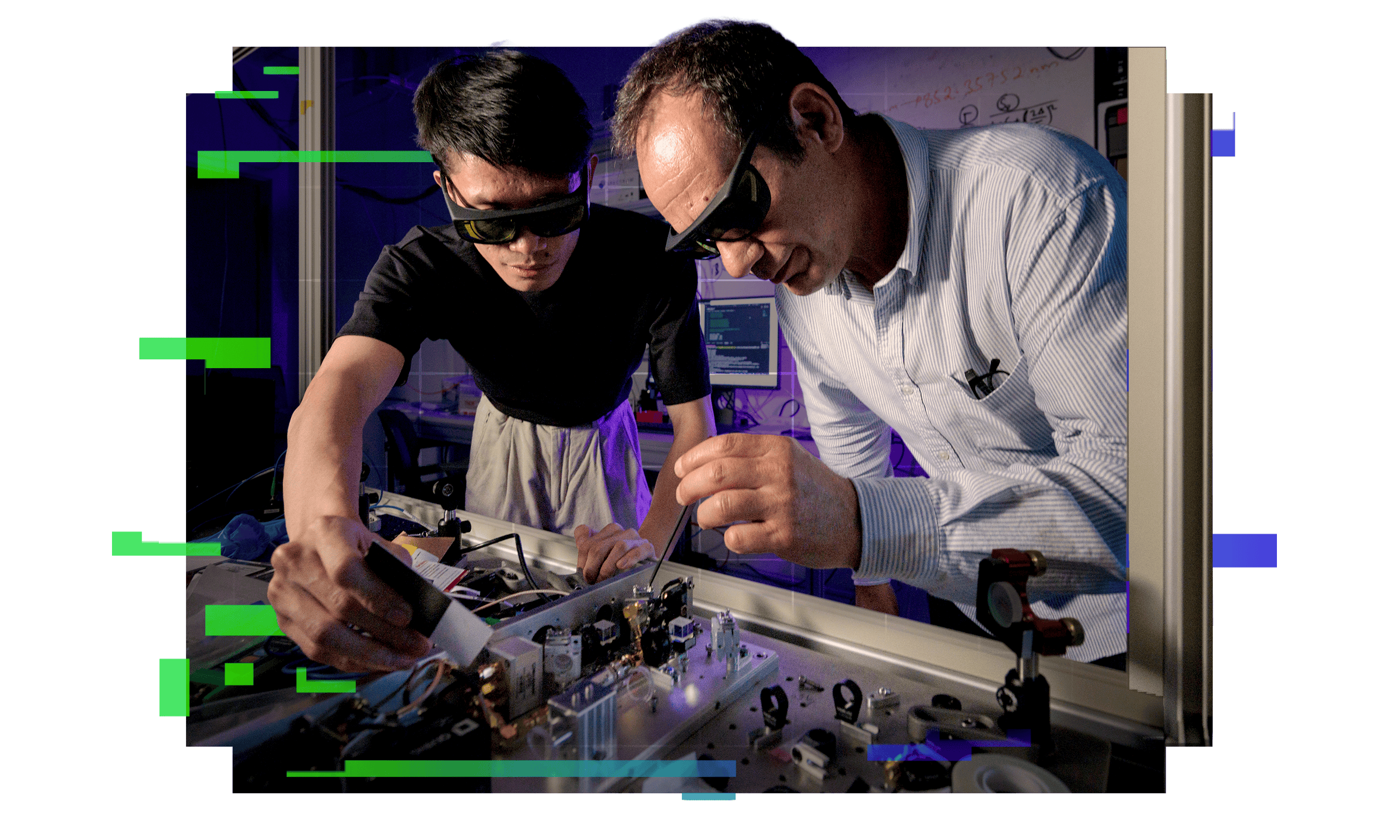
After 12 years immersed in physics and quantum technologies at NUS, Physics alumnus Dr Goh Koon Tong learned to bridge theory and application – a habit that would define his next chapter. At Squareroot8, the startup he cofounded, he translates quantum principles into practical security products. Its quantum random number generator harnesses nature’s inherent unpredictability to produce encryption keys that remain secure even against quantum computers. With Squareroot8’s technologies, industries gain reliable protection of data and the confidence that critical operations remain uninterrupted and safe.
“I saw a gap in quantum security expertise in the region and I aim to develop industry-leading security solutions for the quantum era.”
Among the key contributors to Singapore’s growing quantum ecosystem is the longstanding partnership between the Centre for Quantum Technologies (CQT) and NUS Physics. Almost half of CQT’s research groups are led by physics faculty, a structure that anchors frontier theory to laboratory practice. Together, they advance everything from fundamental quantum science to the development of neutral-atom and trapped-ion processors under the National Quantum Processor Initiative. What makes the partnership distinctive is its comfort with uncertainty: it builds devices for today’s frontiers while keeping space for questions that may redefine the field tomorrow.
“We leave space for our scientists to be imaginative and to pursue curiosity-driven research.”
– Prof José Ignacio Latorre, CQT Director
A stage in Paris, an audience at home
At the United Nations Educational, Scientific and Cultural Organization’s headquarters in early 2025, scientists and diplomats launched the International Year of Quantum Science and Technology, marking a century since physics entered the realm of wavefunctions and uncertainty. On stage was Faculty of Science physicist and CQT Principal Investigator Prof Alexander Ling, who has spent years miniaturising quantum experiments until they are small enough to ride on satellites.
In Singapore, CQT turned the Paris moment into a year of activity. CQT’s Ms Jenny Hogan chaired the national International Year of Quantum (IYQ) workgroup, joined by the Faculty’s and CQT’s Prof Christian Kurtsiefer and representatives of other research organisations and quantum startups. Collectively, they helped shape local programming: a new exhibition at Science Centre Singapore, a fresh run of CQT’s QCamp for pre-university students and a yearlong calendar of events.
Demonstrations ran at the Science Centre Singapore, library talks drew new audiences and booths at science fairs gave visitors a chance to see quantum ideas in action. At one fair, CQT PhD student Darren Koh produced entanglement for then-Education Minister Chan Chun Sing. At another event, children leaned close to soap films that flickered into “bubble computers”, a playful analogy for how quantum devices attempt problems in ways classical ones cannot. For many, it was their first glimpse of the subject beyond textbooks.
When particles refuse to sit still
Quantum mechanics resists straightforward teaching. Barriers leak. States blur. Photons connect across distance. Yet these ideas now feature in lectures at the Faculty of Science. Physics majors can pursue a Specialisation in Quantum Technologies. Students from other disciplines encounter the subject through World of Quantum, a Common Curriculumcourse that emphasises concepts over algebra.
Seeing order in uncertainty
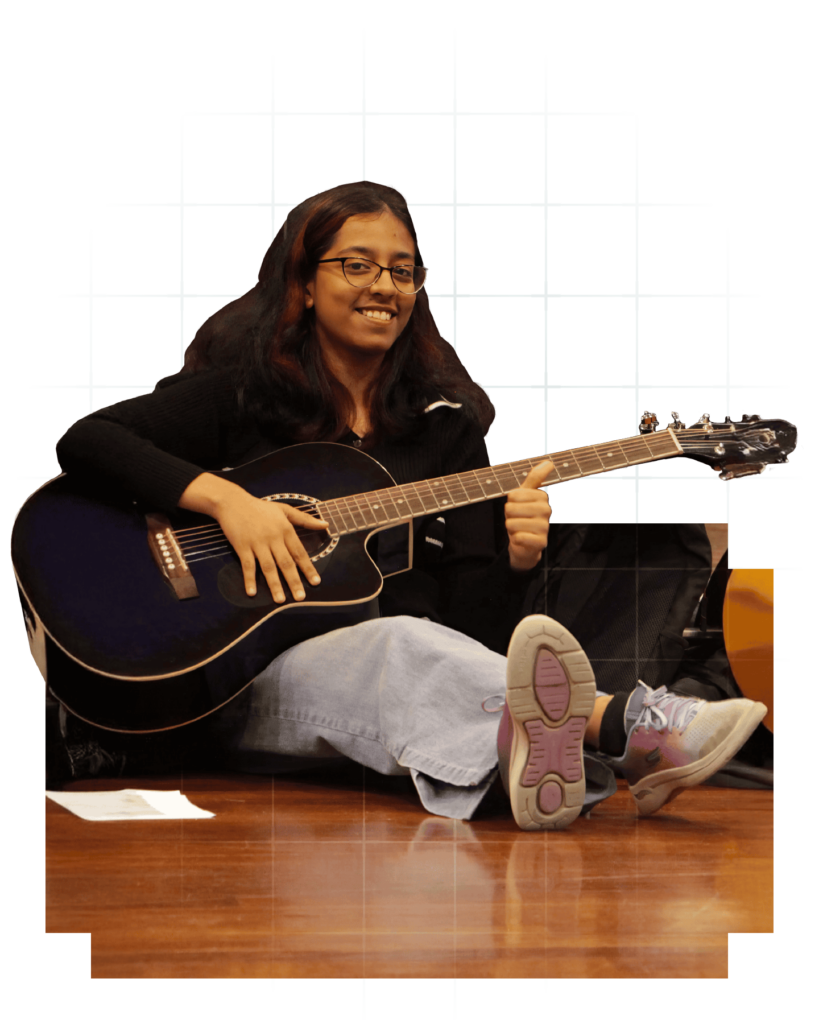
Arushi Sachan (Year 2, Major in Physics, Minor in Artificial Intelligence) first encountered quantum mechanics in an introductory class, where familiar ideas began to blur. In the Quantum Mechanics I course, she saw how mathematical language and logic can describe nature at its most unpredictable. Her studies have since taken her to optics laboratories in Germany and Delhi, where she watched trapped atoms respond to laser light and observed qubits beyond theory. For her, learning quantum is an exercise in perspective, a way of thinking that accepts uncertainty while seeking coherence within it.
“What draws me to quantum is the unique intellectual challenge and sense of wonder that comes with trying to grasp a domain governed by probabilities and nonclassical correlations.”
In 2024, Singapore launched the National Quantum Strategy, committing almost S$300 million to research, engineering capabilities and industry partnerships. At the heart of the country’s ambitious push into quantum technology is a bold focus on talent development.
The National Quantum Scholarships Scheme, launched by Singapore’s National Quantum Office, aims to award 100 PhD and 100 Master’s scholarships by 2030, nurturing the next generation of talent to support the country’s quantum ecosystem.
In a quiet but determined corner of the Faculty, a new generation of quantum scientists is being cultivated – not just in theory, but in preparation for an industry that could redefine the limits of technology and national security. ThePhysicsMSc by Researchand PhD programmes, with promising students supported by National Quantum Scholarships, are not only academic endeavours, but a strategic initiative which builds capacity in both research and talent.
Building the quantum future, one atom at a time
Lee Kai Xiang, one of the first PhD students under the National Quantum Scholarships Scheme, has always been drawn to the invisible side of science – the strange, counterintuitive world of quantum physics. His Final Year Project introduced him to superconducting qubits. For his PhD, he is exploring neutral-atom quantum computing: systems that store and process information using atoms rather than electronic circuits. He is developing and building such a system from first principles, while navigating the tricky tradeoff between performance and flexibility.
“Every problem can be reframed by looking at it differently. How do we do things better or improve what others have done?”
Discoveries awaiting their moment
Our quantum research threads into national priorities. Some point to innovations that could seed new industries. Others strengthen the digital economy, provide tools for advanced manufacturing, or secure communications, with physics as the lock.
Scientists in the Department of Physics are also advancing fundamental studies of large-scale quantum computing through a strategic collaboration with International Business Machines Corporation (IBM) that provides cloud-based access to IBM quantum computers. Such partnerships offer exposure to commercial-grade systems and open pathways to translating research on real quantum machines into practical applications.
Department of
Chemistry
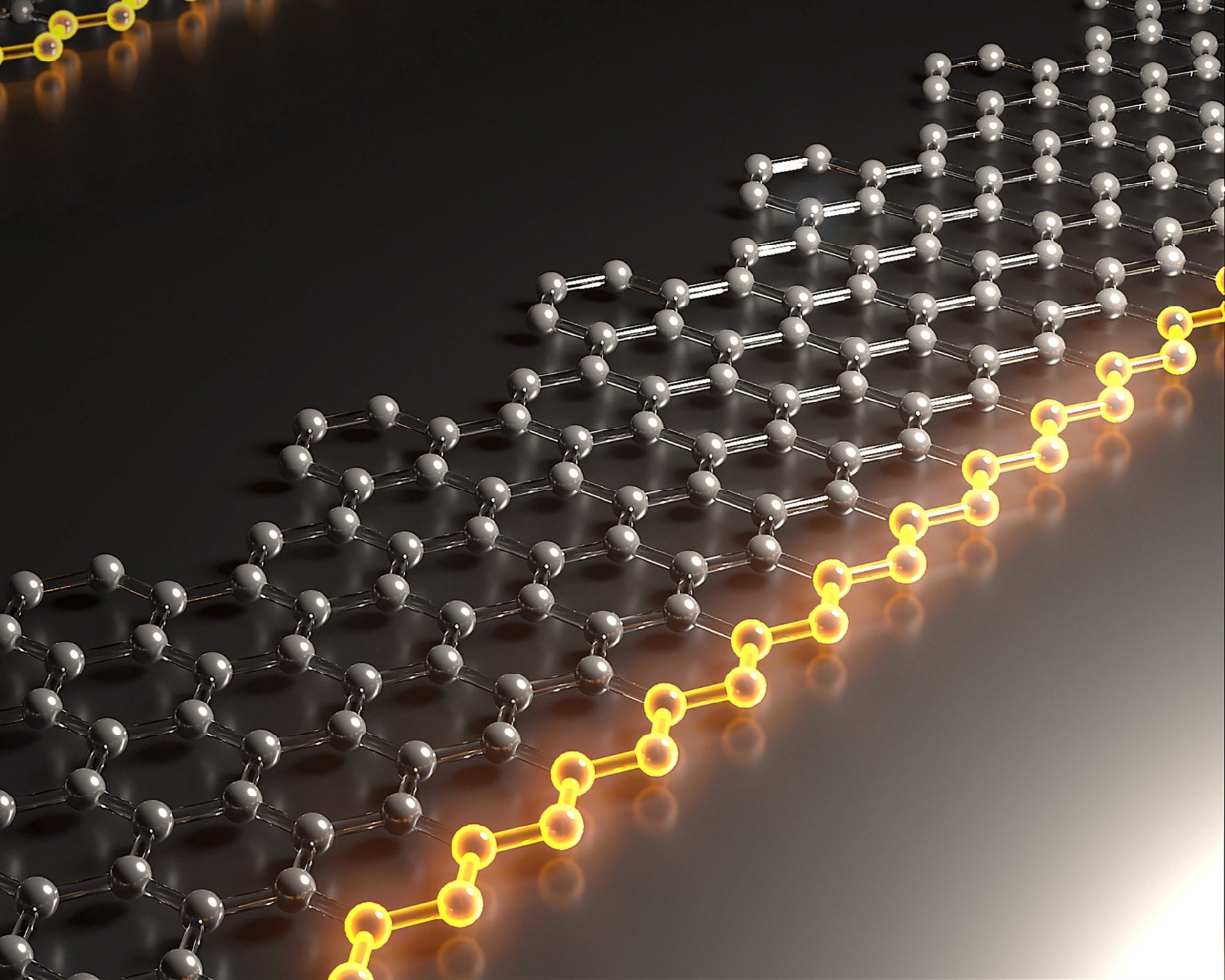
New graphene nanoribbons for future quantum technologies
Published in Nature (January 2025)
Graphene nanoribbons (GNRs) have electronic and magnetic properties that make them strong candidates for quantum devices and spintronics. Assoc Prof Lu Jiong and his collaborators developed a unique Janus GNR with atomically precise zigzag edges, engineered so that one edge is ferromagnetic. This design enables a one-dimensional ferromagnetic spin chain – an important breakthrough that opens the way to next-generation, carbon-based quantum materials for electronics and quantum computing.
Department of
Mathematics
Faster quantum simulations with new algorithm
Published in Quantum (March 2025)
Assoc Prof Cai Zhenning and his collaborators developed an algorithm to simulate the Caldeira-Leggett model, which describes a common problem in quantum mechanics. The algorithm combines the inchworm method and frozen Gaussian approximation to simplify calculations and increase computational speeds for particle dynamics, respectively. This work marks a pioneering attempt to numerically solve the real-time reduced dynamics of the Caldeira-Leggett model, opening the door to simulations of more complex quantum phenomena.
Department of
Physics
Simulating the non-Hermitian skin effect for the first time
Published in Nature Communications (February 2025)
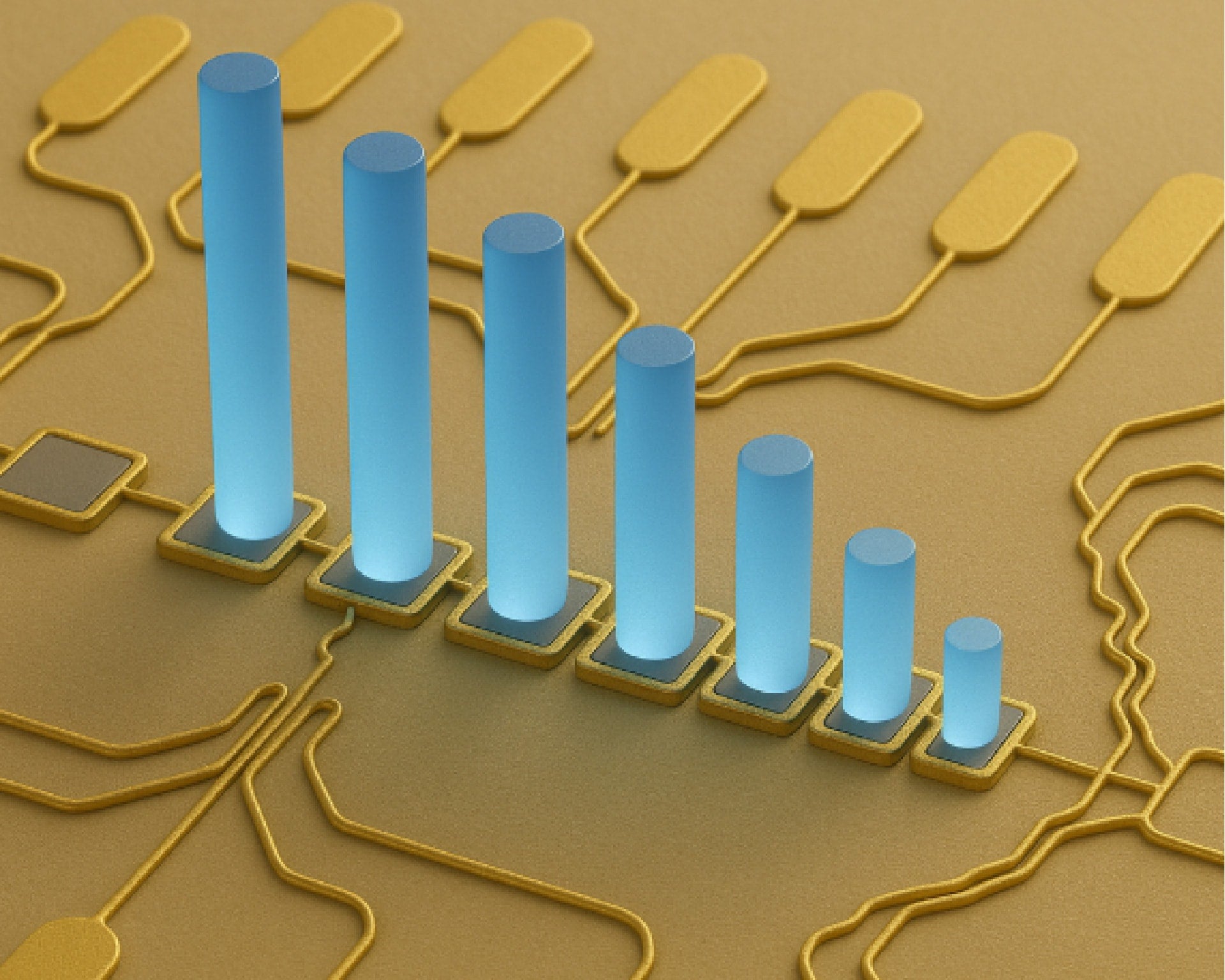
The non-Hermitian skin effect (NHSE), which manifests as an accumulation of states on the boundaries of a system, is an exciting new research domain. However, its intricate dynamics are unclear. Nonnormality and nonreciprocity are necessary to observe the NHSE, but this is not achievable using current hardware. Asst Prof Lee Ching Hua’s team postselected ancilla qubits and used trainable quantum circuits tounveil the simulation of non-Hermitian lattices using present-day quantum computers, paving the way to simulate more sophisticated many-body models.
Department of
Physics
Quantum theory is optimal to violate some classical probability boundaries
Published in Physical Review Letters (May 2025)
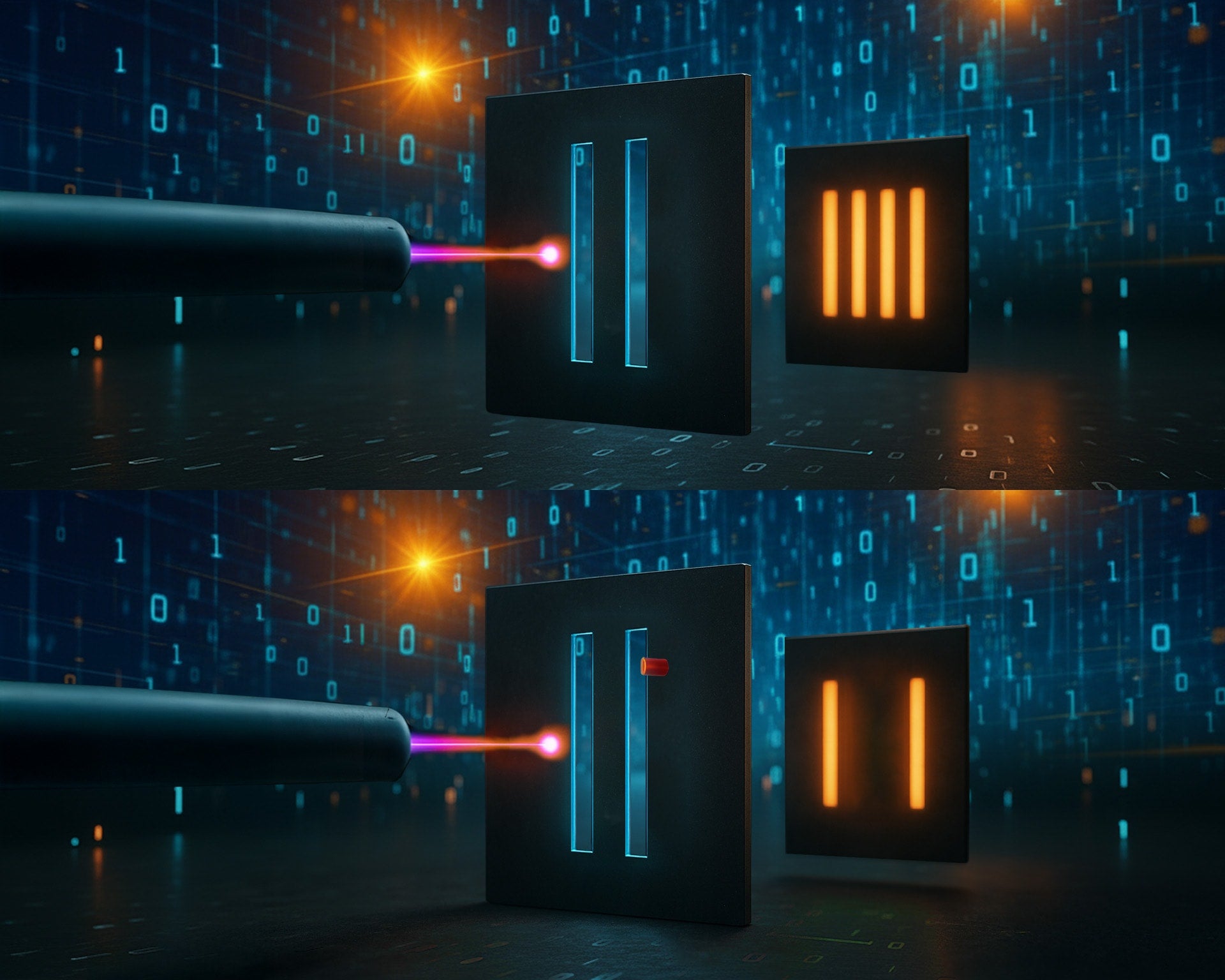
In many tests, quantum mechanics violate classical bounds for the probabilities of measurement outcomes. For the most famous of such tests, Bell’s inequalities, quantum theory does not reach the mathematical maximum. In this work, Prof Valerio Scarani’s team derived a theory-independent limit for the maximum possible violation of the so-called Tsirelson precession inequality, and showed by construction that quantum theory consistently reaches this bound.
A long-term vision
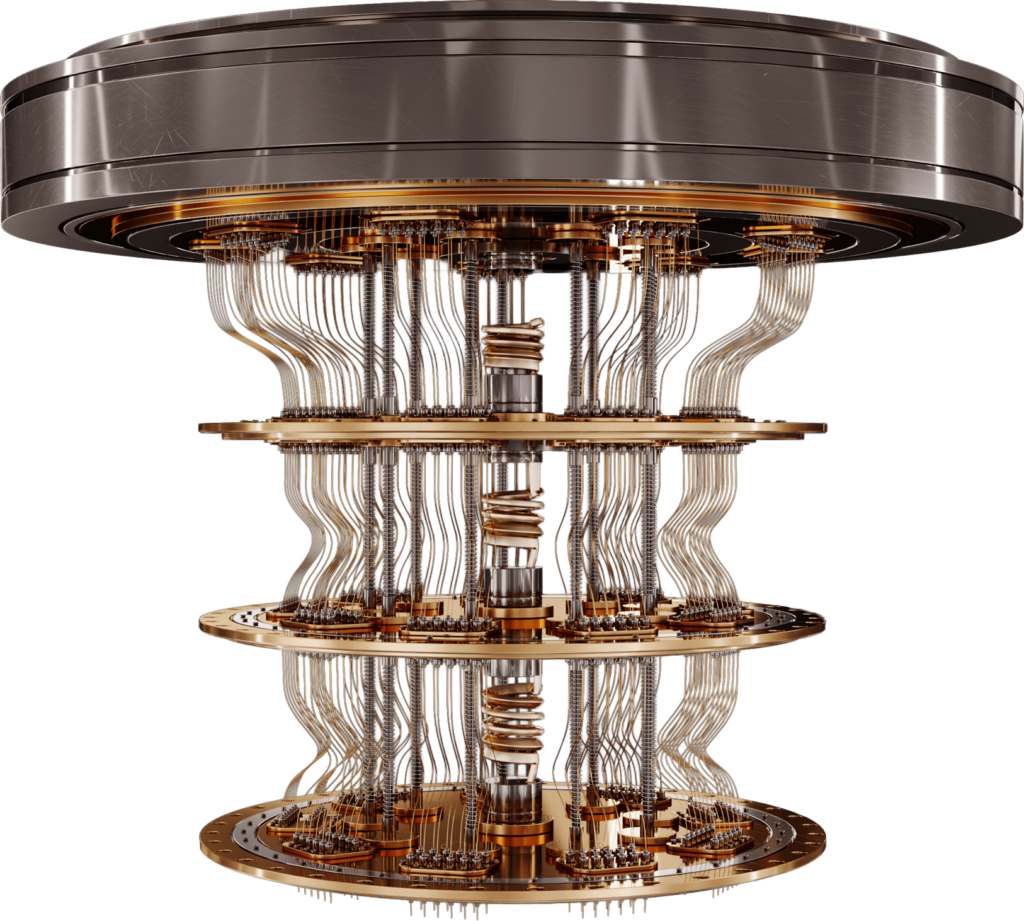
Quantum computing is still in its infancy. Only about 100 to 200 machines exist worldwide, many of them fragile and kept near absolute zero. Few will ever sit in homes or offices. Access will come through the cloud, where a handful of providers and national laboratories host the hardware while users log in remotely. Timelines are long, but markets are already watching, with projections of US$72 billion in quantum computing revenue by 2035 and a broader quantum sector nearing US$97 billion within a decade.
For Singapore, what counts is talent. The Faculty of Science trains students to think in probabilities, supports researchers who turn equations into devices and works with partners to build public understanding. IYQ may have ended but the era of quantum science has only just begun.
Box Story
New bent-toed gecko species in Timor-Leste
“We have barely scratched the surface of Timor-Leste’s biodiversity. New discoveries can have profound impacts on conservation and policy-making.”
In August 2022, we led an expedition to Timor-Leste in collaboration with Conservation International and the government of Timor-Leste. The Museum’s herpetologist, Dr CHAN Kin Onn, discovered a new species of bent-toed gecko which was named Cyrtodactylus santana, in reference to the Nino Konis Santana National Park, in which the gecko was discovered.